
What should you know about haemolytic crisis in sickle cell disease?
Short answer
A haemolytic crisis is a potentially urgent episode in which red blood cells break down quickly in sickle cell disease, causing worsening anaemia and symptoms that need medical assessment.
This answers one question. It is not a diagnosis and does not replace an assessment by a licensed doctor.
At a glance
- Main problem
- Red blood cells are breaking down faster than the body replaces them.
- Possible clues
- Worsening fatigue, pale skin, dark urine, yellow eyes, dizziness, or breathlessness.
- Action
- Contact the sickle-cell team promptly; severe symptoms require emergency help.
What happens in the body
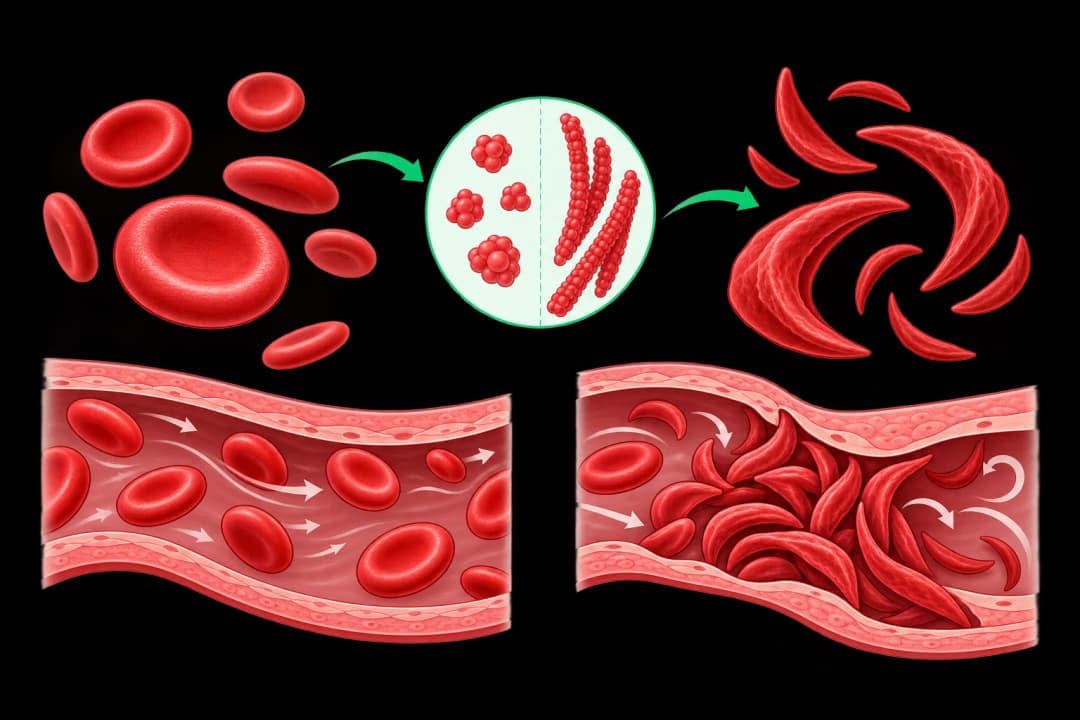
Red blood cells carry oxygen. During haemolysis, they are destroyed faster than usual, which can reduce oxygen delivery and leave the body short of healthy cells. Possible features include new or worsening Fatigue, Pale Skin, yellowing of the eyes, dark urine, dizziness, fast heartbeat, breathlessness, or Joint Pain. A crisis may occur alongside infection, dehydration, cold exposure, or other stress, but the trigger is not always obvious. It is different from a pain crisis, although the two can occur together.
What to do
Follow the emergency plan provided by your sickle-cell team and contact them promptly if symptoms suggest haemolysis. Keep drinking fluids if you can swallow safely, avoid strenuous activity, and take only medicines included in your care plan. Bring your medication list and previous blood results if available. Medical assessment may include a Blood Test and checks of oxygen levels, urine, infection, and heart rate. Do not wait for a routine appointment when symptoms are new or rapidly worsening.
When to seek urgent care
Seek emergency help for severe breathlessness, chest pain, fainting, confusion, extreme weakness, a very fast heartbeat, or inability to drink. Fever, sudden severe headache, one-sided weakness, or a painful swollen limb also needs urgent assessment. Children with unusual sleepiness, poor feeding, or breathing difficulty should be assessed immediately. Tell the receiving team that you have sickle cell disease and may be experiencing haemolysis.
Questions for your doctor
Which symptoms in my case suggest haemolysis rather than a pain crisis? What should my emergency plan say? How often should my blood counts be checked, and which treatments or infections could trigger a rapid fall in red blood cells?
Find care
General Clinics & Polyclinics in Abu Dhabi
That answer is general. If you want it applied to your own case, these are licensed general clinics & polyclinics listed in Abu Dhabi.
27 Ar Ruwwad St - Shakhbout City - MSH4 - Abu Dhabi - United Arab Emirates
Accepts: Daman, Thiqa, Cigna, MetLife +20 more
Al Ruwais, Al Dhafrah
Accepts: Daman, Thiqa, AXA, Cigna +16 more
Al Bahyah - Al Bahyah Old - Abu Dhabi - United Arab Emirates
Accepts: Daman, Thiqa, Cigna, Allianz Care +18 more
Abu Dhabi
Accepts: Daman, Thiqa, AXA, Cigna +27 more
Ordered by verification status and how complete each clinic's public record is, then alphabetically. This is a directory listing, not a ranking — Zavis does not rate or recommend providers.
A factual listing drawn from the DHA, DOH and MOHAP licence registers. It is not a referral, an endorsement, or advice that any of these providers is right for you.
Questions people ask
Is haemolytic crisis the same as a pain crisis?
No. Haemolysis concerns rapid red-cell breakdown, while a pain crisis results from blocked blood flow; both problems can occur together.
How is haemolysis checked?
A clinician may use a Blood Test and examine oxygen levels, urine, heart rate, and possible triggers such as infection.
Related
Related reading
Keep reading
Medical disclaimer. This page is general health information, not medical advice, and it cannot diagnose you. Always consult a licensed healthcare provider about your own symptoms and treatment. In an emergency in the UAE, call 998 for an ambulance.