
What should you know about glandular fever symptoms?
Short answer
Glandular fever commonly presents with a sore throat, swollen glands, fever and pronounced fatigue, though symptoms vary.
This answers one question. It is not a diagnosis and does not replace an assessment by a licensed doctor.
At a glance
- Common pattern
- Sore throat, swollen neck glands, fever and marked fatigue may occur together.
- Safety point
- Avoid strenuous contact activity until advised during recovery.
How symptoms can appear
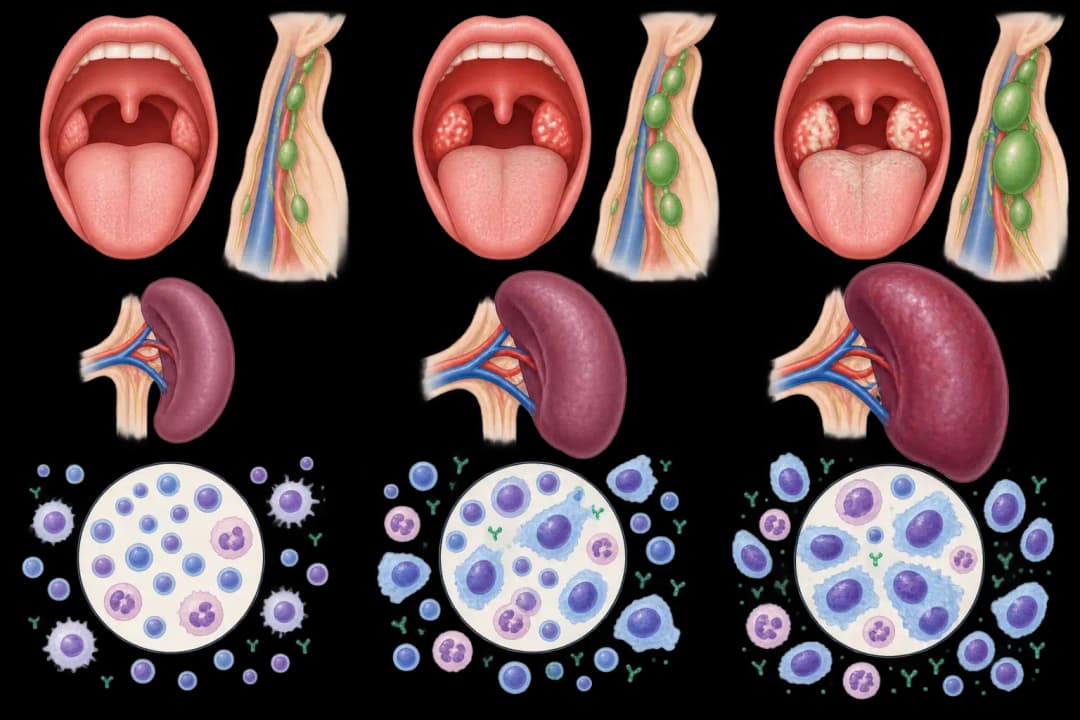
Symptoms may build gradually rather than arriving together. The throat can be very sore, the tonsils may look enlarged, and glands in the neck can become tender. Fever and a general unwell feeling may sit alongside heavy tiredness that makes school, work or exercise difficult.
Symptoms overlap with other infections, so a clinician may use an examination and appropriate testing before confirming the cause. A rash, night sweats or reduced appetite can also occur. The pattern and change over time matter more than one symptom in isolation.
Managing symptoms
Rest, drink regularly, and choose soft foods or cool drinks if swallowing hurts. Use only pain or fever medicines that are suitable for you and follow the label or a clinician’s instructions. Avoid strenuous contact activity until medical advice confirms it is safe, because the spleen can enlarge during glandular fever.
Plan lighter days and return to activity gradually as energy improves. Arrange a GP consultation if symptoms are severe, persistent or interfering with hydration or daily function. Read more about Sore Throat and Swollen Glands.
When to seek care
Get urgent help for difficulty breathing or swallowing saliva, severe dehydration, confusion, fainting, or intense or worsening upper-abdominal pain. These warning signs need prompt assessment.
Seek medical advice if fever continues, throat pain is worsening, or fatigue is preventing basic activities. Sudden deterioration matters even when the illness began with familiar glandular-fever symptoms.
Questions for your doctor
Ask what features support glandular fever, whether testing is appropriate, which activities to avoid, and how to recognise dehydration or a spleen-related emergency.
Find care
General Clinics & Polyclinics in Abu Dhabi
That answer is general. If you want it applied to your own case, these are licensed general clinics & polyclinics listed in Abu Dhabi.
27 Ar Ruwwad St - Shakhbout City - MSH4 - Abu Dhabi - United Arab Emirates
Accepts: Daman, Thiqa, Cigna, MetLife +20 more
Al Ruwais, Al Dhafrah
Accepts: Daman, Thiqa, AXA, Cigna +16 more
Al Bahyah - Al Bahyah Old - Abu Dhabi - United Arab Emirates
Accepts: Daman, Thiqa, Cigna, Allianz Care +18 more
Abu Dhabi
Accepts: Daman, Thiqa, AXA, Cigna +27 more
Ordered by verification status and how complete each clinic's public record is, then alphabetically. This is a directory listing, not a ranking — Zavis does not rate or recommend providers.
A factual listing drawn from the DHA, DOH and MOHAP licence registers. It is not a referral, an endorsement, or advice that any of these providers is right for you.
Questions people ask
Do all people with glandular fever have the same symptoms?
No. Symptoms vary in intensity and timing, and some people have a less typical pattern.
Why can fatigue last after other symptoms improve?
Recovery can continue after the throat and fever settle, so activity may need to increase gradually.
Related
Related reading
Keep reading
Medical disclaimer. This page is general health information, not medical advice, and it cannot diagnose you. Always consult a licensed healthcare provider about your own symptoms and treatment. In an emergency in the UAE, call 998 for an ambulance.