
What should you know about a fetal electrocardiogram?
Short answer
A fetal electrocardiogram is often a mistaken name for a maternal ECG; a standard ECG records the pregnant person's heart rhythm, while fetal monitoring uses different equipment.
This answers one question. It is not a diagnosis and does not replace an assessment by a licensed doctor.
At a glance
- Other name
- ECG or EKG
- Standard recording
- The pregnant person's heart
- Fetal assessment
- Uses pregnancy-specific monitoring
Understanding the terms
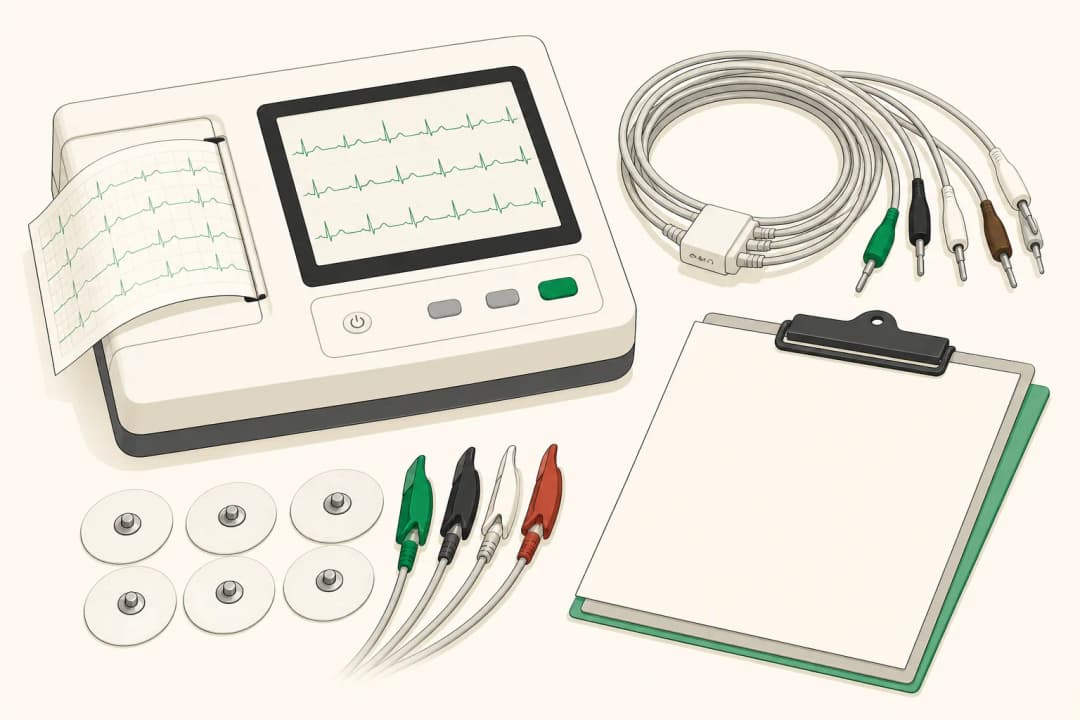
An electrocardiogram, also called an ECG or EKG, uses adhesive electrodes to detect the heart's electrical activity. It can help clinicians assess rhythm and clues about how the heart is working. It does not measure fetal movements or directly diagnose the baby.
Pregnancy teams may arrange a maternal ECG for palpitations, dizziness, fainting, chest discomfort, breathlessness, or a pre-existing cardiac concern. Conditions such as atrial fibrillation, angina, and heart failure require assessment in the context of the person's symptoms and examination; an ECG alone does not confirm or exclude every cause.
Preparing for the test
Tell the clinician you are pregnant and list your medicines and relevant medical history. Wear a top that can be adjusted for electrode placement, avoid body lotion on the chest that day, and lie or sit still during the recording. Ask whether you need a follow-up appointment to discuss the result.
When symptoms need urgent review
Call emergency services for severe or ongoing chest pain, marked breathing difficulty, collapse, or fainting with a racing or irregular heartbeat. Contact your maternity service urgently for reduced fetal movement, bleeding, suspected fluid loss, or painful regular contractions. Do not delay urgent care while waiting for an ECG appointment.
Useful questions
Ask which heart question the ECG is intended to answer, whether fetal monitoring is also needed, what happens if the tracing is unusual, and how your medicines or pregnancy stage affect the plan. A GP consultation can help coordinate referral when symptoms persist.
Find care
General Clinics & Polyclinics in Abu Dhabi
That answer is general. If you want it applied to your own case, these are licensed general clinics & polyclinics listed in Abu Dhabi.
27 Ar Ruwwad St - Shakhbout City - MSH4 - Abu Dhabi - United Arab Emirates
Accepts: Daman, Thiqa, Cigna, MetLife +20 more
Al Ruwais, Al Dhafrah
Accepts: Daman, Thiqa, AXA, Cigna +16 more
Al Bahyah - Al Bahyah Old - Abu Dhabi - United Arab Emirates
Accepts: Daman, Thiqa, Cigna, Allianz Care +18 more
Abu Dhabi
Accepts: Daman, Thiqa, AXA, Cigna +27 more
Ordered by verification status and how complete each clinic's public record is, then alphabetically. This is a directory listing, not a ranking — Zavis does not rate or recommend providers.
A factual listing drawn from the DHA, DOH and MOHAP licence registers. It is not a referral, an endorsement, or advice that any of these providers is right for you.
Questions people ask
Is an ECG safe during pregnancy?
A standard ECG uses surface electrodes to record electrical signals and does not expose you to radiation.
Is fetal monitoring the same as an ECG?
No. Fetal monitoring is designed to assess the baby's heart rate and movement patterns using pregnancy-specific equipment.
Related
Related reading
Keep reading
Medical disclaimer. This page is general health information, not medical advice, and it cannot diagnose you. Always consult a licensed healthcare provider about your own symptoms and treatment. In an emergency in the UAE, call 998 for an ambulance.