
What should you know about etiology of type 2 diabetes?
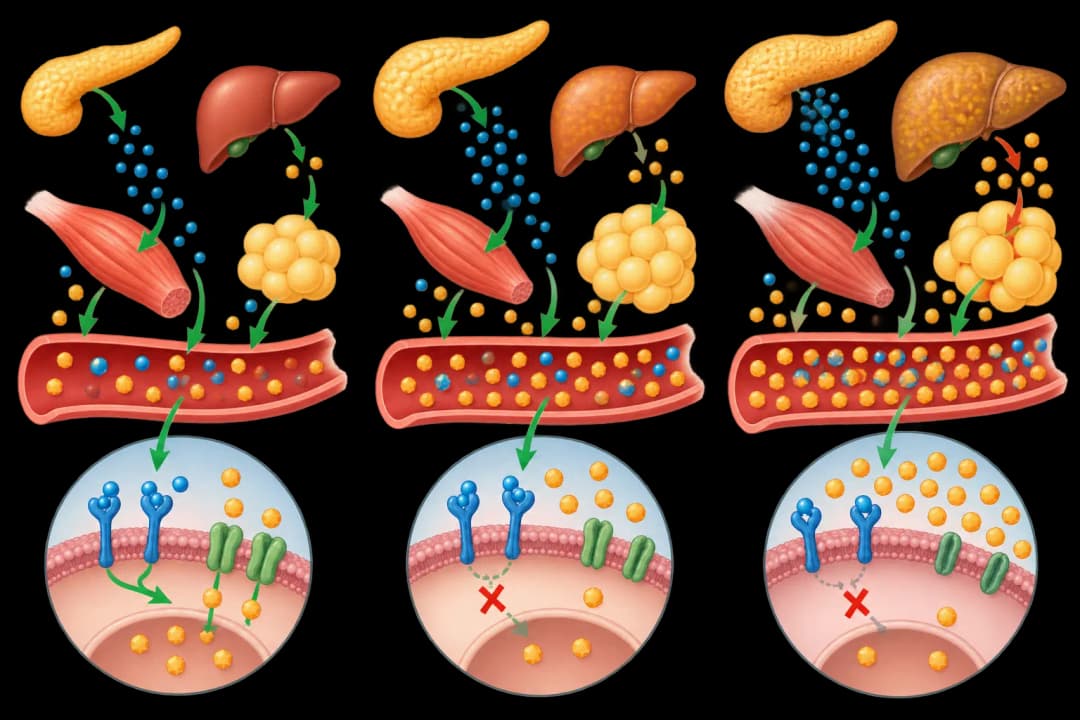
Short answer
Type 2 diabetes develops when insulin resistance combines with reduced insulin production, causing blood glucose to remain too high.
This answers one question. It is not a diagnosis and does not replace an assessment by a licensed doctor.
At a glance
- Core process
- Insulin resistance with insufficient insulin production
- Risk influences
- Genetics, age, activity, sleep and body weight
- Assessment
- Blood-glucose testing
How the condition develops
Insulin helps glucose move from the bloodstream into cells for energy. In type 2 diabetes, muscle, liver and fat cells respond less effectively to insulin, so the pancreas has to work harder. Over time, it may not release enough insulin to meet demand. A mix of inherited tendency, increasing age, previous prediabetes, excess body weight, limited activity, sleep problems and some medicines can influence risk. This is not a simple result of one food or one personal choice, and people can develop it with different body shapes and routines.
Useful next steps
If you have risk factors or symptoms such as increased thirst, frequent urination, tiredness or blurred vision, arrange a blood-glucose assessment. Regular movement, balanced meals, adequate sleep and support with weight management can improve insulin sensitivity, whether or not medication is also needed. Follow-up can help protect the kidneys, nerves, eyes, heart and blood vessels. Do not change prescribed medicine without clinical advice.
When to seek urgent care
Seek urgent help for vomiting, severe dehydration, unusual drowsiness, confusion, difficulty breathing, or very high glucose with feeling acutely unwell. Arrange routine review for persistent thirst, recurrent infections, numbness or wounds that heal slowly. These concerns do not identify the cause by themselves, but they warrant testing and a clear plan.
Questions to bring
Ask which blood tests are suitable, whether you have prediabetes, what targets apply to you, and how often your eyes, feet, kidneys and blood pressure should be checked. Discuss family history, medicines and practical changes that fit your daily routine.
Find care
General Clinics & Polyclinics in Abu Dhabi
That answer is general. If you want it applied to your own case, these are licensed general clinics & polyclinics listed in Abu Dhabi.
27 Ar Ruwwad St - Shakhbout City - MSH4 - Abu Dhabi - United Arab Emirates
Accepts: Daman, Thiqa, Cigna, MetLife +20 more
Al Ruwais, Al Dhafrah
Accepts: Daman, Thiqa, AXA, Cigna +16 more
Al Bahyah - Al Bahyah Old - Abu Dhabi - United Arab Emirates
Accepts: Daman, Thiqa, Cigna, Allianz Care +18 more
Abu Dhabi
Accepts: Daman, Thiqa, AXA, Cigna +27 more
Ordered by verification status and how complete each clinic's public record is, then alphabetically. This is a directory listing, not a ranking — Zavis does not rate or recommend providers.
A factual listing drawn from the DHA, DOH and MOHAP licence registers. It is not a referral, an endorsement, or advice that any of these providers is right for you.
Questions people ask
Is type 2 diabetes caused only by eating sugar?
No. It reflects interacting genetic, metabolic and lifestyle factors rather than one food or behaviour.
Can someone with a healthy-looking body develop it?
Yes. Body size does not rule out insulin resistance or inherited susceptibility, so symptoms and risk factors should be assessed on their own merits.
Related
Related reading
Keep reading
Medical disclaimer. This page is general health information, not medical advice, and it cannot diagnose you. Always consult a licensed healthcare provider about your own symptoms and treatment. In an emergency in the UAE, call 998 for an ambulance.