
What should you know about an electrocardiogram test?
Short answer
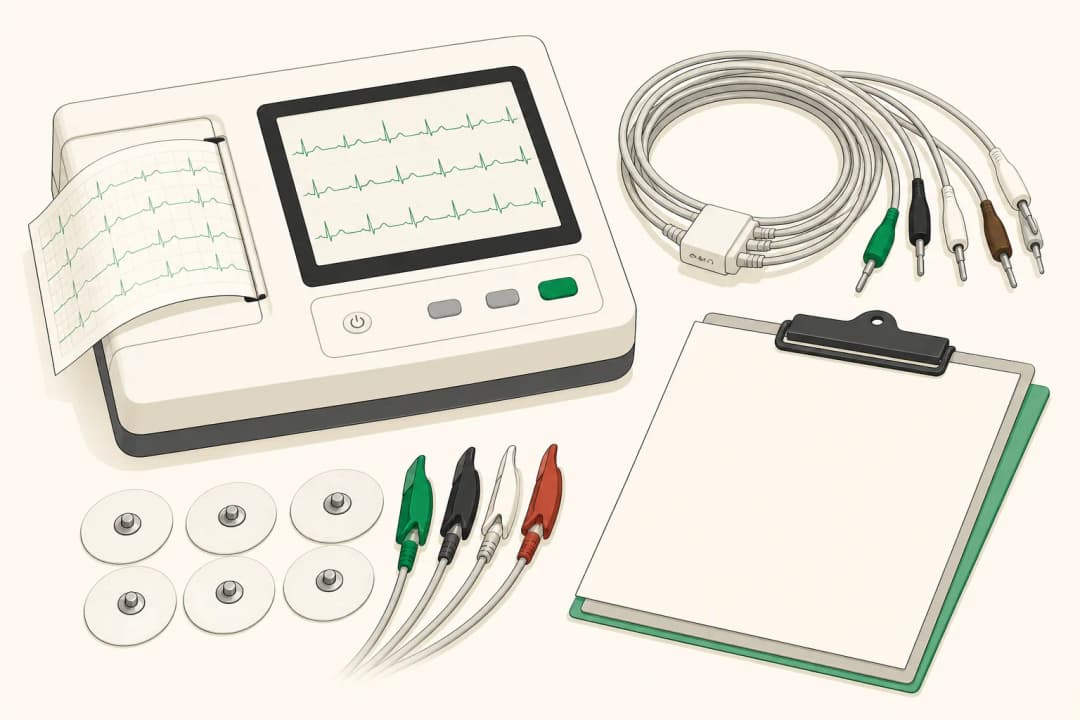
An electrocardiogram test uses skin electrodes to record heart rhythm and electrical signals during a short assessment.
This answers one question. It is not a diagnosis and does not replace an assessment by a licensed doctor.
At a glance
- How it works
- Electrodes detect electrical signals
- What you do
- Lie still and breathe normally
- What it does not do
- Send electricity into your body
What happens during an ECG
A clinician places adhesive electrodes on the chest and sometimes the arms and legs. Wires connect them to an ECG machine, which turns the signals into a tracing. You usually lie still and breathe normally while the recording is taken. The test does not send electricity into your body.
The tracing can show the rate and regularity of the heartbeat and patterns that may need further assessment. The meaning depends on your symptoms, examination and health history, so a printed line should be reviewed by a qualified clinician.
Before and during the test
Wear clothing that can be adjusted for access to the chest, and mention allergies to adhesives or difficulty lying flat. Avoid applying oily creams to electrode areas unless your clinic advises otherwise. Keep still during the recording; movement, shivering or talking can create interference and may require another recording.
When to seek urgent care
Call emergency services for new or severe chest pain, major breathlessness, fainting, collapse or sudden weakness. Do not wait for a routine ECG appointment when these symptoms are happening. Arrange a review for recurring racing beats, unexplained dizziness or reduced ability to exercise.
Questions for your doctor
Ask why the test is recommended, whether you need to change any medicines, when results will be available and whether further testing may be needed.
Find care
General Clinics & Polyclinics in Abu Dhabi
That answer is general. If you want it applied to your own case, these are licensed general clinics & polyclinics listed in Abu Dhabi.
27 Ar Ruwwad St - Shakhbout City - MSH4 - Abu Dhabi - United Arab Emirates
Accepts: Daman, Thiqa, Cigna, MetLife +20 more
Al Ruwais, Al Dhafrah
Accepts: Daman, Thiqa, AXA, Cigna +16 more
Al Bahyah - Al Bahyah Old - Abu Dhabi - United Arab Emirates
Accepts: Daman, Thiqa, Cigna, Allianz Care +18 more
Abu Dhabi
Accepts: Daman, Thiqa, AXA, Cigna +27 more
Ordered by verification status and how complete each clinic's public record is, then alphabetically. This is a directory listing, not a ranking — Zavis does not rate or recommend providers.
A factual listing drawn from the DHA, DOH and MOHAP licence registers. It is not a referral, an endorsement, or advice that any of these providers is right for you.
Questions people ask
Do ECG electrodes hurt?
The recording is generally comfortable, though adhesive removal can bother sensitive skin.
Can I talk during an ECG?
You may be asked to stay quiet and still briefly because movement and speech can affect the tracing.
Related
Related reading
Keep reading
Medical disclaimer. This page is general health information, not medical advice, and it cannot diagnose you. Always consult a licensed healthcare provider about your own symptoms and treatment. In an emergency in the UAE, call 998 for an ambulance.