
What should you know about electrocardiogram measures?
Short answer
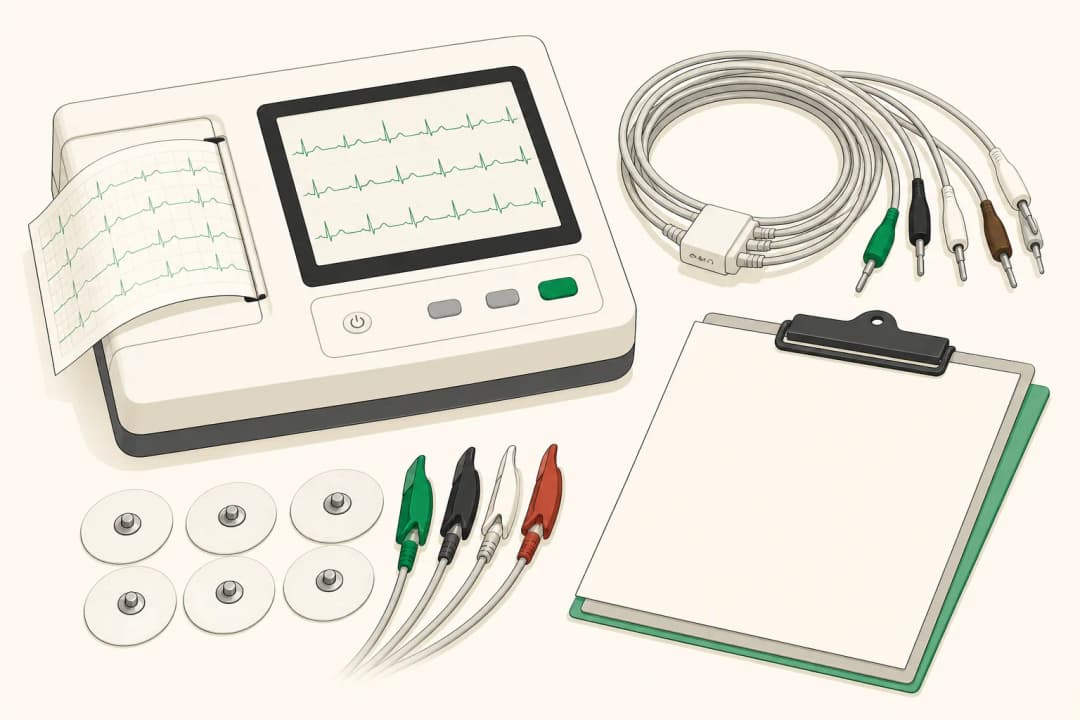
An electrocardiogram measures heart rate, rhythm, and the timing of electrical conduction through the heart during a short recording.
This answers one question. It is not a diagnosis and does not replace an assessment by a licensed doctor.
At a glance
- Measures
- Rate, rhythm, and conduction timing
- Time captured
- The recording period
- Not measured directly
- Blood pressure or oxygen level
Understanding the measurements
The tracing shows how quickly beats occur and whether they follow a regular pattern. Clinicians assess intervals that reflect travel through the heart’s electrical system, along with the shape and size of waves. These features can point towards rhythm disturbance, delayed conduction, or changes that need comparison with symptoms and earlier recordings. An ECG does not directly measure blood pressure, oxygen level, or how well the heart pumps. A normal result also describes one time period rather than every heartbeat throughout the day.
Using your result
Take the report to the clinician who requested it and ask which measurement matters for your concern. Record when palpitations, dizziness, chest discomfort, or breathlessness occur, and note medicines or stimulants that may be relevant. If symptoms are intermittent, your clinician may discuss a wearable monitor or another assessment. Read about the procedure at Electrocardiogram.
Warning symptoms
Get urgent help for sudden chest pressure, severe breathing difficulty, fainting, confusion, or a rapid irregular heartbeat with weakness or dizziness. The urgency comes from the symptoms and their onset, not from waiting to see what an ECG measurement says.
Questions worth asking
Ask whether the rate and rhythm were within the expected range for the situation, whether conduction timing was delayed, and whether comparison or monitoring is needed. Ask what symptoms should prompt immediate reassessment.
Find care
General Clinics & Polyclinics in Abu Dhabi
That answer is general. If you want it applied to your own case, these are licensed general clinics & polyclinics listed in Abu Dhabi.
27 Ar Ruwwad St - Shakhbout City - MSH4 - Abu Dhabi - United Arab Emirates
Accepts: Daman, Thiqa, Cigna, MetLife +20 more
Al Ruwais, Al Dhafrah
Accepts: Daman, Thiqa, AXA, Cigna +16 more
Al Bahyah - Al Bahyah Old - Abu Dhabi - United Arab Emirates
Accepts: Daman, Thiqa, Cigna, Allianz Care +18 more
Abu Dhabi
Accepts: Daman, Thiqa, AXA, Cigna +27 more
Ordered by verification status and how complete each clinic's public record is, then alphabetically. This is a directory listing, not a ranking — Zavis does not rate or recommend providers.
A factual listing drawn from the DHA, DOH and MOHAP licence registers. It is not a referral, an endorsement, or advice that any of these providers is right for you.
Questions people ask
Does an ECG measure heart strength?
It can suggest some patterns associated with heart strain, but pumping function usually needs clinical assessment and sometimes imaging.
Why might monitoring be suggested?
A short ECG can miss changes that occur at other times, while longer monitoring samples the rhythm during everyday activities.
Related
Related reading
Keep reading
Medical disclaimer. This page is general health information, not medical advice, and it cannot diagnose you. Always consult a licensed healthcare provider about your own symptoms and treatment. In an emergency in the UAE, call 998 for an ambulance.