
What should you know about electrocardiogram leads?
Short answer
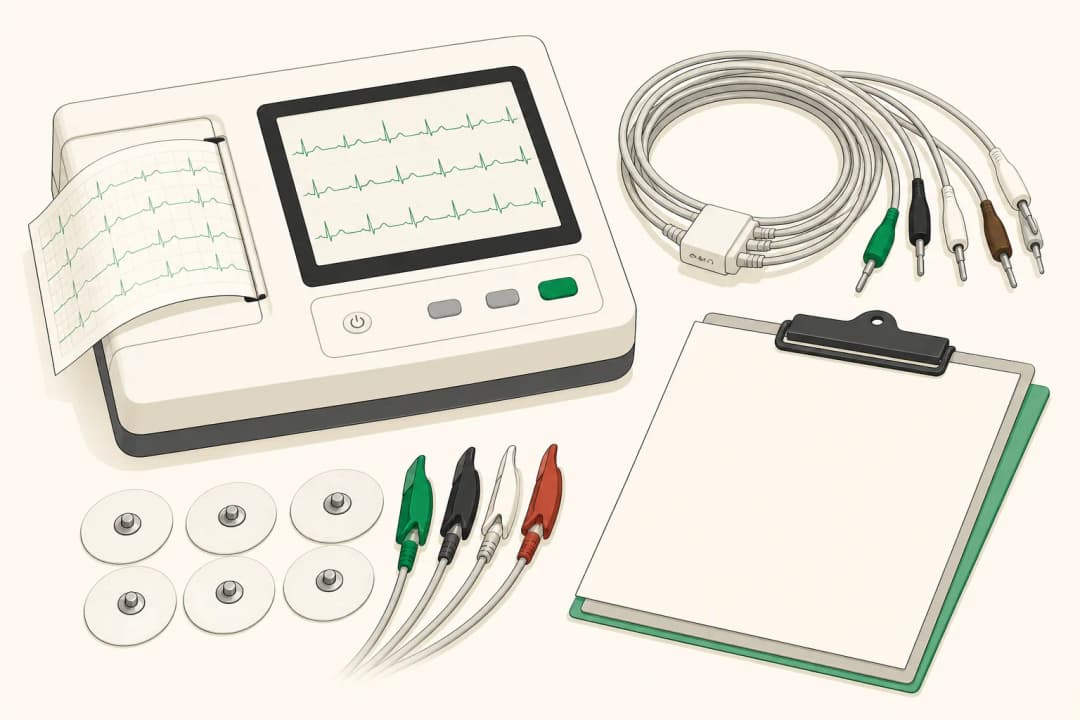
Electrocardiogram leads are different views of the heart’s electrical activity, created from skin electrodes and used together to interpret rhythm and conduction.
This answers one question. It is not a diagnosis and does not replace an assessment by a licensed doctor.
At a glance
- What creates leads
- Electrodes and electrical comparisons
- What they view
- Different directions across the heart
- What can interfere
- Movement or weak skin contact
Why several leads are used
Each lead compares electrical signals from a particular direction. Looking at several directions helps a clinician see whether a pattern is widespread or concentrated in an area of the heart. Some leads mainly view the front, side, or lower surface, while others help assess the overall rhythm. The electrodes are sensors; they do not send electricity into your body. Hair, sweat, movement, or poor contact can create interference that resembles an abnormality.
Before and during the test
Wear clothing that allows access to the chest and limbs, and mention any skin irritation or implanted device before the recording. Relax, keep still, and breathe normally unless the clinician gives different instructions. Afterward, ask which lead or pattern needs explanation rather than trying to judge one line in isolation. A GP Consultation can place the result alongside your symptoms and examination.
When symptoms need urgent attention
Call emergency services for new chest pain or pressure, fainting, severe breathlessness, blue or grey lips, or a sudden irregular heartbeat with weakness or dizziness. These symptoms require assessment based on how you feel, whether or not a previous ECG was reassuring.
Useful questions
Ask whether the recording was technically clear, whether any lead showed a meaningful change, and how your symptoms fit the overall pattern. Ask whether comparison with an older ECG, monitoring, or another test is needed.
Find care
General Clinics & Polyclinics in Abu Dhabi
That answer is general. If you want it applied to your own case, these are licensed general clinics & polyclinics listed in Abu Dhabi.
27 Ar Ruwwad St - Shakhbout City - MSH4 - Abu Dhabi - United Arab Emirates
Accepts: Daman, Thiqa, Cigna, MetLife +20 more
Al Ruwais, Al Dhafrah
Accepts: Daman, Thiqa, AXA, Cigna +16 more
Al Bahyah - Al Bahyah Old - Abu Dhabi - United Arab Emirates
Accepts: Daman, Thiqa, Cigna, Allianz Care +18 more
Abu Dhabi
Accepts: Daman, Thiqa, AXA, Cigna +27 more
Ordered by verification status and how complete each clinic's public record is, then alphabetically. This is a directory listing, not a ranking — Zavis does not rate or recommend providers.
A factual listing drawn from the DHA, DOH and MOHAP licence registers. It is not a referral, an endorsement, or advice that any of these providers is right for you.
Questions people ask
Are leads the same as electrodes?
No. Electrodes are the skin sensors; leads are the electrical views calculated from their signals.
Do ECG leads hurt?
The recording itself should not hurt, although removing adhesive electrodes can briefly tug at skin or hair.
Related
Related reading
Keep reading
Medical disclaimer. This page is general health information, not medical advice, and it cannot diagnose you. Always consult a licensed healthcare provider about your own symptoms and treatment. In an emergency in the UAE, call 998 for an ambulance.