
What should you know about draining fluid from lungs pneumonia?
Short answer
Fluid related to pneumonia may need drainage when it collects around the lung, becomes infected, or makes breathing difficult.
This answers one question. It is not a diagnosis and does not replace an assessment by a licensed doctor.
At a glance
- Fluid location
- The space around the lung
- Assessment
- Examination, imaging and sometimes fluid sampling
- Possible drainage
- A needle or chest tube, depending on the collection
Why fluid can collect
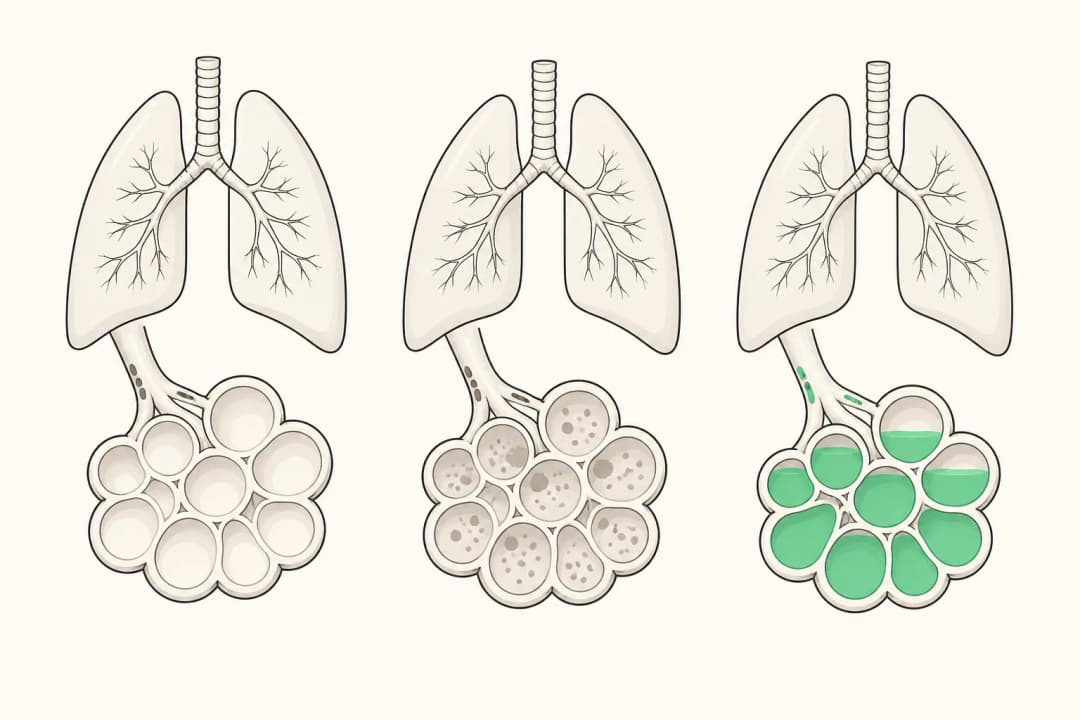
Pneumonia inflames lung tissue and can cause fluid to gather in the space between the lung and chest wall. This is called a pleural effusion. Some collections are small and improve as the infection is treated. A larger collection, thick infected fluid, or fluid that limits lung expansion may need a procedure.
A clinician may use an examination, chest imaging and a sample of the fluid to decide whether drainage is appropriate. The procedure may involve a needle or a small tube placed through the chest wall, with local anaesthetic and monitoring.
What happens next
Follow the prescribed pneumonia treatment and attend the review arranged after imaging or drainage. Keep the dressing around a drain clean and dry according to the clinical team’s instructions. Rest, drink fluids if you can, and record changes in breathing, temperature, chest pain or sputum.
Cough, fever, chills and coughing up phlegm can accompany pneumonia. COVID-19 and Influenza can also cause respiratory symptoms, so testing or examination may be advised.
When to seek urgent care
Get emergency help for severe breathlessness, blue or grey lips, confusion, fainting, or rapidly worsening chest pain. Seek prompt medical review for increasing fever, new weakness, drainage that becomes heavily bloody or foul-smelling, or redness spreading around a drain site. Sepsis is a medical emergency and can include sudden deterioration, confusion or very fast breathing.
Questions for your doctor
Where is the fluid, and how is its size being assessed? Does it look infected? Would antibiotics alone be suitable, or is drainage recommended? How should the drain site be cared for, and when will it be removed?
Find care
General Clinics & Polyclinics in Abu Dhabi
That answer is general. If you want it applied to your own case, these are licensed general clinics & polyclinics listed in Abu Dhabi.
27 Ar Ruwwad St - Shakhbout City - MSH4 - Abu Dhabi - United Arab Emirates
Accepts: Daman, Thiqa, Cigna, MetLife +20 more
Al Ruwais, Al Dhafrah
Accepts: Daman, Thiqa, AXA, Cigna +16 more
Al Bahyah - Al Bahyah Old - Abu Dhabi - United Arab Emirates
Accepts: Daman, Thiqa, Cigna, Allianz Care +18 more
Abu Dhabi
Accepts: Daman, Thiqa, AXA, Cigna +27 more
Ordered by verification status and how complete each clinic's public record is, then alphabetically. This is a directory listing, not a ranking — Zavis does not rate or recommend providers.
A factual listing drawn from the DHA, DOH and MOHAP licence registers. It is not a referral, an endorsement, or advice that any of these providers is right for you.
Questions people ask
Does every pneumonia-related fluid collection need drainage?
No. The decision depends on the amount, appearance, infection features, breathing impact and response to treatment.
What symptoms need emergency help?
Severe breathing difficulty, blue or grey lips, confusion, fainting or rapidly worsening chest pain need emergency assessment.
Related
Related reading
Medical disclaimer. This page is general health information, not medical advice, and it cannot diagnose you. Always consult a licensed healthcare provider about your own symptoms and treatment. In an emergency in the UAE, call 998 for an ambulance.