
What to know about different MRI scanners
Short answer
MRI scanners vary in shape, magnetic strength, body-area capability, and available imaging techniques, so the right system depends on the clinical question and patient needs.
This answers one question. It is not a diagnosis and does not replace an assessment by a licensed doctor.
At a glance
- Scanner shapes
- Closed-bore, wide-bore, open, and dedicated systems suit different circumstances.
- No ionising radiation
- MRI forms images with magnetic fields and radio waves.
- Safety check
- Implants and metal must be assessed against the specific scanner conditions.
Main scanner differences
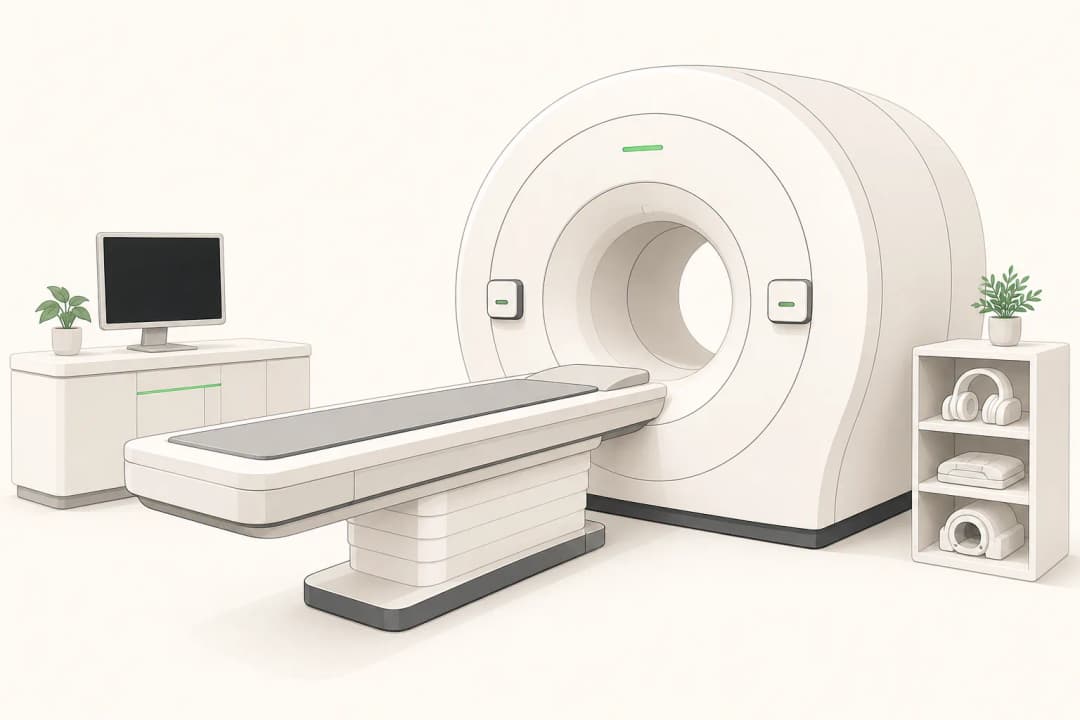
Conventional closed-bore systems place the examined area inside a cylindrical magnet. Wide-bore models offer more space, while open designs leave more room at the sides and may help some people who feel confined. Dedicated scanners image a particular limb or body region. Not every design can perform every specialised examination.
How scanner choice affects an examination
Stronger or more specialised systems can support detailed images and advanced sequences, but magnetic strength alone does not determine whether a scan will answer the clinical question. The receiver coil, scan protocol, software, body area, movement, and radiology expertise also influence the result. An open scanner may improve access or comfort, yet it may not provide the sequences or image detail needed for a small lesion or complex treatment plan. The radiology team matches the equipment and protocol to the requested examination.
Getting ready for MRI
Give the imaging service details of any pacemaker, implanted pump, hearing implant, surgical clip, metal fragment, or other device before the appointment. Staff need the device name and model when possible because MRI conditions differ between implants and scanners. Mention pregnancy or possible pregnancy, kidney problems, prior contrast reactions, pain when lying still, and anxiety in enclosed spaces. Follow instructions about eating, medicines, clothing, and metal removal. If comfort is a concern, ask whether a wide-bore scanner, positioning support, or prescribed calming medicine would still allow the required images.
When to seek help
During the scan, use the call device if you feel intense pain, burning, breathlessness, faintness, or severe distress; the radiographer can stop the examination and assess you. After contrast, trouble breathing, facial or throat swelling, collapse, or a rapidly spreading rash requires urgent medical help. New neurological symptoms such as a seizure, sudden weakness, new speech difficulty, or loss of consciousness also need emergency assessment rather than waiting for an MRI booking or report.
Questions before booking
Ask which body area and clinical concern the MRI will assess, whether contrast or a specialised sequence is expected, and whether your implant documentation has been reviewed. If you need an open or wide-bore unit, confirm that the proposed scanner can perform the requested protocol. You may also ask how long you must remain still, whether a companion can attend, when the report should be available, and who will discuss its meaning with you.
Questions people ask
Is an open MRI suitable for every examination?
No. Open systems differ in their available coils, sequences, and image capability. The imaging service must confirm that a particular unit can answer the requested question.
Can I choose a wide-bore scanner if I feel claustrophobic?
It may be an option if the centre has one and it supports the required protocol. Tell the booking team early so they can match comfort needs with the examination.
Will the same scan look identical on every MRI machine?
Not necessarily. Equipment, coils, protocols, software, and movement can change image appearance, so earlier studies should be available when comparison matters.
Related
Related reading
Keep reading
Cancer care in the UAE
Hospitals & Medical Centers in Abu Dhabi
Most UAE cancer care is delivered inside hospital services rather than by standalone oncology clinics, so these are licensed hospitals & medical centers listed in Abu Dhabi. Confirm the specific cancer service exists before you travel, and know that asking for a second opinion is routine.
Ahalia Hospital Musaffah Building - Musaffah - Musaffah Industrial - Abu Dhabi - United Arab Emirates
Accepts: Daman, Thiqa, AXA, Cigna +26 more
Al Ruwais Industrial City - Abu Dhabi - United Arab Emirates
Accepts: Daman, Thiqa, AXA, Cigna +30 more
Abu Dhabi, Abu Dhabi
Accepts: Daman, Thiqa, AXA, Cigna +30 more
Second opinions are routine in cancer care and asking for one does not affect your treatment. How to arrange a second opinion in the UAE.
Ordered by verification status and how complete each clinic's public record is, then alphabetically. This is a directory listing, not a ranking — Zavis does not rate or recommend providers.
A factual listing drawn from the DHA, DOH and MOHAP licence registers. It is not a referral, an endorsement, or advice that any of these providers is right for you.
Medical disclaimer. This page is general health information, not medical advice, and it cannot diagnose you. Always consult a licensed healthcare provider about your own symptoms and treatment. In an emergency in the UAE, call 998 for an ambulance.