
Diabetes and chronic kidney disease: what to know
Short answer
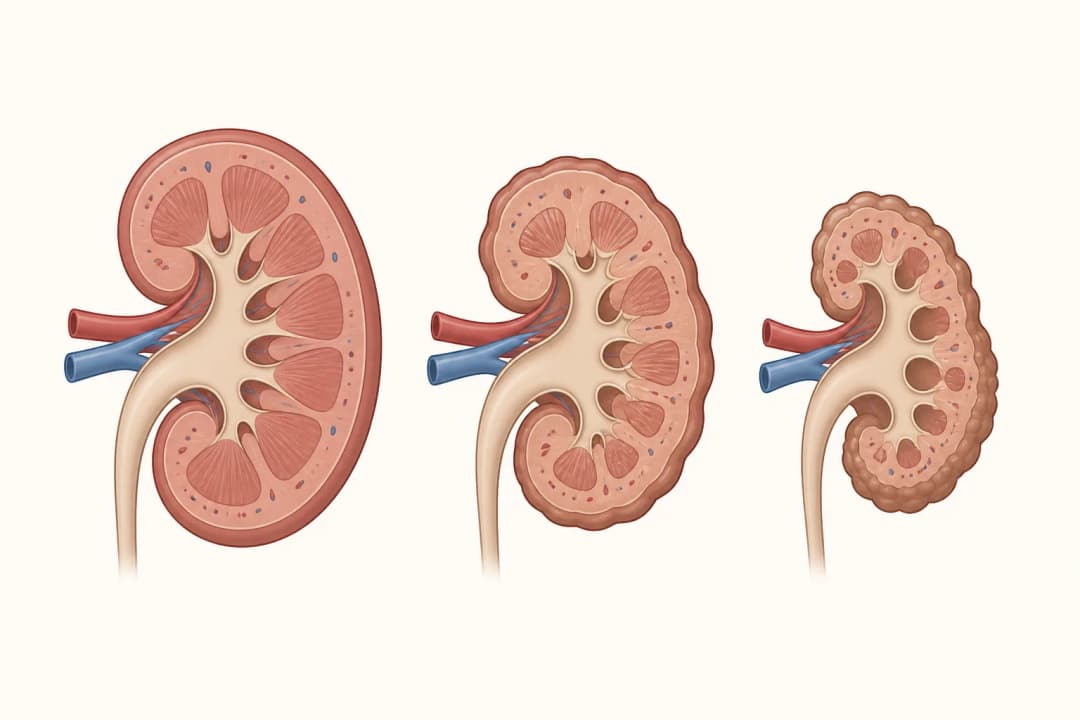
Diabetic kidney disease is kidney damage associated with diabetes, often found through urine and blood tests before noticeable symptoms develop.
This answers one question. It is not a diagnosis and does not replace an assessment by a licensed doctor.
At a glance
- Early stage
- Kidney damage may be present without noticeable symptoms, so routine testing matters.
- Key checks
- Urine protein, kidney blood tests, blood pressure, and glucose control are reviewed together.
How it affects the kidneys
High glucose can damage the small blood vessels that filter blood, while high blood pressure can add further strain. Early kidney changes may cause no obvious symptoms. Later, some people notice swelling, tiredness, changes in urination, itchy skin, nausea, or reduced appetite. These symptoms have many possible causes and do not confirm kidney disease. Testing usually looks for protein in urine and measures kidney filtering with a blood test.
Protecting kidney health
Attend urine and blood monitoring even when you feel well. Take prescribed glucose and blood-pressure medicines consistently, and ask before using anti-inflammatory painkillers or herbal supplements. Follow the eating, fluid, and salt advice suited to your kidney function rather than adopting a generic diet. Keep blood pressure and glucose records if requested, avoid smoking, and discuss activity that is safe for you. Your clinician may refer you to a kidney specialist if results change or disease is advanced.
When to seek care
Seek prompt medical advice for new swelling, much less urine, breathlessness, persistent vomiting, confusion, or rapidly worsening weakness. Urgent help is needed for severe breathlessness, chest pain, or sudden confusion. Report blood in urine, painful urination, or a sudden change in glucose control so another problem can be considered.
Questions for your doctor
What do my urine protein and kidney blood tests show? How often should they be repeated? Which painkillers and supplements should I avoid? Do my diabetes or blood-pressure medicines need review? What symptoms should prompt urgent contact?
Find care
General Clinics & Polyclinics in Abu Dhabi
That answer is general. If you want it applied to your own case, these are licensed general clinics & polyclinics listed in Abu Dhabi.
27 Ar Ruwwad St - Shakhbout City - MSH4 - Abu Dhabi - United Arab Emirates
Accepts: Daman, Thiqa, Cigna, MetLife +20 more
Al Ruwais, Al Dhafrah
Accepts: Daman, Thiqa, AXA, Cigna +16 more
Al Bahyah - Al Bahyah Old - Abu Dhabi - United Arab Emirates
Accepts: Daman, Thiqa, Cigna, Allianz Care +18 more
Abu Dhabi
Accepts: Daman, Thiqa, AXA, Cigna +27 more
Ordered by verification status and how complete each clinic's public record is, then alphabetically. This is a directory listing, not a ranking — Zavis does not rate or recommend providers.
A factual listing drawn from the DHA, DOH and MOHAP licence registers. It is not a referral, an endorsement, or advice that any of these providers is right for you.
Questions people ask
Can diabetic kidney disease be present without symptoms?
Yes. Early changes are often found through urine and blood tests rather than symptoms.
Should I change my diet on my own?
No. Fluid, salt, protein, and other advice should match your kidney function and be discussed with your care team.
Related
Related reading
Keep reading
Medical disclaimer. This page is general health information, not medical advice, and it cannot diagnose you. Always consult a licensed healthcare provider about your own symptoms and treatment. In an emergency in the UAE, call 998 for an ambulance.