
Cystoscopy and the TURP procedure
Short answer
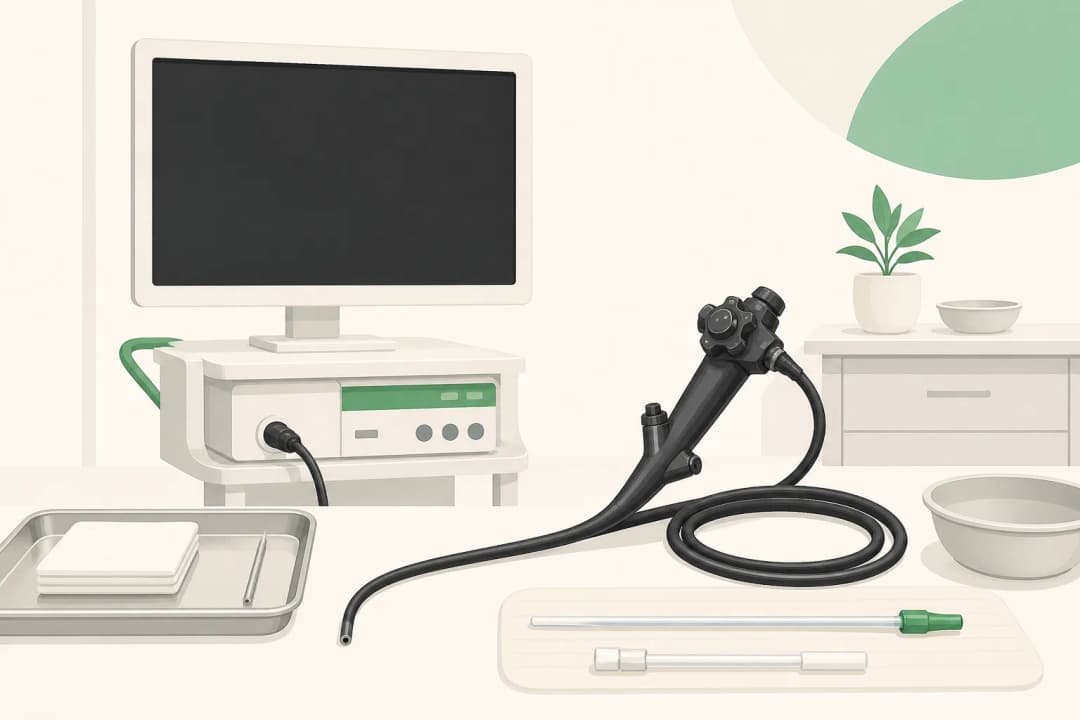
During TURP, a surgeon passes an operating cystoscope through the urethra to remove prostate tissue blocking urine flow.
This answers one question. It is not a diagnosis and does not replace an assessment by a licensed doctor.
At a glance
- Full name
- Transurethral resection of the prostate
- Access
- An operating cystoscope passes through the urethra
- Early recovery
- A urinary catheter may support drainage
The short answer
TURP means transurethral resection of the prostate. It is performed with anesthesia and does not require an external cut to reach the prostate.
What happens during TURP
The operating instrument provides a view through the urethra and allows obstructing prostate tissue to be removed in small pieces. The removed tissue may be sent to a laboratory for examination. TURP treats a blockage; the reason for the blockage and the aim of surgery should be explained before consent.
A urinary catheter is commonly left in place after the operation so urine can drain while the area heals. Bladder irrigation may run through the catheter to prevent blood and small clots from obstructing drainage.
Before and after the operation
Give the surgical team a current medicine list and specifically identify blood thinners, diabetes medicines and supplements. Follow their fasting instructions exactly, arrange transport if requested, and report burning urine, fever or other possible infection symptoms before admission.
During recovery, follow directions for catheter care, fluids, activity, lifting and prescribed medicines. Urgency, frequency, stinging and blood-tinged urine can occur while tissue heals, but the care team should tell you what pattern is expected and how follow-up will be arranged.
Warning signs after TURP
Get urgent medical advice for fever, chills, escalating pelvic pain, heavy bleeding, large clots or urine that stops draining. If a catheter is present, check that the tubing is not kinked, but do not pull it or attempt to flush it unless your clinical team has specifically taught you to do so.
Points to clarify before consent
Discuss why TURP is recommended, which anesthesia is suitable, what alternatives fit your diagnosis and how the operation could affect ejaculation, erections or continence. Ask when the catheter is expected to come out and which number to call if drainage stops at home.
Questions people ask
Is a TURP the same as a diagnostic cystoscopy?
No. Both use a scope through the urethra, but diagnostic cystoscopy mainly examines the urinary passage and bladder. TURP uses an operating instrument to remove prostate tissue.
Why might there be blood in the urine after TURP?
The treated prostate surface can bleed as it heals, so the urine may look pink or red. Heavy bleeding, large clots or loss of urine flow requires prompt assessment.
Related
Related reading
Keep reading
Cancer care in the UAE
Hospitals & Medical Centers in Abu Dhabi
Most UAE cancer care is delivered inside hospital services rather than by standalone oncology clinics, so these are licensed hospitals & medical centers listed in Abu Dhabi. Confirm the specific cancer service exists before you travel, and know that asking for a second opinion is routine.
Ahalia Hospital Musaffah Building - Musaffah - Musaffah Industrial - Abu Dhabi - United Arab Emirates
Accepts: Daman, Thiqa, AXA, Cigna +26 more
Al Ruwais Industrial City - Abu Dhabi - United Arab Emirates
Accepts: Daman, Thiqa, AXA, Cigna +30 more
Abu Dhabi, Abu Dhabi
Accepts: Daman, Thiqa, AXA, Cigna +30 more
Second opinions are routine in cancer care and asking for one does not affect your treatment. How to arrange a second opinion in the UAE.
Ordered by verification status and how complete each clinic's public record is, then alphabetically. This is a directory listing, not a ranking — Zavis does not rate or recommend providers.
A factual listing drawn from the DHA, DOH and MOHAP licence registers. It is not a referral, an endorsement, or advice that any of these providers is right for you.
Medical disclaimer. This page is general health information, not medical advice, and it cannot diagnose you. Always consult a licensed healthcare provider about your own symptoms and treatment. In an emergency in the UAE, call 998 for an ambulance.