
Cystoscopy to remove a ureteric stent
Short answer
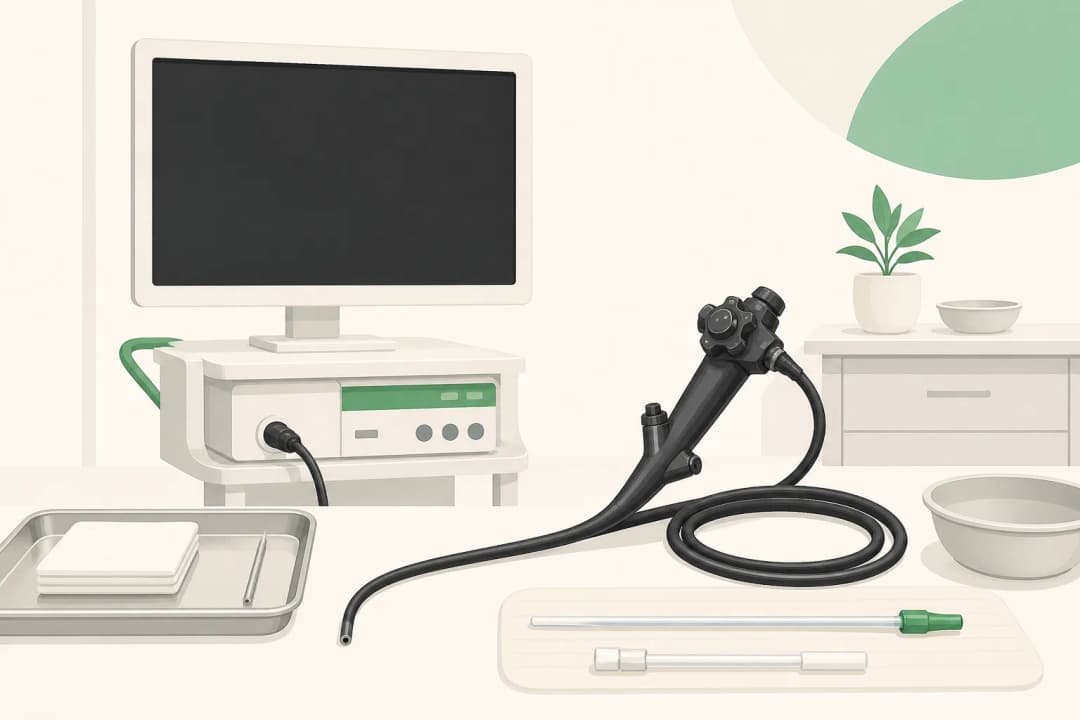
Cystoscopy can remove a ureteric stent by passing a small camera and grasping instrument through the urethra.
This answers one question. It is not a diagnosis and does not replace an assessment by a licensed doctor.
At a glance
- Route
- Through the urethra, without a skin incision
- Purpose
- To locate, grasp and remove the ureteric stent
- Afterward
- Temporary burning or urinary frequency may occur
The short answer
The clinician locates the end of the stent inside the bladder, grips it and gently withdraws it. The planned pain control and preparation depend on the type of cystoscope, your health and local practice.
How stent removal works
A ureteric stent is a soft tube that runs between a kidney and the bladder to keep urine draining. When it no longer needs to remain, a cystoscope gives the clinician a view of its bladder end without a skin incision.
You may notice pressure, an urge to pass urine or brief discomfort as the scope and stent move through the urinary passage. Mild burning, urinary frequency or a small amount of blood in the urine can occur for a short time afterward.
Preparing and recovering
Follow the clinic's instructions about eating, drinking and regular medicines because these vary with the planned anesthesia. Tell the team about blood-thinning medicines, medicine allergies, pregnancy possibility, urinary infection symptoms and any previous difficulty with urinary procedures.
After removal, use the prescribed pain relief and drink fluids as advised for your medical circumstances. Confirm whether you can drive, work or exercise that day, and whether follow-up imaging or urine tests are planned.
When to seek medical care
Contact the treating service promptly if pain is increasing rather than settling, you develop fever or chills, urine becomes cloudy or foul-smelling, bleeding is heavy or clots appear. Seek urgent care if you cannot pass urine, feel severely unwell, or have intense pain in the side or back with vomiting.
Useful questions for your clinician
Ask which anesthesia is planned, whether you need a urine test beforehand, how long urinary irritation may last in your situation, and who to call outside clinic hours. Also clarify why the stent can now come out and whether another stent could be needed.
Questions people ask
Will I need anesthesia for stent removal?
Pain control may involve local anesthetic gel or another form of anesthesia. The choice depends on the equipment, your health, expected difficulty and the service's approach.
Can I pass urine after the stent is removed?
Many people can pass urine afterward, although it may sting initially. Inability to urinate, worsening pain or a feeling of a painfully full bladder needs urgent assessment.
Related
Related reading
Keep reading
Cancer care in the UAE
Hospitals & Medical Centers in Abu Dhabi
Most UAE cancer care is delivered inside hospital services rather than by standalone oncology clinics, so these are licensed hospitals & medical centers listed in Abu Dhabi. Confirm the specific cancer service exists before you travel, and know that asking for a second opinion is routine.
Ahalia Hospital Musaffah Building - Musaffah - Musaffah Industrial - Abu Dhabi - United Arab Emirates
Accepts: Daman, Thiqa, AXA, Cigna +26 more
Al Ruwais Industrial City - Abu Dhabi - United Arab Emirates
Accepts: Daman, Thiqa, AXA, Cigna +30 more
Abu Dhabi, Abu Dhabi
Accepts: Daman, Thiqa, AXA, Cigna +30 more
Second opinions are routine in cancer care and asking for one does not affect your treatment. How to arrange a second opinion in the UAE.
Ordered by verification status and how complete each clinic's public record is, then alphabetically. This is a directory listing, not a ranking — Zavis does not rate or recommend providers.
A factual listing drawn from the DHA, DOH and MOHAP licence registers. It is not a referral, an endorsement, or advice that any of these providers is right for you.
Medical disclaimer. This page is general health information, not medical advice, and it cannot diagnose you. Always consult a licensed healthcare provider about your own symptoms and treatment. In an emergency in the UAE, call 998 for an ambulance.