
What should you know about cystoscopy purpose?
Short answer
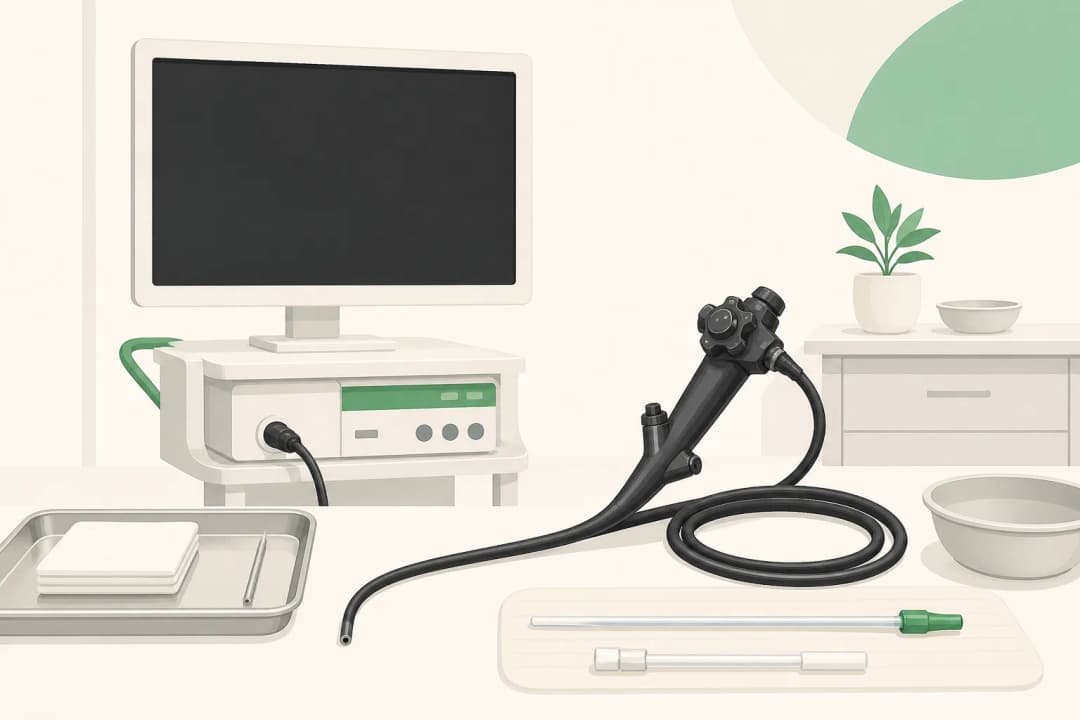
The purpose of cystoscopy is to examine the urethra and bladder directly for changes that other tests may not fully show.
This answers one question. It is not a diagnosis and does not replace an assessment by a licensed doctor.
At a glance
- Main purpose
- Direct inspection of the urethra and bladder lining.
- Tissue testing
- A suspicious-looking area may need biopsy before its cause can be established.
- Planning point
- Inspection, surveillance, biopsy, and treatment can require different preparation.
Why cystoscopy is used
The camera view can help identify inflammation, narrowing, stones, bleeding sites, or an abnormal area in the bladder lining. It may also support follow-up after treatment. When tissue diagnosis is needed, an instrument can pass through the cystoscope to collect a biopsy.
Diagnosis, monitoring, and treatment
The exact purpose should be stated in your appointment information or consent discussion. Diagnostic cystoscopy looks for an explanation for urinary symptoms or an imaging finding. Surveillance cystoscopy checks the bladder lining at planned intervals after a previous condition or treatment. Operative cystoscopy allows a clinician to biopsy, remove, or treat selected abnormalities using instruments passed through the scope.
Seeing an abnormal area does not by itself establish its cause. The appearance, urine tests, scans, and any biopsy report are considered together before a diagnosis or care plan is confirmed.
Clarify the goal of your appointment
Before attending, check whether the visit is for inspection alone or could include a biopsy or treatment. This affects preparation, anaesthesia, recovery, and whether you need transport. Bring a current medicine list and tell the team about urinary symptoms, infections, allergies, pregnancy, blood-thinning treatment, and previous urinary procedures.
Ask how cystoscopy complements tests you have already had. Knowing the clinical question makes it easier to understand what a normal view can rule out, what it cannot assess, and which result may require another investigation.
Symptoms that need attention
Tell the clinic before the procedure if you have fever, chills, new painful urination, or cloudy and foul-smelling urine, because infection may change the plan. After cystoscopy, obtain prompt advice for increasing pain, worsening bleeding, or persistent urinary difficulty. Inability to pass urine, heavy bleeding with clots, severe pain, or marked illness requires urgent assessment.
Useful questions about the purpose
You can ask: What specific question should this examination answer? Could you take a biopsy or perform treatment at the same visit? What would a normal examination mean for my symptoms? Which findings would lead to imaging, laboratory testing, another cystoscopy, or a treatment discussion? Also confirm who will explain the findings and when.
Questions people ask
Does having cystoscopy mean cancer is suspected?
No. Cystoscopy is used for several urinary concerns, including inflammation, narrowing, stones, bleeding, follow-up, and abnormal imaging. Your clinician can explain the specific reason for your test.
Can cystoscopy treat a problem as well as find it?
Sometimes. Instruments passed through the cystoscope can collect tissue or treat selected abnormalities, but the available procedure depends on the equipment, anaesthesia, and plan agreed in advance.
Related
Related reading
Keep reading
Cancer care in the UAE
Hospitals & Medical Centers in Abu Dhabi
Most UAE cancer care is delivered inside hospital services rather than by standalone oncology clinics, so these are licensed hospitals & medical centers listed in Abu Dhabi. Confirm the specific cancer service exists before you travel, and know that asking for a second opinion is routine.
Ahalia Hospital Musaffah Building - Musaffah - Musaffah Industrial - Abu Dhabi - United Arab Emirates
Accepts: Daman, Thiqa, AXA, Cigna +26 more
Al Ruwais Industrial City - Abu Dhabi - United Arab Emirates
Accepts: Daman, Thiqa, AXA, Cigna +30 more
Abu Dhabi, Abu Dhabi
Accepts: Daman, Thiqa, AXA, Cigna +30 more
Second opinions are routine in cancer care and asking for one does not affect your treatment. How to arrange a second opinion in the UAE.
Ordered by verification status and how complete each clinic's public record is, then alphabetically. This is a directory listing, not a ranking — Zavis does not rate or recommend providers.
A factual listing drawn from the DHA, DOH and MOHAP licence registers. It is not a referral, an endorsement, or advice that any of these providers is right for you.
Medical disclaimer. This page is general health information, not medical advice, and it cannot diagnose you. Always consult a licensed healthcare provider about your own symptoms and treatment. In an emergency in the UAE, call 998 for an ambulance.