
Cystoscopy with a left retrograde pyelogram
Short answer
This combined procedure uses cystoscopy and contrast imaging to examine the bladder and map the left ureter and kidney drainage system.
This answers one question. It is not a diagnosis and does not replace an assessment by a licensed doctor.
At a glance
- Area examined
- Bladder, left ureter and left kidney drainage system
- Imaging method
- Contrast is introduced through the bladder for X-ray imaging.
- Possible addition
- A ureteric stent may be placed when clinically needed.
What the combined procedure does
The word “left” identifies the urinary tract side being studied. “Retrograde” means contrast is introduced upward from the bladder into the ureter rather than given into a vein. X-ray images then outline the channel through which urine drains from the left kidney.
How the examination is performed
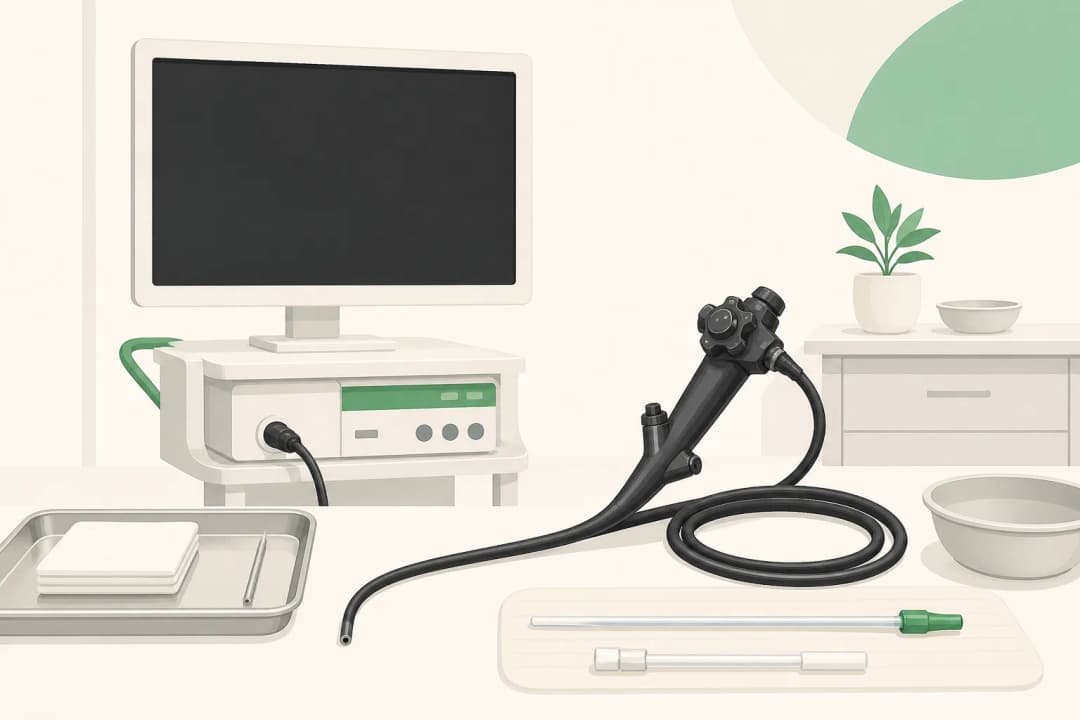
A clinician passes a cystoscope through the urethra to view the bladder and locate the left ureteric opening. A fine catheter is guided into that opening, contrast is introduced, and imaging records the outline of the ureter and collecting system. The images can reveal the position of a narrowing, blockage or filling abnormality without assuming what caused it.
Depending on the reason for the procedure, the team may also collect a sample, place a temporary ureteric stent or plan a separate treatment. Ask whether any additional step is intended because it can change the anaesthetic, recovery and follow-up.
Preparing and recovering
Follow the hospital’s fasting instructions and provide a current list of medicines, allergies and previous reactions to contrast or anaesthesia. Mention pregnancy or possible pregnancy before imaging. Only adjust anticoagulants or diabetes medicines according to an individual plan from the treating team.
After discharge, take medicines exactly as prescribed and follow any fluid guidance. Temporary urinary burning, urgency, mild bladder discomfort or lightly blood-stained urine may occur. If a stent was placed, you may also notice flank discomfort or urinary frequency; the team should tell you how and when it will be removed or reviewed.
Signs that need medical attention
Contact the urology service if pain escalates, urinary bleeding becomes heavier, clots develop, vomiting prevents fluids, or urinary symptoms persist beyond the expected recovery described at discharge. Report new flank pain, particularly if a stent is present.
Go for urgent assessment if you cannot urinate, have fever with shaking chills, develop severe pain in the side or lower abdomen, faint, or experience breathing difficulty or facial swelling. These symptoms warrant timely evaluation after urinary instrumentation or medication exposure.
Details to confirm beforehand
Ask what the clinician is looking for on the left side, which anaesthetic is planned, whether biopsy or stent placement is possible, and when results will be discussed. Confirm who will remove a stent, if used, and which number to call outside clinic hours.
Questions people ask
Is a retrograde pyelogram the same as cystoscopy?
No. Cystoscopy provides a direct view inside the urethra and bladder; the retrograde pyelogram adds contrast and X-ray imaging of a ureter and the kidney’s drainage passages.
Why does the procedure name specify the left side?
It tells the team which ureter and kidney drainage system are being imaged. Your consent discussion should confirm the side before the procedure.
Related
Related reading
Keep reading
Cancer care in the UAE
Hospitals & Medical Centers in Abu Dhabi
Most UAE cancer care is delivered inside hospital services rather than by standalone oncology clinics, so these are licensed hospitals & medical centers listed in Abu Dhabi. Confirm the specific cancer service exists before you travel, and know that asking for a second opinion is routine.
Ahalia Hospital Musaffah Building - Musaffah - Musaffah Industrial - Abu Dhabi - United Arab Emirates
Accepts: Daman, Thiqa, AXA, Cigna +26 more
Al Ruwais Industrial City - Abu Dhabi - United Arab Emirates
Accepts: Daman, Thiqa, AXA, Cigna +30 more
Abu Dhabi, Abu Dhabi
Accepts: Daman, Thiqa, AXA, Cigna +30 more
Second opinions are routine in cancer care and asking for one does not affect your treatment. How to arrange a second opinion in the UAE.
Ordered by verification status and how complete each clinic's public record is, then alphabetically. This is a directory listing, not a ranking — Zavis does not rate or recommend providers.
A factual listing drawn from the DHA, DOH and MOHAP licence registers. It is not a referral, an endorsement, or advice that any of these providers is right for you.
Medical disclaimer. This page is general health information, not medical advice, and it cannot diagnose you. Always consult a licensed healthcare provider about your own symptoms and treatment. In an emergency in the UAE, call 998 for an ambulance.