
Cystoscopy for interstitial cystitis
Short answer
Cystoscopy may help assess bladder pain and exclude other causes, but it does not alone confirm interstitial cystitis.
This answers one question. It is not a diagnosis and does not replace an assessment by a licensed doctor.
At a glance
- Condition name
- Interstitial cystitis is also called bladder pain syndrome
- Test limitation
- Cystoscopy alone does not establish the diagnosis
- What it can do
- Inspect the bladder and help exclude another visible cause
The short answer
Interstitial cystitis, also called bladder pain syndrome, is usually assessed from the pattern of pain, urgency and frequency, urine testing, and exclusion of other explanations. Looking inside the bladder may be useful when symptoms are unusual, blood is present, or the clinician needs to check for a distinct bladder lesion.
How findings are interpreted
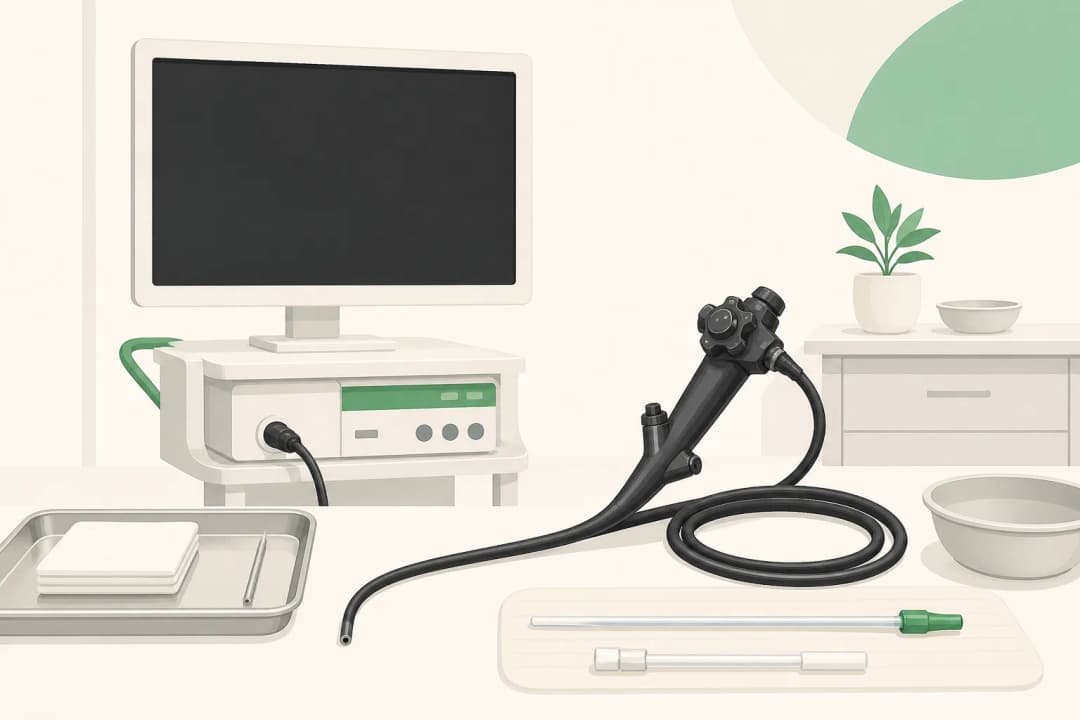
The clinician examines the urethra and bladder lining for stones, inflammation, an abnormal growth, or a specific ulcer-like lesion. Many people with bladder pain syndrome do not have a single defining appearance on routine cystoscopy, so a normal-looking bladder does not dismiss genuine symptoms.
Cystoscopy can be performed while awake with local anaesthetic gel or under deeper anaesthesia, depending on the purpose. Bladder stretching or tissue sampling is a separate decision and should be explained before consent.
Prepare around your symptom pattern
Bring a list of medicines and describe where pain occurs, whether filling or emptying changes it, and how urgency affects daily life. Mention visible blood, previous urinary infections, pelvic treatments, and any past difficulty with catheters or examinations.
After cystoscopy, temporary burning or urgency may overlap with existing bladder symptoms. Use the recovery plan supplied by the unit, note whether symptoms return toward their usual level, and take only pain relief that your clinician says is suitable for you.
Symptoms that need prompt attention
Get advice from the treating service if discomfort keeps intensifying, bleeding increases, or you develop fever, chills, cloudy foul-smelling urine, or new pain in the side or back. Urgent care is appropriate if you cannot urinate or become severely unwell.
Do not automatically label a sudden change as an interstitial cystitis flare. Infection, urinary retention, stones, and other causes may need a different response.
Clarify what the test is meant to answer
Ask which alternative conditions the clinician is checking for, whether any treatment is planned during the examination, and what a normal result would mean for your care. Confirm the anaesthetic approach, recovery arrangements, and whom to contact if your usual bladder symptoms flare afterward.
Questions people ask
Is cystoscopy required for everyone with suspected interstitial cystitis?
Not necessarily. The need depends on the symptoms, examination, urine results, previous assessments, and whether another bladder condition must be excluded.
Can cystoscopy make bladder symptoms flare?
Instrumentation can temporarily increase burning, urgency, or discomfort. Ask for a personalised recovery plan and report symptoms that are severe, worsening, or accompanied by infection signs.
What if the bladder looks normal?
A normal appearance does not invalidate bladder pain. The clinician interprets it with the symptom pattern and other tests, then discusses management based on the overall assessment.
Related
Related reading
Keep reading
Cancer care in the UAE
Hospitals & Medical Centers in Abu Dhabi
Most UAE cancer care is delivered inside hospital services rather than by standalone oncology clinics, so these are licensed hospitals & medical centers listed in Abu Dhabi. Confirm the specific cancer service exists before you travel, and know that asking for a second opinion is routine.
Ahalia Hospital Musaffah Building - Musaffah - Musaffah Industrial - Abu Dhabi - United Arab Emirates
Accepts: Daman, Thiqa, AXA, Cigna +26 more
Al Ruwais Industrial City - Abu Dhabi - United Arab Emirates
Accepts: Daman, Thiqa, AXA, Cigna +30 more
Abu Dhabi, Abu Dhabi
Accepts: Daman, Thiqa, AXA, Cigna +30 more
Second opinions are routine in cancer care and asking for one does not affect your treatment. How to arrange a second opinion in the UAE.
Ordered by verification status and how complete each clinic's public record is, then alphabetically. This is a directory listing, not a ranking — Zavis does not rate or recommend providers.
A factual listing drawn from the DHA, DOH and MOHAP licence registers. It is not a referral, an endorsement, or advice that any of these providers is right for you.
Medical disclaimer. This page is general health information, not medical advice, and it cannot diagnose you. Always consult a licensed healthcare provider about your own symptoms and treatment. In an emergency in the UAE, call 998 for an ambulance.