
What should you know about cystoscopy and urethral dilation?
Short answer
Cystoscopy lets a urologist inspect the urethra and bladder, while urethral dilation gently widens a narrowed part of the urethra.
This answers one question. It is not a diagnosis and does not replace an assessment by a licensed doctor.
At a glance
- Purpose
- Dilation opens a narrowed urethral segment; cystoscopy inspects the urinary passage and bladder.
- Aftercare
- A temporary catheter may be used to support drainage during early healing.
- Follow-up
- Monitoring matters because scar-related narrowing can return.
The short answer
The procedures may be combined when narrowing makes urination difficult or prevents the scope from passing comfortably. Dilation can improve the channel at that time, but the underlying scar tissue can narrow again and may require follow-up.
What happens during the procedure
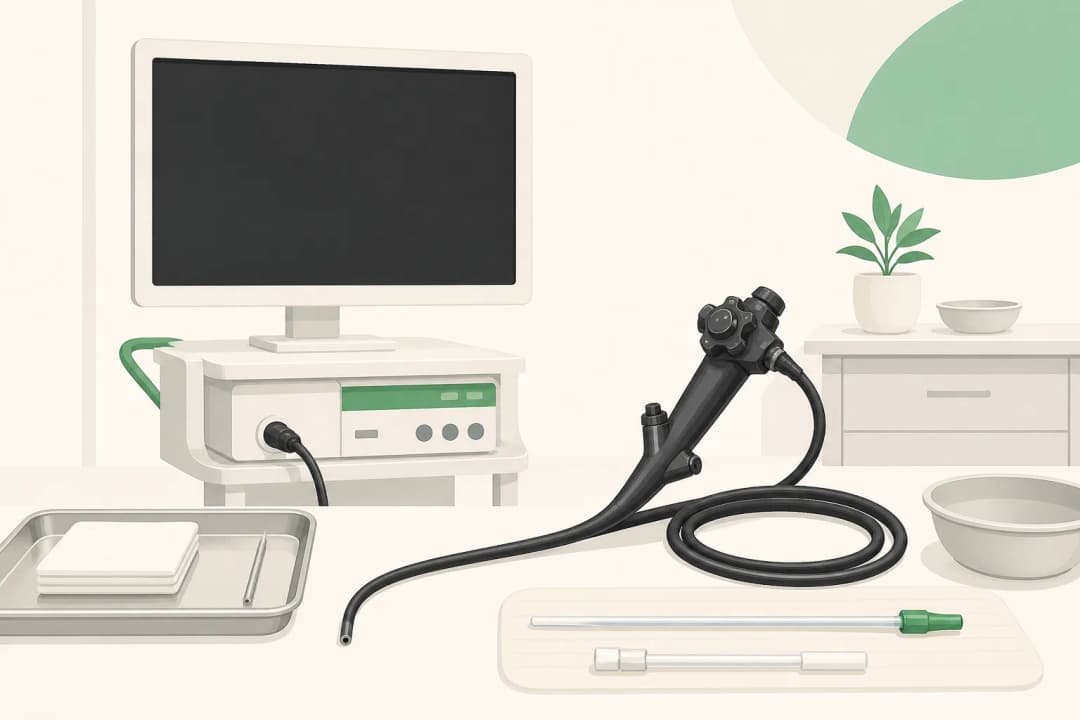
A narrow telescope is guided through the urinary opening. The urologist identifies the narrowed segment, then uses graduated dilators or a balloon to widen it in a controlled way. The cystoscope can then examine the urethral lining and bladder for stones, inflammation, bleeding sources, or abnormal tissue.
Local anaesthetic gel, sedation, or general anaesthesia may be used according to the extent of treatment and the patient's needs. A urinary catheter may remain temporarily so urine can drain while irritation and swelling ease.
What to do before and after
Tell the team about blood-thinning medicine, allergies, urinary infections, prior urethral procedures, and problems with anaesthesia. Follow the clinic's fasting directions when sedation is planned, and arrange a responsible adult for the journey home when instructed. Medicine changes should come directly from the treating clinician.
Short-lived burning, urgency, a slower stream, or a small amount of blood can follow instrumentation. Use prescribed or recommended pain relief, drink fluids as advised, and follow all catheter instructions. Attend follow-up even if urine flow improves, because the clinician may need to monitor healing and renewed narrowing.
Symptoms that need medical attention
Call the care team promptly if burning or pain is intensifying rather than settling, urine becomes cloudy or foul-smelling, bleeding increases, or a catheter stops draining. Fever, chills, or new lower abdominal swelling may signal infection or retained urine and should be assessed without delay.
Go to urgent care if you cannot pass urine after catheter removal, have severe lower abdominal pain, feel faint or acutely unwell, or see heavy bleeding and obstructing clots. These signs require examination rather than home observation.
Planning your follow-up
Clarify where the narrowing is, what may have caused it, whether a catheter will be used, and when it should come out. Ask how improvement will be checked, what recurrence might feel like, when normal activity can resume, and which contact number to use if urine flow weakens.
Questions people ask
Why might dilation be needed before cystoscopy?
A narrowed urethra may prevent comfortable passage of the cystoscope, so controlled widening can allow examination of the bladder.
Does dilation remove the scar tissue?
Dilation stretches the narrowed area rather than removing every part of the scar, which is why later monitoring may be recommended.
What if my urine stream weakens again?
Contact the urology team, particularly if the change progresses or is accompanied by pain, infection symptoms, or inability to urinate.
Related
Related reading
Keep reading
Cancer care in the UAE
Hospitals & Medical Centers in Abu Dhabi
Most UAE cancer care is delivered inside hospital services rather than by standalone oncology clinics, so these are licensed hospitals & medical centers listed in Abu Dhabi. Confirm the specific cancer service exists before you travel, and know that asking for a second opinion is routine.
Ahalia Hospital Musaffah Building - Musaffah - Musaffah Industrial - Abu Dhabi - United Arab Emirates
Accepts: Daman, Thiqa, AXA, Cigna +26 more
Al Ruwais Industrial City - Abu Dhabi - United Arab Emirates
Accepts: Daman, Thiqa, AXA, Cigna +30 more
Abu Dhabi, Abu Dhabi
Accepts: Daman, Thiqa, AXA, Cigna +30 more
Second opinions are routine in cancer care and asking for one does not affect your treatment. How to arrange a second opinion in the UAE.
Ordered by verification status and how complete each clinic's public record is, then alphabetically. This is a directory listing, not a ranking — Zavis does not rate or recommend providers.
A factual listing drawn from the DHA, DOH and MOHAP licence registers. It is not a referral, an endorsement, or advice that any of these providers is right for you.
Medical disclaimer. This page is general health information, not medical advice, and it cannot diagnose you. Always consult a licensed healthcare provider about your own symptoms and treatment. In an emergency in the UAE, call 998 for an ambulance.