
CUSA during liver resection
Short answer
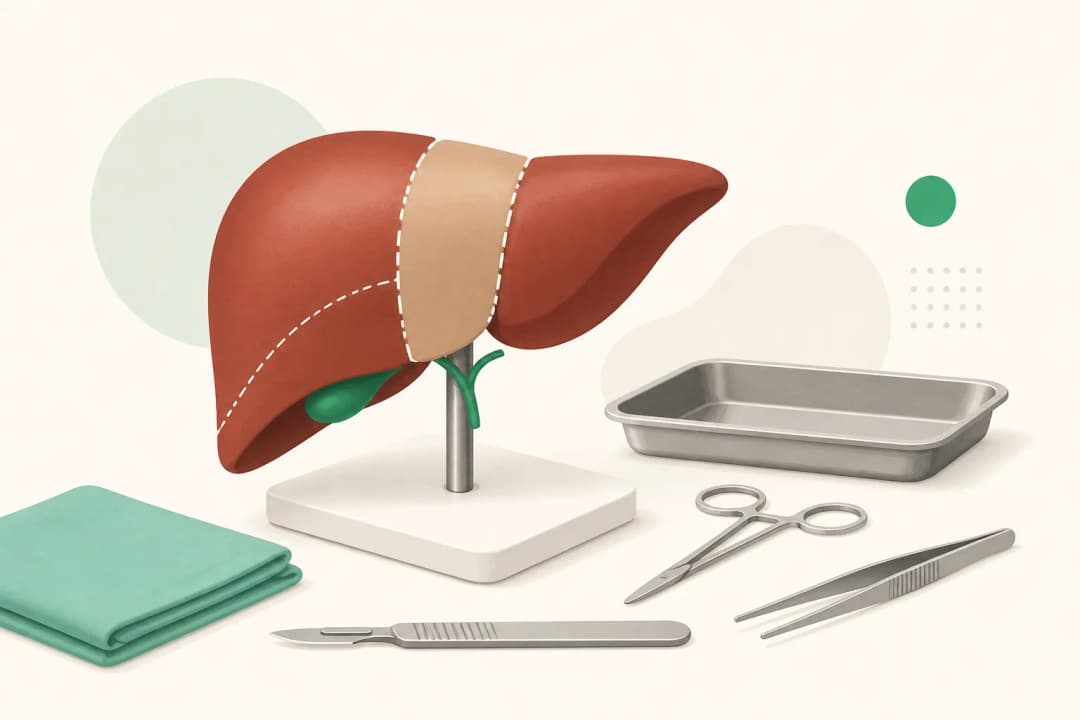
CUSA is an ultrasonic surgical device that can help a surgeon divide liver tissue while preserving visible vessels.
This answers one question. It is not a diagnosis and does not replace an assessment by a licensed doctor.
At a glance
- Device type
- Ultrasonic surgical aspirator.
- Main role
- Divides selected liver tissue and exposes structures.
- Decision maker
- The operating surgeon chooses the dissection method.
What does CUSA do in liver surgery?
Its tip vibrates to fragment selected soft tissue, while irrigation and suction clear the operative field. This lets the surgeon identify blood vessels and bile ducts as the liver is divided, then seal, clip or tie them as appropriate.
How it fits into a liver resection
Liver resection removes a planned portion of the liver containing a tumour or other diseased tissue. It may be considered for primary liver cancer or liver metastases, including some that originated in the bowel. CUSA is one option for the tissue-division stage; it is not a separate cancer treatment.
The surgeon may instead use or combine other dissection and vessel-sealing instruments. Tumour position, nearby vessels, liver condition, the planned open or minimally invasive approach, and the team's experience all influence the choice. Use of CUSA does not by itself determine whether a tumour can be completely removed.
Preparing for and recovering from surgery
Tell the surgical team about all medicines, supplements, allergies, previous abdominal operations and any heart, lung or liver problems. Follow individual instructions about eating, drinking and medicines before the operation; blood-thinning medicines require a plan rather than an unplanned stop.
After surgery, breathing exercises, pain control and gradual movement support recovery. The team will monitor the wound, liver function and signs of bleeding, infection or bile leakage. Follow the discharge advice on lifting, driving, wound care and returning to food and activity.
Symptoms to report after liver resection
Contact the surgical team urgently for fever, worsening abdominal pain, an increasingly swollen abdomen, repeated vomiting, new jaundice, dark urine, pale stools, wound redness, pus, or fluid leaking from the wound. These findings can signal a complication that needs assessment.
Call emergency services for severe breathlessness, chest pain, collapse, confusion or heavy bleeding. New calf swelling or pain also requires prompt medical advice because it can accompany a blood clot.
What to ask the liver surgeon
Ask which part of the liver is planned for removal, how close the tumour lies to major vessels or bile ducts, which instruments may be used, and whether the approach could change during surgery. Clarify the expected hospital recovery, pathology review, follow-up imaging and whom to contact after discharge.
Questions people ask
Does CUSA remove the whole liver tumour?
The planned liver resection removes the tumour-bearing tissue. CUSA may help with tissue division, but the full operation also involves controlling vessels and bile ducts and removing the surgical specimen.
Is CUSA the same as tumour ablation?
No. CUSA is a tool used during surgical dissection. Tumour ablation aims to destroy tumour tissue in place using energy or another local method.
Related
Related reading
Keep reading
Cancer care in the UAE
Hospitals & Medical Centers in Abu Dhabi
Most UAE cancer care is delivered inside hospital services rather than by standalone oncology clinics, so these are licensed hospitals & medical centers listed in Abu Dhabi. Confirm the specific cancer service exists before you travel, and know that asking for a second opinion is routine.
Ahalia Hospital Musaffah Building - Musaffah - Musaffah Industrial - Abu Dhabi - United Arab Emirates
Accepts: Daman, Thiqa, AXA, Cigna +26 more
Al Ruwais Industrial City - Abu Dhabi - United Arab Emirates
Accepts: Daman, Thiqa, AXA, Cigna +30 more
Abu Dhabi, Abu Dhabi
Accepts: Daman, Thiqa, AXA, Cigna +30 more
Second opinions are routine in cancer care and asking for one does not affect your treatment. How to arrange a second opinion in the UAE.
Ordered by verification status and how complete each clinic's public record is, then alphabetically. This is a directory listing, not a ranking — Zavis does not rate or recommend providers.
A factual listing drawn from the DHA, DOH and MOHAP licence registers. It is not a referral, an endorsement, or advice that any of these providers is right for you.
Medical disclaimer. This page is general health information, not medical advice, and it cannot diagnose you. Always consult a licensed healthcare provider about your own symptoms and treatment. In an emergency in the UAE, call 998 for an ambulance.