
Croup and asthma treatment: what to know
Short answer
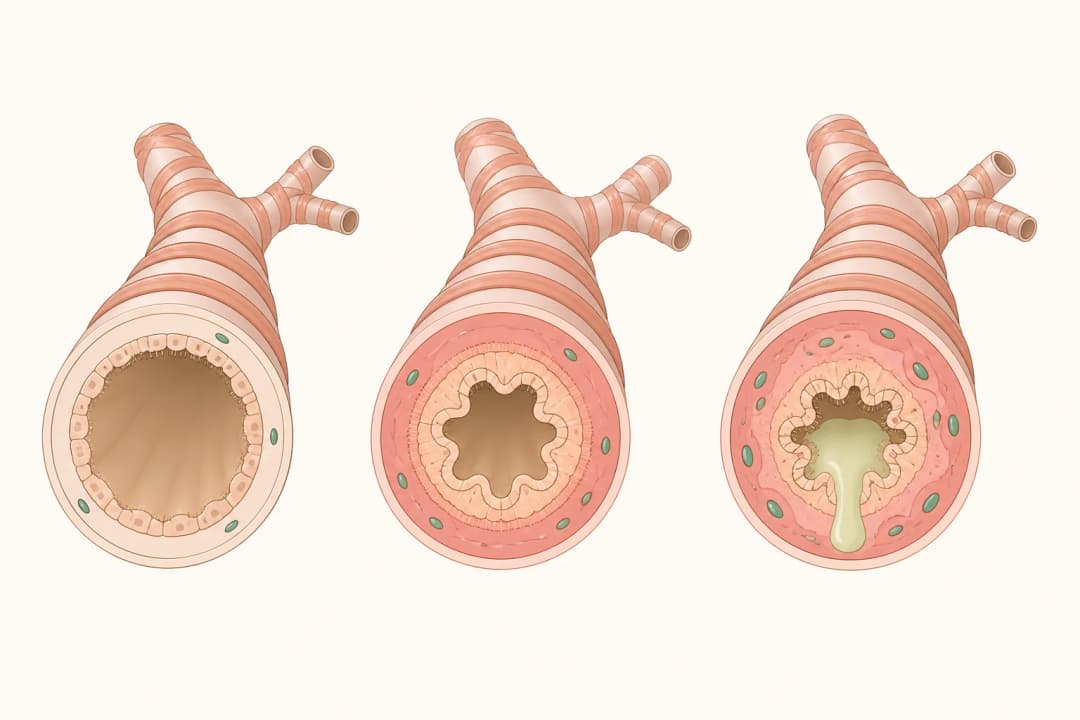
Croup and asthma affect different parts of the airway, so treatment depends on the breathing pattern, age, cause, and severity.
This answers one question. It is not a diagnosis and does not replace an assessment by a licensed doctor.
At a glance
- Croup pattern
- Upper-airway swelling with barking cough or hoarseness
- Asthma pattern
- Lower-airway narrowing with wheeze, cough, or chest tightness
- Urgency
- Breathing difficulty needs immediate assessment
How they differ
Croup usually involves swelling around the upper airway and may cause a barking cough, hoarse voice, or a harsh sound when breathing in. Asthma involves sensitive, narrowed lower airways and commonly causes cough, wheezing, chest tightness, or breathlessness. A child can have symptoms that overlap, so the sound or label alone should not determine treatment.
Allergic rhinitis, house dust mite allergy, infections, smoke, and other triggers may worsen airway symptoms. A chronic cough also needs its own assessment. Clinicians consider the person's age, breathing effort, oxygen level when available, previous episodes, and response to prescribed treatment.
Treatment and support
For croup-like symptoms, keep the child calm and upright and follow the clinician's plan. Do not use steam or give unprescribed medicines. Asthma treatment may include a prescribed reliever inhaler and, for some people, regular preventer treatment. Use inhalers with the recommended technique and spacer if supplied.
A nebuliser treatment may be used in a clinic or emergency setting when a clinician considers it appropriate; it is not automatically needed for every cough or wheeze. Keep a written action plan if asthma has been diagnosed, and reduce known triggers such as smoke or indoor allergens where practical.
When to seek urgent care
Call emergency services for severe breathing difficulty, blue or grey lips, pauses in breathing, exhaustion, confusion, or inability to speak, drink, or cry normally. Urgent assessment is also needed when a prescribed reliever is not helping as directed, breathing is rapidly worsening, or noisy breathing continues while resting.
Questions for your doctor
Which airway pattern does this episode suggest? What is the exact inhaler or medicine plan, and how should it be given? When would a Nebuliser Treatment be considered? Which triggers should we avoid, and what signs mean we should seek emergency help?
Find care
General Clinics & Polyclinics in Abu Dhabi
That answer is general. If you want it applied to your own case, these are licensed general clinics & polyclinics listed in Abu Dhabi.
27 Ar Ruwwad St - Shakhbout City - MSH4 - Abu Dhabi - United Arab Emirates
Accepts: Daman, Thiqa, Cigna, MetLife +20 more
Al Ruwais, Al Dhafrah
Accepts: Daman, Thiqa, AXA, Cigna +16 more
Al Bahyah - Al Bahyah Old - Abu Dhabi - United Arab Emirates
Accepts: Daman, Thiqa, Cigna, Allianz Care +18 more
Abu Dhabi
Accepts: Daman, Thiqa, AXA, Cigna +27 more
Ordered by verification status and how complete each clinic's public record is, then alphabetically. This is a directory listing, not a ranking — Zavis does not rate or recommend providers.
A factual listing drawn from the DHA, DOH and MOHAP licence registers. It is not a referral, an endorsement, or advice that any of these providers is right for you.
Questions people ask
Can asthma cause a croup-like cough?
Asthma commonly causes cough and wheezing, but a barking cough or noisy inhalation may reflect upper-airway irritation. A clinician should assess breathing symptoms rather than relying on sound alone.
Is a nebuliser always needed for asthma?
No. A nebuliser is used when a clinician judges it appropriate. Many people use prescribed inhalers with the correct technique instead.
Related
Related reading
Keep reading
Medical disclaimer. This page is general health information, not medical advice, and it cannot diagnose you. Always consult a licensed healthcare provider about your own symptoms and treatment. In an emergency in the UAE, call 998 for an ambulance.