
What should you know about CO2 Fraxel laser treatment?
Short answer
CO2 Fraxel laser treatment usually refers to fractional resurfacing, but the exact device and depth must be confirmed because Fraxel and CO2 can describe different technologies.
This answers one question. It is not a diagnosis and does not replace an assessment by a licensed doctor.
At a glance
- Terminology
- Fraxel and CO2 identify different aspects of laser treatment
- Fractional pattern
- Separated microscopic columns with surrounding untreated skin
- Decision point
- Confirm the exact device and depth before treatment
Understanding the terminology
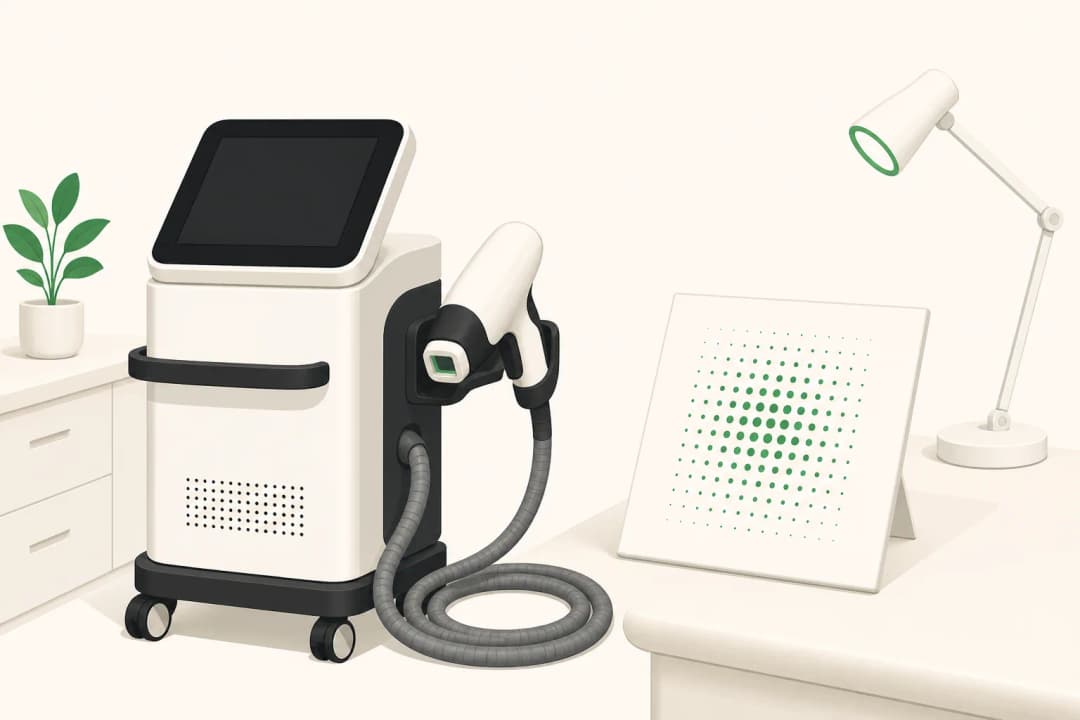
Fraxel is commonly used for fractional treatment, while CO2 identifies a carbon dioxide laser. They are not interchangeable labels for every device. Fractional delivery treats separated microscopic columns, leaving surrounding skin untreated; a CO2 fractional plan can be more ablative than a non-ablative fractional plan. The clinician should explain the device, wavelength, treatment depth, and intended concern in plain language.
Possible goals include selected fine lines, sun-damaged texture, and some acne-scar changes. It will not address every wrinkle, pigment concern, or scar, and early redness or swelling can obscure the eventual change. Treatment selection depends on the skin examination, medical history, and tolerance for recovery.
Planning the treatment
Before booking, discuss tanning, active rashes, infection, cold sores, medicines, previous procedures, and a history of prolonged pigment change or raised scars. Ask whether a gentler option such as microneedling or another laser approach fits the concern. Prepare for clinician-directed cleansing and moisturising after treatment, and avoid picking, friction, heat, and direct sunlight while the barrier heals.
Clarify whether the plan is intended for crow's feet, sun-damaged skin, acne scars, or another target. Different concerns may need different settings or staged care. Do not assume that a branded term tells you how deep the laser will act.
When to seek care
Report increasing pain, spreading redness, worsening swelling, pus, foul drainage, blisters, fever, or a delayed reaction to the treating clinic. Seek urgent care for eye pain, vision change, severe swelling, or breathing difficulty. A clinician should review new or deepening pigment changes and any area that is not healing as expected.
Questions for your doctor
Ask for the exact device name, whether it is ablative or non-ablative, the treatment depth, the reason it suits your concern, and the expected recovery pattern. Ask about alternatives, aftercare, sun protection, and what would happen if a scar or pigment change needs further treatment.
Find care
General Clinics & Polyclinics in Abu Dhabi
That answer is general. If you want it applied to your own case, these are licensed general clinics & polyclinics listed in Abu Dhabi.
27 Ar Ruwwad St - Shakhbout City - MSH4 - Abu Dhabi - United Arab Emirates
Accepts: Daman, Thiqa, Cigna, MetLife +20 more
Al Ruwais, Al Dhafrah
Accepts: Daman, Thiqa, AXA, Cigna +16 more
Al Bahyah - Al Bahyah Old - Abu Dhabi - United Arab Emirates
Accepts: Daman, Thiqa, Cigna, Allianz Care +18 more
Abu Dhabi
Accepts: Daman, Thiqa, AXA, Cigna +27 more
Ordered by verification status and how complete each clinic's public record is, then alphabetically. This is a directory listing, not a ranking — Zavis does not rate or recommend providers.
A factual listing drawn from the DHA, DOH and MOHAP licence registers. It is not a referral, an endorsement, or advice that any of these providers is right for you.
Questions people ask
Is every Fraxel treatment a CO2 laser treatment?
No. Fraxel is a fractional treatment term, while CO2 describes a carbon dioxide laser source. The clinician should identify the actual device and settings.
Can fractional laser help crow's feet?
It may be considered for selected fine lines after assessment, but treatment cannot correct every cause of lines around the eyes and requires careful eye-area planning.
Related
Related reading
Keep reading
Medical disclaimer. This page is general health information, not medical advice, and it cannot diagnose you. Always consult a licensed healthcare provider about your own symptoms and treatment. In an emergency in the UAE, call 998 for an ambulance.