
CIS and cystoscopy: what the test can show
Short answer
Cystoscopy helps a urologist inspect the bladder for carcinoma in situ, but tissue biopsy is needed to confirm the diagnosis.
This answers one question. It is not a diagnosis and does not replace an assessment by a licensed doctor.
At a glance
- CIS meaning
- A flat, high-grade change in the bladder lining
- Purpose of cystoscopy
- Direct inspection of the urethra and bladder lining
- Confirmation
- A tissue sample is examined by a pathologist
The short answer
In this context, CIS refers to carcinoma in situ of the bladder: a flat, high-grade change confined to the bladder lining. Unlike a raised bladder growth, it may appear as a reddened or abnormal patch and can be difficult to distinguish by appearance alone.
What the findings mean
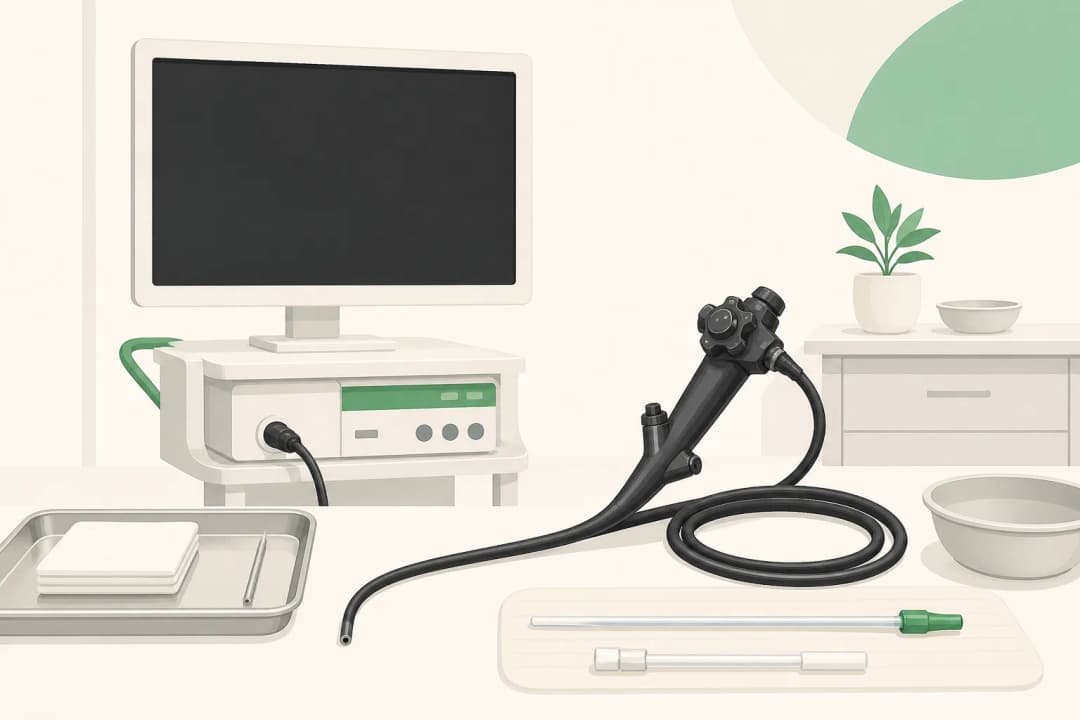
During cystoscopy, a thin viewing instrument passes through the urethra so the clinician can examine the bladder lining. A suspicious flat area can guide where samples are taken, yet a visual finding is not the final diagnosis. A pathologist examines the removed tissue to identify the cell changes present.
The interpretation may also use urine test results, earlier bladder findings, and whether enhanced imaging was used. A normal-looking examination does not automatically resolve every concern if symptoms, urine cytology, or prior results remain abnormal; the urology team decides whether further sampling or follow-up is appropriate.
What to do before and after cystoscopy
Before the appointment, provide an up-to-date medication list and mention blood-thinning medicines, allergies, a possible urinary infection, or previous difficulty with urinary procedures. Follow the clinic's instructions about eating, drinking, medicines, transport, and whether the examination will include biopsy or anaesthesia.
Afterwards, mild burning with urination, urinary urgency, or a small amount of blood can occur for a short time. Use the discharge instructions for fluids, activity, and prescribed medicines. Confirm how biopsy results will be delivered and which clinician will explain whether monitoring or bladder-directed treatment is recommended.
When to seek medical care
Contact the treating team promptly if bleeding is increasing, clots are appearing, burning is worsening rather than settling, or urinary symptoms are accompanied by fever or chills. Seek urgent care if you cannot pass urine, have severe lower abdominal pain, feel faint, or develop heavy bleeding. These warnings relate to the procedure and need assessment regardless of what the bladder finding proves to be.
Questions for your urologist
Ask whether the examination is flexible or rigid, whether a biopsy is planned, and what pain relief or anaesthesia will be used. It is also useful to ask what the visible areas looked like, whether urine cytology or additional sampling is needed, when pathology should be available, and who to contact if recovery symptoms worsen.
Questions people ask
Can cystoscopy alone diagnose bladder CIS?
Cystoscopy can reveal an area that looks suspicious and helps direct sampling. Confirmation depends on examination of tissue by a pathologist, often considered alongside urine cytology and clinical history.
Can CIS be missed on a standard cystoscopy?
CIS can be subtle because it grows flat along the lining rather than forming an obvious raised mass. If concern remains despite an inconclusive view, the urologist may consider targeted or additional sampling and other imaging methods.
Is blood in the urine expected after cystoscopy?
A small amount can occur briefly, particularly if tissue was taken. Increasing bleeding, clots, inability to urinate, fever, or severe pain needs prompt medical advice.
Related
Related reading
Keep reading
Cancer care in the UAE
Hospitals & Medical Centers in Abu Dhabi
Most UAE cancer care is delivered inside hospital services rather than by standalone oncology clinics, so these are licensed hospitals & medical centers listed in Abu Dhabi. Confirm the specific cancer service exists before you travel, and know that asking for a second opinion is routine.
Ahalia Hospital Musaffah Building - Musaffah - Musaffah Industrial - Abu Dhabi - United Arab Emirates
Accepts: Daman, Thiqa, AXA, Cigna +26 more
Al Ruwais Industrial City - Abu Dhabi - United Arab Emirates
Accepts: Daman, Thiqa, AXA, Cigna +30 more
Abu Dhabi, Abu Dhabi
Accepts: Daman, Thiqa, AXA, Cigna +30 more
Second opinions are routine in cancer care and asking for one does not affect your treatment. How to arrange a second opinion in the UAE.
Ordered by verification status and how complete each clinic's public record is, then alphabetically. This is a directory listing, not a ranking — Zavis does not rate or recommend providers.
A factual listing drawn from the DHA, DOH and MOHAP licence registers. It is not a referral, an endorsement, or advice that any of these providers is right for you.
Medical disclaimer. This page is general health information, not medical advice, and it cannot diagnose you. Always consult a licensed healthcare provider about your own symptoms and treatment. In an emergency in the UAE, call 998 for an ambulance.