
Chronic kidney disease secondary to hypertensive nephrosclerosis
Short answer
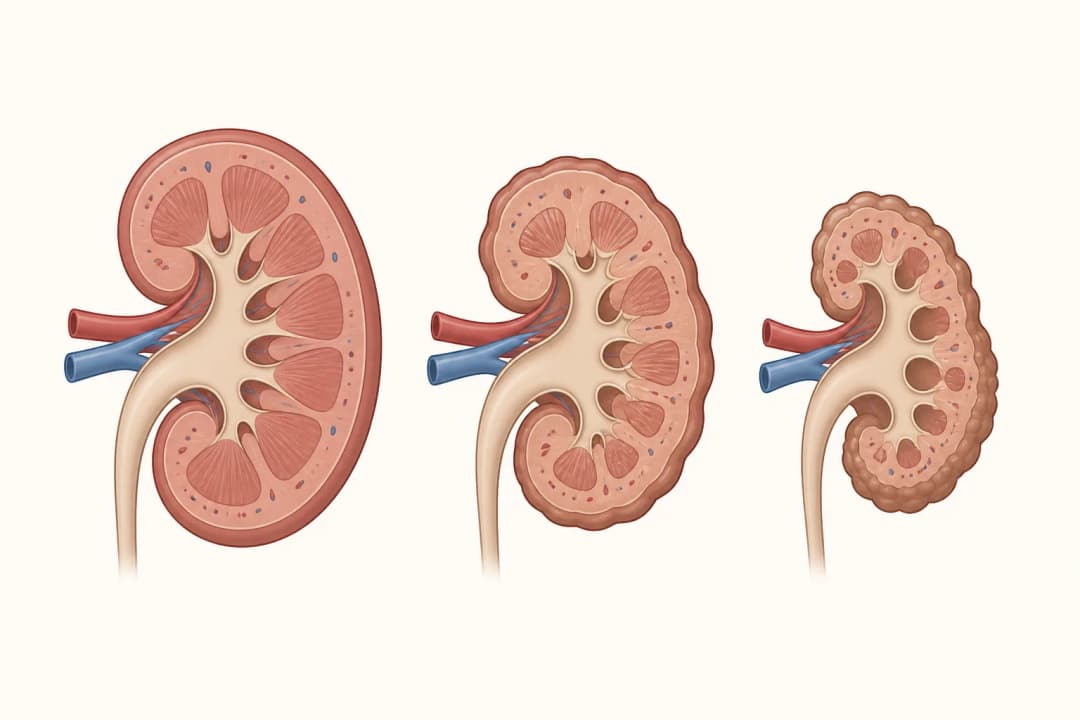
Chronic kidney disease secondary to hypertensive nephrosclerosis means long-standing high blood pressure has damaged small kidney blood vessels and reduced filtration.
This answers one question. It is not a diagnosis and does not replace an assessment by a licensed doctor.
At a glance
- Underlying process
- Damage to small kidney blood vessels from long-term high pressure
- Key monitoring
- Blood pressure, kidney filtration, and urine albumin or protein
- Medicine safety
- Check new medicines and supplements with a clinician
The connection between pressure and kidney damage
The kidneys depend on a dense network of small blood vessels to deliver and filter blood. Persistently raised pressure can thicken and narrow these vessels, reducing efficient blood flow and gradually injuring kidney tissue. This pattern is called hypertensive nephrosclerosis.
Many people do not feel high blood pressure or early kidney damage. Clinicians look at blood pressure history, creatinine and estimated filtration, urine albumin or protein, and other possible causes. Swelling, tiredness, or changes in urine can occur as kidney function changes, but each symptom has other possible explanations.
Protecting kidney function day by day
Measure blood pressure as advised and take prescribed treatment consistently. Keep appointments for kidney blood and urine checks, and discuss home readings rather than changing doses yourself. Tell every clinician that you have kidney disease before starting a new medicine, especially regular pain relief or supplements.
Food, salt, activity, weight, smoking, and blood sugar may all be discussed according to your circumstances. Managing Hypertension is central, while Type 2 Diabetes can add another source of kidney strain. Your plan should be individualised to your readings and other health needs.
When to get urgent advice
Arrange prompt advice if blood pressure readings are repeatedly much higher than your agreed range, or if you develop new swelling, reduced urine, severe headache, visual change, or breathlessness. Call emergency services for chest pain, severe breathing difficulty, confusion, fainting, or collapse.
What to clarify at review
Ask what blood pressure range is appropriate for you, how often kidney function and urine albumin should be checked, and whether your medicines protect kidney filtration. Ask how to handle illness, missed doses, pain relief, and home readings, and which symptoms require same-day contact.
Find care
General Clinics & Polyclinics in Abu Dhabi
That answer is general. If you want it applied to your own case, these are licensed general clinics & polyclinics listed in Abu Dhabi.
27 Ar Ruwwad St - Shakhbout City - MSH4 - Abu Dhabi - United Arab Emirates
Accepts: Daman, Thiqa, Cigna, MetLife +20 more
Al Ruwais, Al Dhafrah
Accepts: Daman, Thiqa, AXA, Cigna +16 more
Al Bahyah - Al Bahyah Old - Abu Dhabi - United Arab Emirates
Accepts: Daman, Thiqa, Cigna, Allianz Care +18 more
Abu Dhabi
Accepts: Daman, Thiqa, AXA, Cigna +27 more
Ordered by verification status and how complete each clinic's public record is, then alphabetically. This is a directory listing, not a ranking — Zavis does not rate or recommend providers.
A factual listing drawn from the DHA, DOH and MOHAP licence registers. It is not a referral, an endorsement, or advice that any of these providers is right for you.
Questions people ask
Can high blood pressure damage kidneys without symptoms?
Yes. Kidney injury and raised blood pressure can both be present without a noticeable change in how you feel.
Should I change my blood pressure dose after one high reading?
No. Record the reading and contact your care team for advice unless emergency symptoms are present.
Related
Related reading
Keep reading
Medical disclaimer. This page is general health information, not medical advice, and it cannot diagnose you. Always consult a licensed healthcare provider about your own symptoms and treatment. In an emergency in the UAE, call 998 for an ambulance.