
What should you know about central hepatectomy?
Short answer
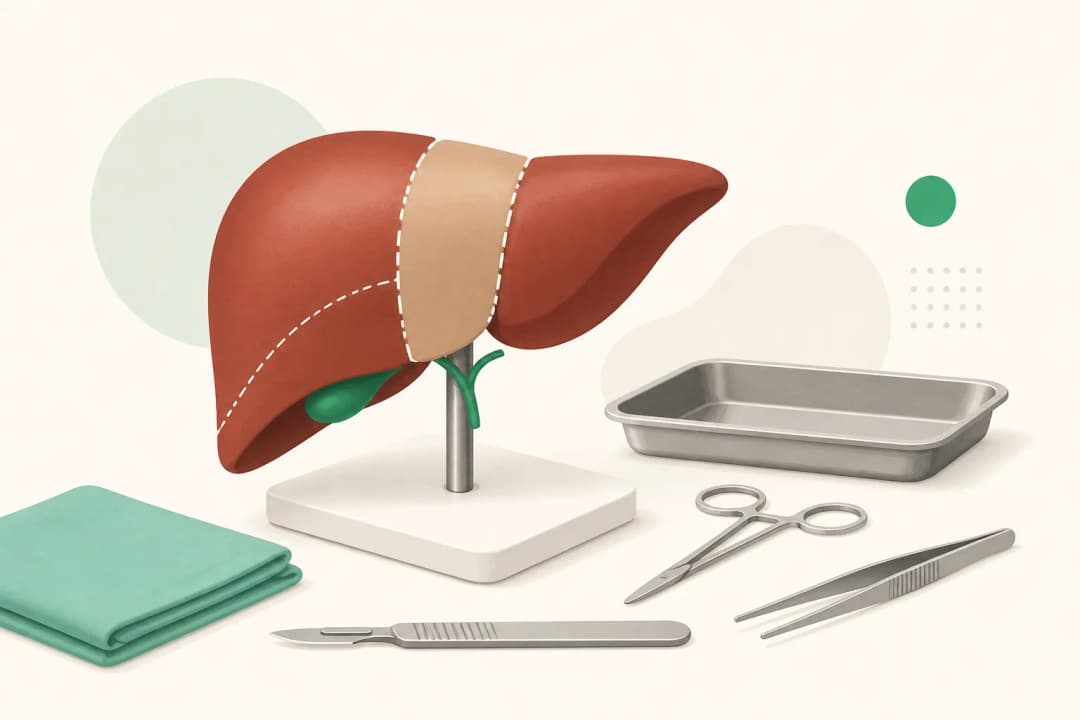
Central hepatectomy removes diseased tissue from the liver's middle while preserving functioning liver on both sides.
This answers one question. It is not a diagnosis and does not replace an assessment by a licensed doctor.
At a glance
- Procedure
- A tissue-preserving form of liver resection
- Location
- The central portion of the liver
- Planning focus
- Tumour clearance and function of the remaining liver
Direct answer
It is a type of liver resection chosen for selected centrally located tumours. The operation is technically demanding because surgeons work near major blood vessels and bile ducts, but its tissue-preserving design may be useful when removing an entire side of the liver is undesirable.
How surgeons assess the operation
Detailed scans show the tumour's relationship to the right and left blood supply, hepatic veins and bile drainage. The team estimates whether the remaining liver portions will have adequate inflow, outflow and drainage after the central tissue is removed.
Central hepatectomy may be considered for a primary liver tumour or a tumour that has spread to the liver, including selected liver metastases from bowel cancer. Suitability depends on location, number of lesions, liver condition, other illness and whether a clear surgical margin appears achievable.
Before and after surgery
Before surgery, tell the team about blood-thinning medicines, supplements, previous abdominal operations and any liver disease. Follow the hospital's instructions on eating, drinking and medicine adjustments. Breathing exercises and early supported walking commonly form part of recovery.
After discharge, protect the wound, increase activity gradually and use pain relief as prescribed. Keep follow-up appointments for wound review, liver blood tests and the final pathology discussion. The pathology report clarifies the tumour type and surgical margins and helps shape any further care.
Problems that need prompt help
Contact the surgical team urgently for fever, worsening abdominal pain or swelling, increasing wound redness, pus, yellow skin or eyes, dark urine, persistent vomiting, breathlessness or new confusion. Sudden chest pain, collapse, coughing blood or severe breathing difficulty requires emergency care.
Fluid leaking from a wound or drain, fresh bleeding, or a drain that suddenly changes or stops should be reported using the hospital's surgical contact pathway.
Points to clarify with the surgeon
Which liver segments will be removed, how much healthy liver will remain, and are nearby vessels or ducts involved? Ask whether ablation might be combined with resection, how the operation could affect bile drainage and what support will be needed at home.
Questions people ask
Is central hepatectomy a whole-liver removal?
No. It removes selected central liver tissue and leaves functioning liver tissue on the right and left.
Why choose a central resection?
For a suitably placed tumour, it can preserve more liver tissue than removing an entire right or left side, although anatomy and tumour clearance govern the choice.
Will the liver regrow after surgery?
The remaining liver can enlarge and adapt after resection, but recovery depends on its underlying health, the extent of surgery and any complications.
Related
Related reading
Keep reading
Cancer care in the UAE
Hospitals & Medical Centers in Abu Dhabi
Most UAE cancer care is delivered inside hospital services rather than by standalone oncology clinics, so these are licensed hospitals & medical centers listed in Abu Dhabi. Confirm the specific cancer service exists before you travel, and know that asking for a second opinion is routine.
Ahalia Hospital Musaffah Building - Musaffah - Musaffah Industrial - Abu Dhabi - United Arab Emirates
Accepts: Daman, Thiqa, AXA, Cigna +26 more
Al Ruwais Industrial City - Abu Dhabi - United Arab Emirates
Accepts: Daman, Thiqa, AXA, Cigna +30 more
Abu Dhabi, Abu Dhabi
Accepts: Daman, Thiqa, AXA, Cigna +30 more
Second opinions are routine in cancer care and asking for one does not affect your treatment. How to arrange a second opinion in the UAE.
Ordered by verification status and how complete each clinic's public record is, then alphabetically. This is a directory listing, not a ranking — Zavis does not rate or recommend providers.
A factual listing drawn from the DHA, DOH and MOHAP licence registers. It is not a referral, an endorsement, or advice that any of these providers is right for you.
Medical disclaimer. This page is general health information, not medical advice, and it cannot diagnose you. Always consult a licensed healthcare provider about your own symptoms and treatment. In an emergency in the UAE, call 998 for an ambulance.