
What causes heavy periods?
Short answer
Heavy periods may be caused by ovulation changes, growths or changes within the uterus, some medicines, or disorders affecting blood clotting.
This answers one question. It is not a diagnosis and does not replace an assessment by a licensed doctor.
At a glance
- Pattern clues
- Cycle timing, clots, flooding, pain and bleeding outside periods
- Health effect
- Heavy periods can reduce iron stores and cause anaemia symptoms
- Assessment
- Tests are chosen according to symptoms, history and pregnancy possibility
The main reasons periods become heavy
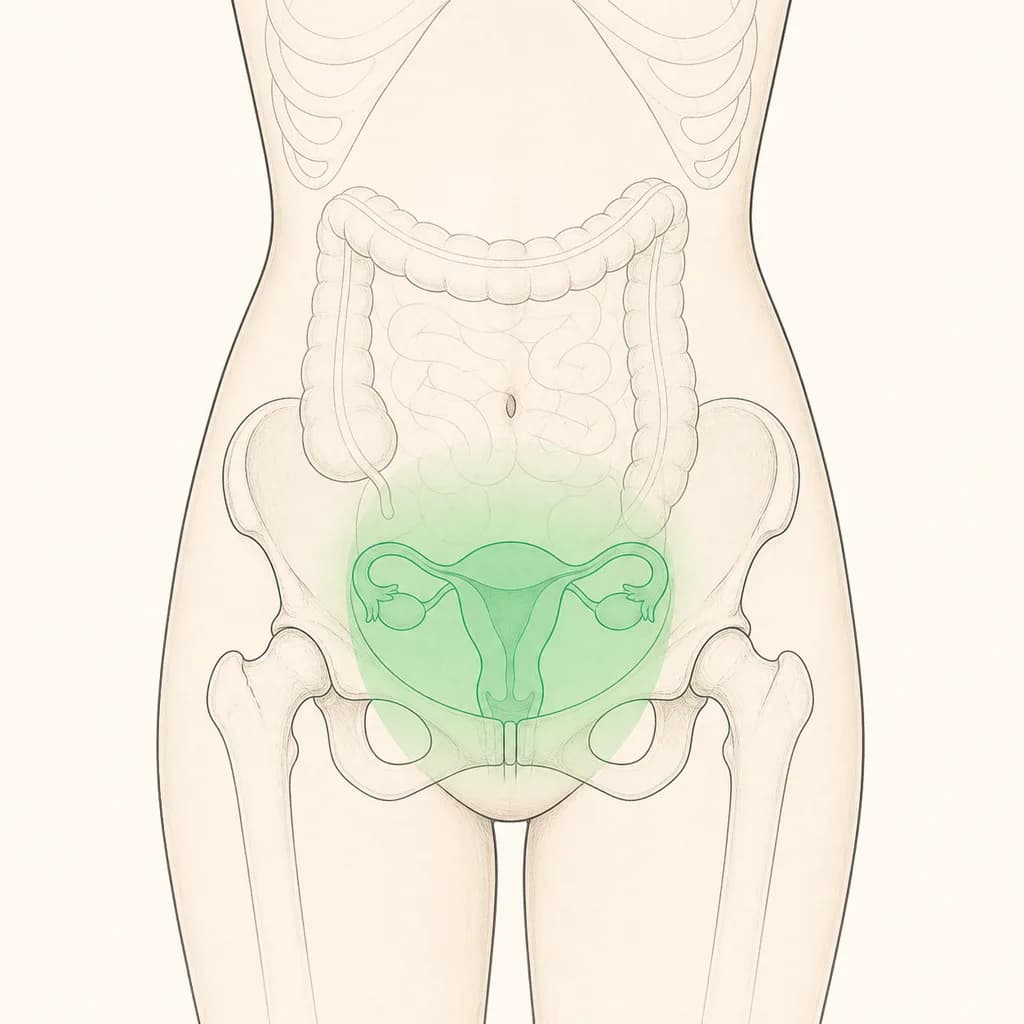
Uterine fibroids, adenomyosis and endometrial polyps can alter the surface that bleeds. Polycystic ovary syndrome and perimenopause can disrupt ovulation, which changes how the uterine lining develops and sheds. Sometimes no single cause is found.
What your bleeding pattern can show
A period can be considered heavy when the flow forces frequent product changes, leaks through clothes or bedding, involves flooding or sizeable clots, lasts longer than your usual period, or limits normal activities. Comparing the flow with your own previous cycles is useful because menstrual patterns vary between people.
Timing offers clues. Long gaps followed by heavy flow can accompany irregular ovulation, while pelvic pressure may occur with fibroids. Painful heavy periods can occur with adenomyosis. These associations guide assessment but do not establish the cause by themselves.
Prepare for an assessment
Track several details: cycle dates, bleeding between periods or after sex, overnight changes, clots, pain, tiredness and breathlessness. Bring a list of prescribed medicines, non-prescription products and contraception. Mention a family history of unusually heavy bleeding, easy bruising or prolonged bleeding after dental work.
A clinician may tailor tests to your age, symptoms and pregnancy possibility. A blood count can look for anaemia, and other tests may assess iron, pregnancy, clotting or hormonal factors. An ultrasound or examination may be offered when a structural cause is suspected.
Warning signs that need urgent help
Get urgent care when bleeding is accompanied by fainting, severe dizziness, chest discomfort, shortness of breath at rest, confusion, pronounced weakness or a pounding heartbeat. Do not drive yourself if you feel faint or unsafe to travel alone.
Severe abdominal or pelvic pain with bleeding needs rapid assessment, particularly if pregnancy is possible. Fever, collapse, or bleeding after menopause also warrants prompt medical attention.
Points to discuss at your appointment
Find out whether your pattern suggests an ovulation problem, a uterine condition or a clotting issue. Ask what each proposed test would clarify, whether iron replacement is appropriate, which treatment choices suit your medical history, and how each option may affect pregnancy plans.
Find care
General Clinics & Polyclinics in Abu Dhabi
That answer is general. If you want it applied to your own case, these are licensed general clinics & polyclinics listed in Abu Dhabi.
27 Ar Ruwwad St - Shakhbout City - MSH4 - Abu Dhabi - United Arab Emirates
Accepts: Daman, Thiqa, Cigna, MetLife +20 more
Al Ruwais, Al Dhafrah
Accepts: Daman, Thiqa, AXA, Cigna +16 more
Al Bahyah - Al Bahyah Old - Abu Dhabi - United Arab Emirates
Accepts: Daman, Thiqa, Cigna, Allianz Care +18 more
Abu Dhabi
Accepts: Daman, Thiqa, AXA, Cigna +27 more
Ordered by verification status and how complete each clinic's public record is, then alphabetically. This is a directory listing, not a ranking — Zavis does not rate or recommend providers.
A factual listing drawn from the DHA, DOH and MOHAP licence registers. It is not a referral, an endorsement, or advice that any of these providers is right for you.
Questions people ask
Can heavy periods begin during perimenopause?
Perimenopause can cause less predictable ovulation, so the uterine lining may shed at irregular times or with a heavier flow. Other causes still need consideration when the bleeding is new or troublesome.
Can medication contribute to heavy periods?
Some medicines, particularly those that reduce blood clotting, can increase menstrual bleeding. Do not stop prescribed treatment on your own; the prescriber can weigh the bleeding against the reason the medicine is needed.
Can heavy periods cause tiredness?
Repeated blood loss can lower iron stores and eventually contribute to iron-deficiency anaemia. Tiredness, weakness, breathlessness, headaches or paleness are reasons to arrange an assessment.
Related
Related reading
Keep reading
Medical disclaimer. This page is general health information, not medical advice, and it cannot diagnose you. Always consult a licensed healthcare provider about your own symptoms and treatment. In an emergency in the UAE, call 998 for an ambulance.