
Can chronic kidney disease be prevented?
Short answer
Chronic kidney disease is not always preventable, but managing blood pressure and diabetes and avoiding kidney injury can lower the risk.
This answers one question. It is not a diagnosis and does not replace an assessment by a licensed doctor.
At a glance
- Main modifiable risks
- High blood pressure and type 2 diabetes
- Early detection
- Blood and urine checks may find kidney changes before symptoms
What affects kidney risk
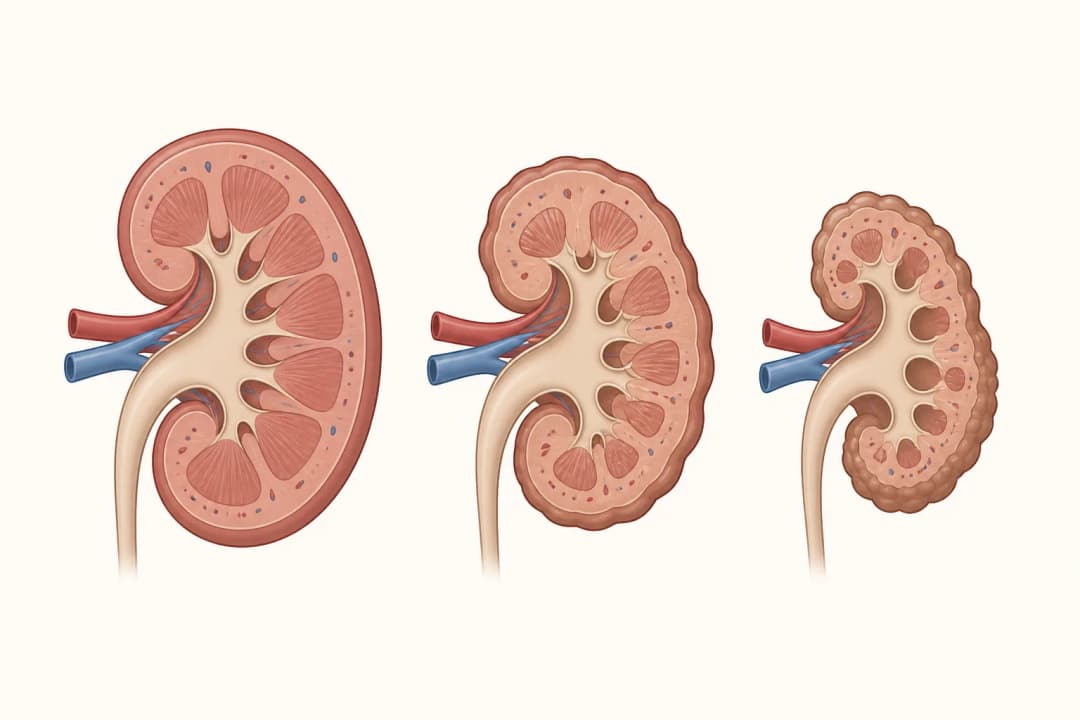
The kidneys filter waste and help regulate fluid, salts, and blood pressure. High blood pressure and type 2 diabetes can damage the small blood vessels and filtering units over time, especially when they are untreated or poorly controlled. Kidney injury can also follow dehydration, severe illness, urinary blockage, or harmful medicine use. Some causes are inherited or cannot be changed, so prevention means reducing avoidable strain and finding problems early. Chronic kidney disease may develop quietly, which is why routine checks matter for people with risk factors.
Steps that protect kidney health
Attend recommended blood pressure and diabetes checks, take prescribed treatment consistently, and ask whether kidney blood or urine testing is appropriate. Avoid smoking, stay active in a way that suits your health, and choose a balanced eating pattern with sensible salt intake. Drink regularly, particularly during hot weather or illness, while following any fluid limit prescribed for you. Do not use frequent painkillers or herbal products without checking with a clinician or pharmacist. Seek advice early for repeated urinary infections or symptoms of blockage.
When to seek care
Arrange medical review for persistent swelling, foamy or bloody urine, changes in urination, ongoing tiredness, or unexplained nausea. Seek urgent help for severe breathlessness, confusion, very little urine, or sudden swelling after an illness or new medicine. Do not wait for symptoms if you have diabetes, hypertension, or a strong family history of kidney disease; screening can detect changes before you feel unwell.
Questions for your doctor
How often should my blood pressure, blood sugar, kidney blood test, and urine be checked? Are any medicines affecting my kidneys? What should I do during vomiting, diarrhoea, fever, or dehydration?
Find care
General Clinics & Polyclinics in Abu Dhabi
That answer is general. If you want it applied to your own case, these are licensed general clinics & polyclinics listed in Abu Dhabi.
27 Ar Ruwwad St - Shakhbout City - MSH4 - Abu Dhabi - United Arab Emirates
Accepts: Daman, Thiqa, Cigna, MetLife +20 more
Al Ruwais, Al Dhafrah
Accepts: Daman, Thiqa, AXA, Cigna +16 more
Al Bahyah - Al Bahyah Old - Abu Dhabi - United Arab Emirates
Accepts: Daman, Thiqa, Cigna, Allianz Care +18 more
Abu Dhabi
Accepts: Daman, Thiqa, AXA, Cigna +27 more
Ordered by verification status and how complete each clinic's public record is, then alphabetically. This is a directory listing, not a ranking — Zavis does not rate or recommend providers.
A factual listing drawn from the DHA, DOH and MOHAP licence registers. It is not a referral, an endorsement, or advice that any of these providers is right for you.
Questions people ask
Can healthy habits prevent all kidney disease?
No. Some causes cannot be changed, but managing blood pressure and diabetes, avoiding kidney injury, and attending checks can reduce risk.
Should people with diabetes check their kidneys?
Yes. Ask a clinician how often blood and urine testing is needed, because kidney changes may appear before symptoms.
Related
Related reading
Keep reading
Medical disclaimer. This page is general health information, not medical advice, and it cannot diagnose you. Always consult a licensed healthcare provider about your own symptoms and treatment. In an emergency in the UAE, call 998 for an ambulance.