
Hip prostheses after a broken hip
Short answer
A hip prosthesis replaces damaged joint surfaces when fixation alone may not provide a dependable route to mobility.
This answers one question. It is not a diagnosis and does not replace an assessment by a licensed doctor.
At a glance
- Partial replacement
- Replaces the femoral head while keeping the natural socket
- Total replacement
- Replaces both sides of the hip joint
- Rehabilitation target
- Safe transfers, walking, strength, and balance
The short answer
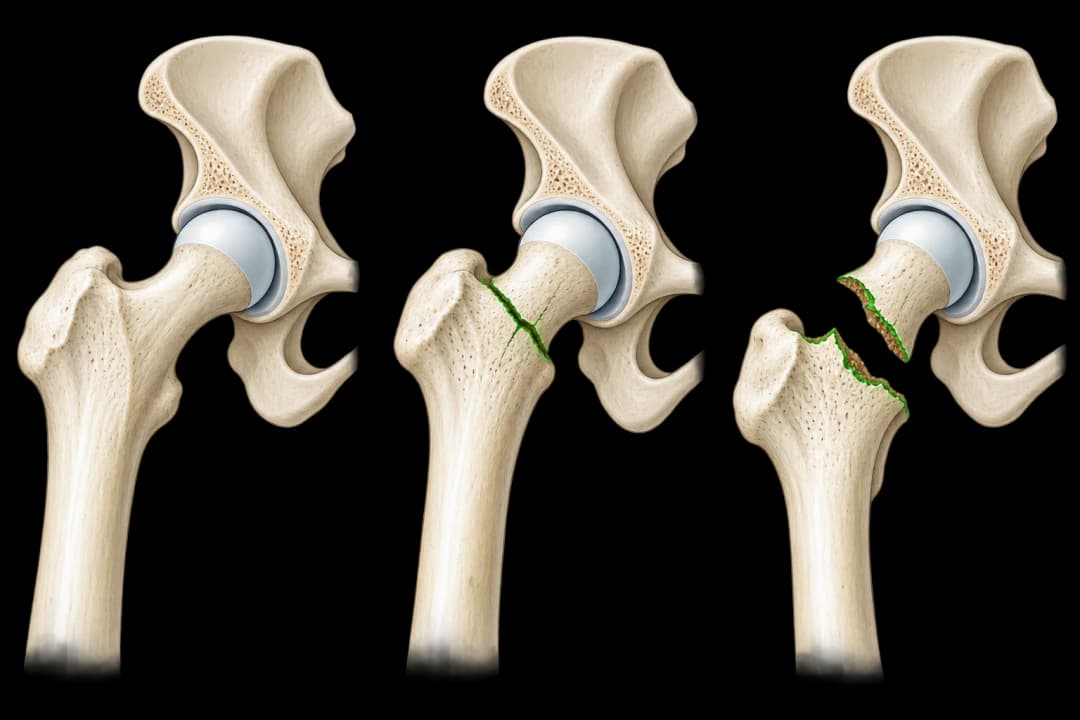
For some fractures near the ball of the hip joint, the surgeon replaces the femoral head rather than trying to join the broken pieces. The selection is individual and follows imaging plus a review of health, joint condition, and previous activity.
Partial and total replacement
A partial hip replacement substitutes the ball and upper part of the thigh bone while retaining the natural socket. A total hip replacement substitutes both the ball and the socket surface. Implant components may be secured with bone cement or fitted so bone can grow against them.
The choice reflects the fracture, socket cartilage, bone quality, general fitness, and how independently the person moved beforehand. A prosthesis provides immediate structural stability, but muscles, balance, and confidence still need rehabilitation.
Caring for the new hip
Use the walking aid and weight-bearing plan supplied by the surgical and physiotherapy teams. Practise safe bed, chair, and toilet transfers before discharge. If specific hip positions must be avoided, ask for a demonstration and check whether home seating or equipment needs adjustment.
Complete prescribed exercises without forcing sharp pain. Observe the wound, take medicines as directed, maintain regular meals and fluids, and remove loose rugs or trailing cables from walking routes. Keep the implant details provided by the hospital for future healthcare visits.
Possible warning signs
Seek emergency assessment if the hip suddenly becomes very painful or looks shortened or rotated, particularly after a fall or awkward turn; the joint may have moved out of position or another injury may have occurred. Sudden chest pain or severe breathlessness also requires emergency help.
Promptly report wound leakage, spreading redness, fever, escalating pain, a painful swollen calf, or new numbness or coldness in the foot. Early assessment helps the team identify infection, circulation problems, or implant-related concerns.
Questions about the implant
Ask whether a partial or total replacement is advised and which features of the fracture influenced that recommendation. Confirm how the prosthesis is fixed, whether movement precautions apply, when driving and everyday activities may resume, and how future dental or medical teams should be told about the implant.
Find care
General Clinics & Polyclinics in Abu Dhabi
That answer is general. If you want it applied to your own case, these are licensed general clinics & polyclinics listed in Abu Dhabi.
27 Ar Ruwwad St - Shakhbout City - MSH4 - Abu Dhabi - United Arab Emirates
Accepts: Daman, Thiqa, Cigna, MetLife +20 more
Al Ruwais, Al Dhafrah
Accepts: Daman, Thiqa, AXA, Cigna +16 more
Al Bahyah - Al Bahyah Old - Abu Dhabi - United Arab Emirates
Accepts: Daman, Thiqa, Cigna, Allianz Care +18 more
Abu Dhabi
Accepts: Daman, Thiqa, AXA, Cigna +27 more
Ordered by verification status and how complete each clinic's public record is, then alphabetically. This is a directory listing, not a ranking — Zavis does not rate or recommend providers.
A factual listing drawn from the DHA, DOH and MOHAP licence registers. It is not a referral, an endorsement, or advice that any of these providers is right for you.
Questions people ask
Is a hip prosthesis the same as metal screws?
No. A prosthesis replaces a joint surface, whereas screws, plates, or rods hold the person's own bone in position for healing.
Can a hip prosthesis dislocate?
Dislocation is a recognised concern. Follow any movement precautions given, and seek urgent care for sudden severe pain, deformity, or inability to move the leg.
Related
Related reading
Keep reading
Medical disclaimer. This page is general health information, not medical advice, and it cannot diagnose you. Always consult a licensed healthcare provider about your own symptoms and treatment. In an emergency in the UAE, call 998 for an ambulance.