
Surgery for a break at the ball of the hip
Short answer
A break near the hip ball often needs surgery to stabilise the bone or replace the damaged ball, followed by guided rehabilitation.
This answers one question. It is not a diagnosis and does not replace an assessment by a licensed doctor.
At a glance
- Area involved
- Femoral head or the neck just below it
- Possible operations
- Internal fixation, partial replacement, or total replacement
- Recovery focus
- Safe mobilisation, wound care, strength, and daily function
The short answer
The operation chosen depends on the fracture's exact position, displacement, bone quality, joint condition, mobility before injury, and the person's overall health.
What surgeons mean by hip ball surgery
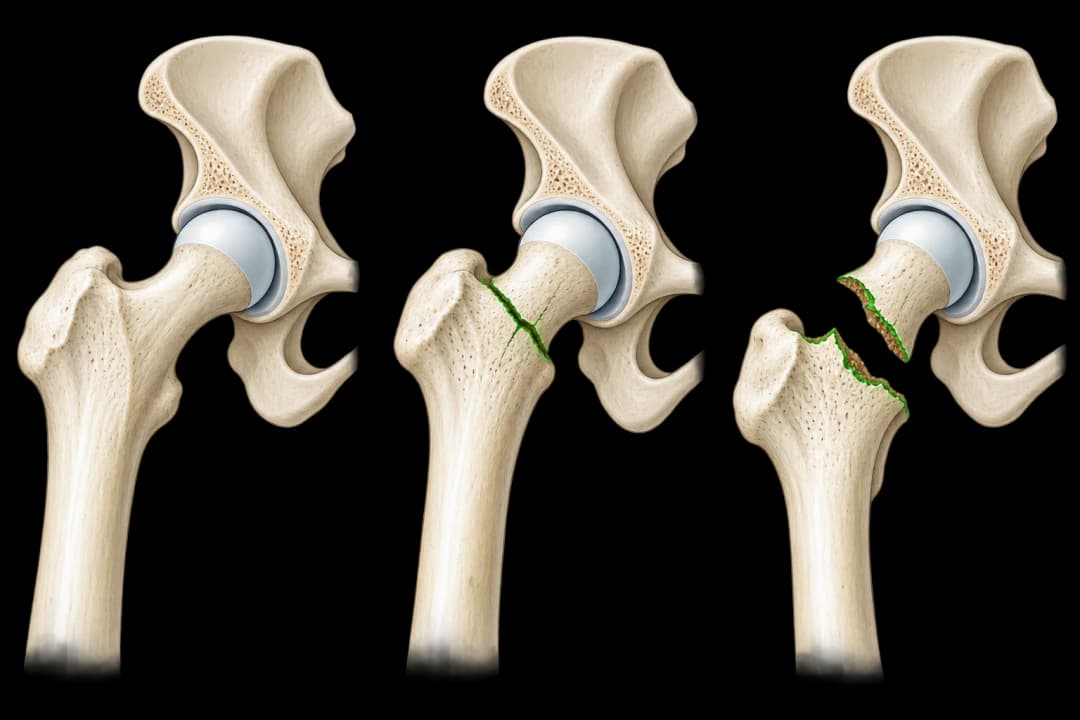
The ball at the top of the thigh bone sits inside the hip socket. A fracture through the nearby femoral neck may disrupt the bone's blood supply. Surgeons may hold the pieces with screws or other fixation, or remove the damaged head and replace it with an artificial component.
A partial replacement changes the femoral head, while a total replacement also resurfaces the socket. The surgeon selects an approach after reviewing imaging and balancing the demands of fixation, healing, stability, and future mobility.
Preparing for treatment and recovery
Give the hospital team an accurate list of medicines, allergies, previous operations, and health conditions. Follow instructions about eating, drinking, and medicines before the procedure. After surgery, take prescribed pain relief and blood-clot prevention treatment exactly as directed.
Physiotherapists help with transfers, walking aids, strengthening, and safe movement. Weight-bearing instructions depend on the repair, so do not assume the operated leg can take unrestricted load. Prepare a clear route at home, stable seating, and help with meals and personal tasks.
Problems that need medical review
Seek urgent help for chest pain, sudden breathlessness, coughing blood, fainting, or a new hot and swollen calf. Contact the surgical team promptly for fever, wound drainage, spreading redness, worsening pain, or a wound that opens.
A fall, sudden inability to stand, a leg that looks newly shortened or turned, or a new loss of feeling also warrants urgent assessment. New confusion or marked drowsiness after discharge should not be dismissed as a normal part of recovery.
Questions for the surgical team
Ask whether fixation, partial replacement, or total replacement is proposed and why it fits your fracture. Clarify when you may stand, what movement precautions apply, how the wound should be cared for, and where rehabilitation will take place.
Find care
General Clinics & Polyclinics in Abu Dhabi
That answer is general. If you want it applied to your own case, these are licensed general clinics & polyclinics listed in Abu Dhabi.
27 Ar Ruwwad St - Shakhbout City - MSH4 - Abu Dhabi - United Arab Emirates
Accepts: Daman, Thiqa, Cigna, MetLife +20 more
Al Ruwais, Al Dhafrah
Accepts: Daman, Thiqa, AXA, Cigna +16 more
Al Bahyah - Al Bahyah Old - Abu Dhabi - United Arab Emirates
Accepts: Daman, Thiqa, Cigna, Allianz Care +18 more
Abu Dhabi
Accepts: Daman, Thiqa, AXA, Cigna +27 more
Ordered by verification status and how complete each clinic's public record is, then alphabetically. This is a directory listing, not a ranking — Zavis does not rate or recommend providers.
A factual listing drawn from the DHA, DOH and MOHAP licence registers. It is not a referral, an endorsement, or advice that any of these providers is right for you.
Questions people ask
Does broken hip ball surgery always mean a full hip replacement?
No. Some fractures can be fixed, and some are treated with a partial replacement. Imaging, fracture pattern, joint health, and personal factors guide the choice.
Will I walk after the operation?
Mobilisation commonly begins with clinical and physiotherapy support. Your team will specify the walking aid, permitted load, and precautions for your particular operation.
Related
Related reading
Keep reading
Medical disclaimer. This page is general health information, not medical advice, and it cannot diagnose you. Always consult a licensed healthcare provider about your own symptoms and treatment. In an emergency in the UAE, call 998 for an ambulance.