
Broken Growth Plate in the Hip: A Guide for Families
Short answer
A suspected break at the hip growth plate needs urgent orthopaedic assessment because it can affect the developing upper femur.
This answers one question. It is not a diagnosis and does not replace an assessment by a licensed doctor.
At a glance
- Who is affected
- Growth-plate injuries occur before the upper femur has finished developing.
- Pain location
- Discomfort may be felt in the hip, groin, thigh, or knee.
- Until assessed
- The child should stop activity and avoid bearing weight on the painful leg.
The short answer
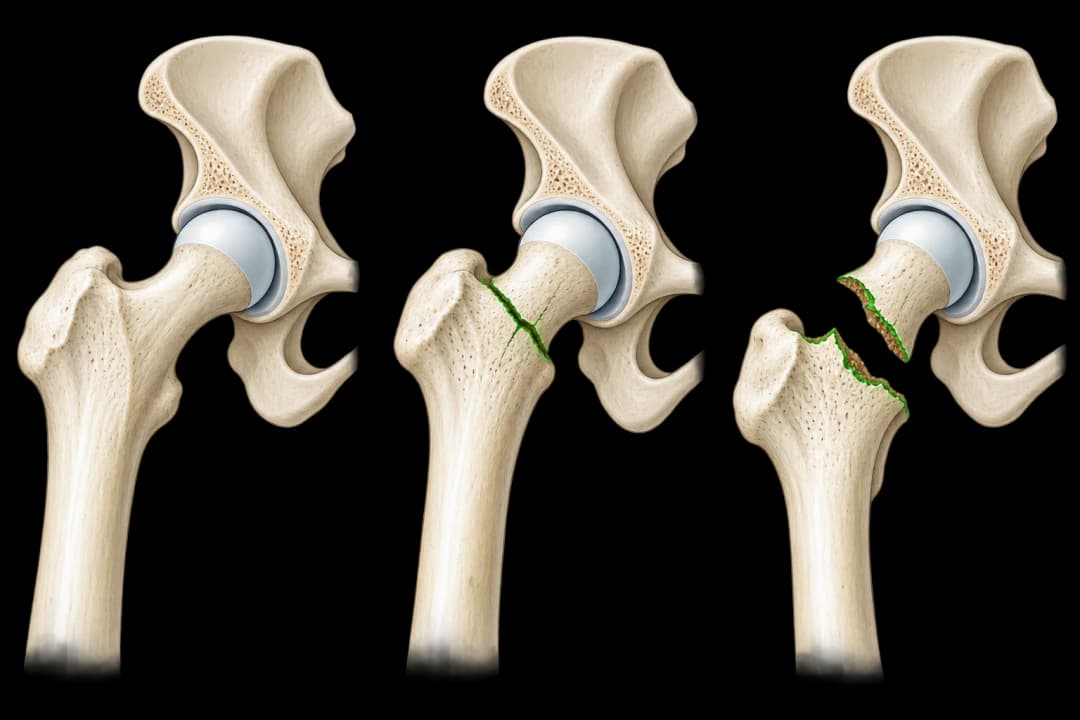
This phrase can describe a fracture through or beside the growth plate near the top of a child's thigh bone. It is also sometimes used informally for a slipped upper femoral growth plate, which is a different problem. Both can cause hip, groin, thigh, or even knee pain, together with a limp or inability to bear weight.
Why the growth plate needs specialist attention
A growth plate is an area of developing cartilage near the end of a child's bone. At the hip, it separates the femoral head from the femoral neck. Injury can disturb alignment or the blood supply to the femoral head, and later growth may be affected. The concern depends on the exact pattern, displacement, skeletal maturity, and how quickly stable alignment is restored.
An orthopaedic clinician examines the position of the leg and checks circulation, sensation, and movement without forcing the hip. Imaging usually begins with appropriate views of the pelvis and hip. The team may obtain other imaging when the diagnosis or fracture detail remains uncertain. Treatment can involve protected weight-bearing, repositioning and fixation, or another approach suited to the confirmed injury.
Protecting the hip before assessment
Stop sport and keep all weight off the painful leg. Do not repeatedly rotate the hip, force the leg straight, or ask the child to demonstrate the limp. Arrange urgent evaluation, using emergency transport when pain is severe, the leg looks deformed, or safe movement is not possible. Follow instructions about food and drink because sedation or an operation may be needed.
Give the clinical team a clear account of any fall, collision, twisting event, recent gradual limp, and where pain is felt. Mention medicines and allergies as well as earlier hip or endocrine problems. Once treated, use crutches or a frame exactly as instructed and attend follow-up imaging; these visits check healing, alignment, the femoral head, and continued growth.
Signs that should not wait
Seek emergency care after an injury if the child cannot stand, has severe hip or groin pain, has an obviously shortened or rotated leg, or has an open wound. A cold, pale, blue, numb, or weak foot may indicate impaired circulation or nerve function and also requires immediate help.
A new persistent limp or unexplained hip, thigh, or knee pain deserves prompt medical assessment even without a clear accident. Upper femoral growth-plate disorders can refer pain to the knee, so a normal-looking knee does not rule out a hip source. After treatment, report increasing pain, fever, wound drainage, new numbness, or a change in foot colour or temperature urgently.
What families can ask at the appointment
Ask whether imaging shows a fracture, a growth-plate slip, or another hip condition, and request the precise name and location. Find out whether alignment and blood supply appear affected, what treatment protects the joint, and when the child may return to weight-bearing, school, and sport. Confirm the follow-up schedule and which symptoms require an earlier review.
Find care
General Clinics & Polyclinics in Abu Dhabi
That answer is general. If you want it applied to your own case, these are licensed general clinics & polyclinics listed in Abu Dhabi.
27 Ar Ruwwad St - Shakhbout City - MSH4 - Abu Dhabi - United Arab Emirates
Accepts: Daman, Thiqa, Cigna, MetLife +20 more
Al Ruwais, Al Dhafrah
Accepts: Daman, Thiqa, AXA, Cigna +16 more
Al Bahyah - Al Bahyah Old - Abu Dhabi - United Arab Emirates
Accepts: Daman, Thiqa, Cigna, Allianz Care +18 more
Abu Dhabi
Accepts: Daman, Thiqa, AXA, Cigna +27 more
Ordered by verification status and how complete each clinic's public record is, then alphabetically. This is a directory listing, not a ranking — Zavis does not rate or recommend providers.
A factual listing drawn from the DHA, DOH and MOHAP licence registers. It is not a referral, an endorsement, or advice that any of these providers is right for you.
Questions people ask
Is a broken hip growth plate the same as a slipped growth plate?
Not necessarily. A fracture follows an injury through or near the growth plate, while a slip describes movement between the femoral head and neck through the growth plate. Imaging and orthopaedic assessment distinguish them.
Why can a hip growth-plate problem cause knee pain?
Nerves can carry pain from the hip in a way that makes it feel as though it comes from the thigh or knee. Clinicians therefore examine the hip when a child has unexplained knee pain with a limp.
Will the injury affect future growth?
The outcome depends on the injury pattern, remaining growth, alignment, and health of the femoral head. Follow-up examinations and imaging allow the orthopaedic team to watch healing and development over time.
Related
Related reading
Keep reading
Medical disclaimer. This page is general health information, not medical advice, and it cannot diagnose you. Always consult a licensed healthcare provider about your own symptoms and treatment. In an emergency in the UAE, call 998 for an ambulance.