
Brain tumour headaches: patterns and warning signs
Short answer
Brain tumours can present with headaches, but headache features alone cannot confirm the cause and new neurological symptoms need prompt assessment.
This answers one question. It is not a diagnosis and does not replace an assessment by a licensed doctor.
At a glance
- Direction of risk
- Brain tumours may present with headache, but a headache does not establish a tumour diagnosis.
- Clinical assessment
- The headache pattern, accompanying symptoms and neurological examination guide next steps.
- Imaging
- MRI may be used to investigate a suspected structural cause.
The short answer
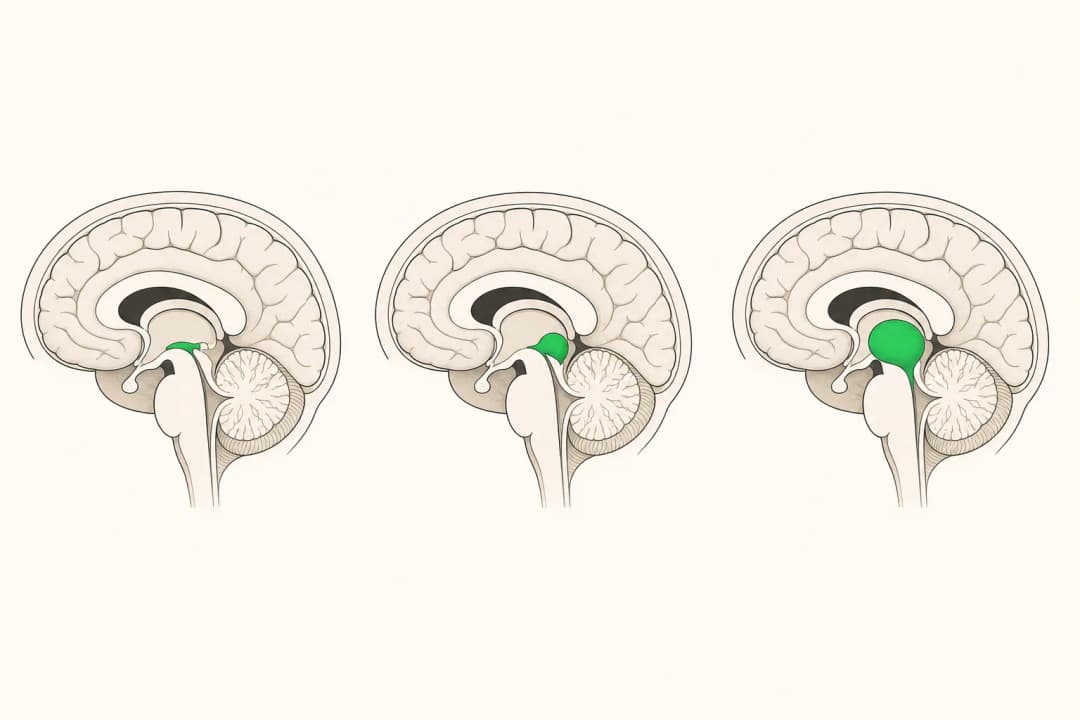
A tumour may cause pain by increasing pressure inside the skull, obstructing normal fluid flow, producing swelling, or affecting pain-sensitive tissues. Many non-cancerous conditions also cause headaches, so clinicians assess the whole pattern rather than one feature.
Details that help explain a headache
Useful details include when the headache began, whether it is changing, what triggers or relieves it, and whether it comes with vomiting, seizures, weakness, visual change, speech difficulty, confusion or altered behaviour. A neurological examination checks functions such as strength, balance, sensation, vision and language.
When the history or examination raises concern, brain imaging can look for a structural cause. MRI provides detailed views of brain tissue, while other imaging may be chosen when MRI is unsuitable or urgent access is needed. Imaging decisions depend on symptoms and clinical findings.
What to record before an assessment
Write down the headache's timing, location, severity, duration, associated symptoms and medicines taken. Note whether it wakes you, follows coughing or straining, or differs from your established headache pattern. Bring an updated medicine list and mention cancer history, immune suppression, recent injury and blood-thinning treatment.
Use pain medicine only as directed, because frequent use of some headache medicines can itself contribute to recurring pain. If a brain tumour is already diagnosed, report a clear change in headaches to the treating team rather than waiting for routine follow-up.
When a headache needs urgent help
Call emergency services for a sudden severe headache, a first seizure, loss of consciousness, marked confusion, new one-sided weakness, facial droop, new speech difficulty, or sudden loss of vision. A headache after a significant head injury also needs urgent assessment when accompanied by vomiting, drowsiness or neurological change.
Seek prompt medical advice for a new headache that steadily worsens, repeatedly wakes you, occurs with unexplained vomiting, or appears alongside new balance, personality, memory or visual changes. Urgency comes from these red-flag features, not from assumptions about how often a cause occurs.
Questions to ask at the appointment
Ask which findings could explain the pain, whether a neurological examination or imaging is appropriate, and which changes should trigger urgent review. If a tumour is known, ask whether swelling, treatment effects, medicine changes or tumour activity could contribute and how the care team plans to distinguish them.
Questions people ask
Can the location of a headache show where a brain tumour is?
Headache location does not reliably map a tumour's position. Clinicians use the broader symptom pattern, neurological examination and imaging when indicated.
Does a headache that is worse in the morning confirm a brain tumour?
No. Timing alone cannot confirm the cause. A changing headache accompanied by vomiting or neurological symptoms warrants clinical assessment.
Why can a diagnosed brain tumour cause headache?
Possible mechanisms include swelling, pressure changes, disrupted fluid flow and effects on pain-sensitive tissues. Treatment-related changes and medicines can also contribute.
Related
Related reading
Keep reading
Cancer care in the UAE
Hospitals & Medical Centers in Abu Dhabi
Most UAE cancer care is delivered inside hospital services rather than by standalone oncology clinics, so these are licensed hospitals & medical centers listed in Abu Dhabi. Confirm the specific cancer service exists before you travel, and know that asking for a second opinion is routine.
Ahalia Hospital Musaffah Building - Musaffah - Musaffah Industrial - Abu Dhabi - United Arab Emirates
Accepts: Daman, Thiqa, AXA, Cigna +26 more
Al Ruwais Industrial City - Abu Dhabi - United Arab Emirates
Accepts: Daman, Thiqa, AXA, Cigna +30 more
Abu Dhabi, Abu Dhabi
Accepts: Daman, Thiqa, AXA, Cigna +30 more
Second opinions are routine in cancer care and asking for one does not affect your treatment. How to arrange a second opinion in the UAE.
Ordered by verification status and how complete each clinic's public record is, then alphabetically. This is a directory listing, not a ranking — Zavis does not rate or recommend providers.
A factual listing drawn from the DHA, DOH and MOHAP licence registers. It is not a referral, an endorsement, or advice that any of these providers is right for you.
Medical disclaimer. This page is general health information, not medical advice, and it cannot diagnose you. Always consult a licensed healthcare provider about your own symptoms and treatment. In an emergency in the UAE, call 998 for an ambulance.