
What should you know about Botox for face sweating?
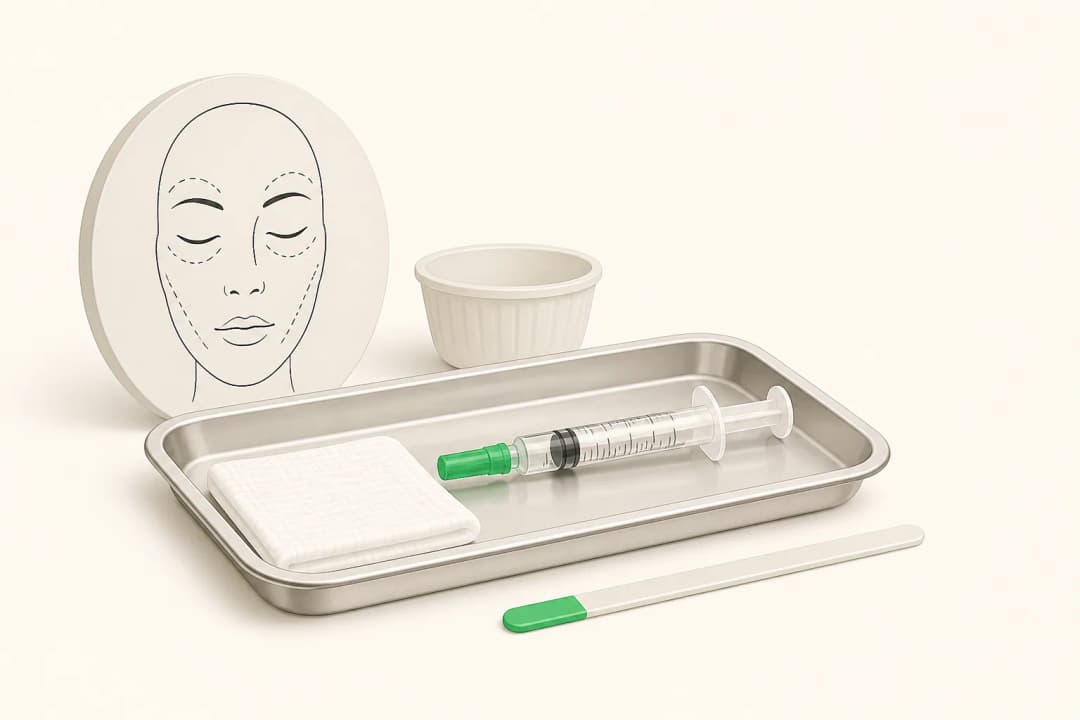
Short answer
Botox for face sweating can temporarily reduce sweat production in selected areas, but an assessment is needed to confirm the cause and plan safe injection sites.
This answers one question. It is not a diagnosis and does not replace an assessment by a licensed doctor.
At a glance
- Main action
- Temporarily reduces nerve signals to selected sweat glands.
- Common planning point
- Injection sites must be chosen carefully on the face.
- What it cannot do
- It does not identify or treat every cause of sweating.
How it works
Botulinum toxin is injected into carefully chosen skin areas. It reduces the nerve signals that tell nearby sweat glands to release sweat. This approach may suit sweating that is localised to the forehead or another defined facial region. It does not correct every cause of sweating, and it is different from treating facial movement lines; see the guide to [Botulinum Toxin Type A](/materials/botulinum-toxin-type-a/).
A clinician should review medicines, allergies, neuromuscular conditions, pregnancy or breastfeeding, and any change in your usual sweating. The face contains muscles and nerves that affect expression, eyelid position, and mouth movement, so injection placement matters.
What to do before and after treatment
Start with a consultation that maps where sweating occurs and considers topical antiperspirants or treatment of an underlying trigger. If injections are appropriate, follow the provider's instructions about skin care, medicines, and activities afterward. Do not rub or massage the treated area unless specifically advised. Keep realistic expectations: the effect is temporary, and follow-up may be needed when sweating returns.
Botox is not a filler. Dermal fillers change volume or contour, whereas botulinum toxin changes selected muscle or gland signalling; compare the treatment types before choosing one.
When to seek care
Seek prompt medical advice if sweating starts suddenly, happens during sleep, or comes with fever, chest discomfort, fainting, shortness of breath, weakness, or unexplained weight change. After injections, contact the treating clinician urgently for trouble swallowing, breathing, widespread weakness, or marked vision changes. Increasing redness, warmth, swelling, or discharge at an injection site also needs review.
Questions for your doctor
Which facial areas are suitable for treatment? Could a medicine or health condition be contributing? What alternatives fit my pattern of sweating? How will you protect facial movement and eyelid function? What symptoms after treatment should prompt an urgent call?
Find care
General Clinics & Polyclinics in Abu Dhabi
That answer is general. If you want it applied to your own case, these are licensed general clinics & polyclinics listed in Abu Dhabi.
27 Ar Ruwwad St - Shakhbout City - MSH4 - Abu Dhabi - United Arab Emirates
Accepts: Daman, Thiqa, Cigna, MetLife +20 more
Al Ruwais, Al Dhafrah
Accepts: Daman, Thiqa, AXA, Cigna +16 more
Al Bahyah - Al Bahyah Old - Abu Dhabi - United Arab Emirates
Accepts: Daman, Thiqa, Cigna, Allianz Care +18 more
Abu Dhabi
Accepts: Daman, Thiqa, AXA, Cigna +27 more
Ordered by verification status and how complete each clinic's public record is, then alphabetically. This is a directory listing, not a ranking — Zavis does not rate or recommend providers.
A factual listing drawn from the DHA, DOH and MOHAP licence registers. It is not a referral, an endorsement, or advice that any of these providers is right for you.
Questions people ask
Can Botox stop all facial sweating?
No. It targets selected areas and reduces sweating for a limited period; other areas may continue to sweat.
Is facial sweating always a cosmetic issue?
No. New, widespread, nighttime, or symptom-associated sweating can need medical assessment before aesthetic treatment.
Related
Related reading
Keep reading
Medical disclaimer. This page is general health information, not medical advice, and it cannot diagnose you. Always consult a licensed healthcare provider about your own symptoms and treatment. In an emergency in the UAE, call 998 for an ambulance.