
What should you know about biphasic urticaria?
Short answer
Biphasic urticaria means hives improve and then return in a second phase, sometimes alongside a broader allergic reaction that needs urgent reassessment.
This answers one question. It is not a diagnosis and does not replace an assessment by a licensed doctor.
At a glance
- Pattern
- Hives return after an initial improvement
- Typical skin signs
- Raised, itchy welts that can move or change shape
- Emergency concern
- Breathing, circulation, or mouth and throat symptoms
The short answer
The returning rash may again form raised, itchy welts that move or change shape. The key safety issue is whether symptoms involve only the skin or include breathing difficulty, faintness, vomiting, or swelling of the mouth or throat.
Understanding two-phase hives
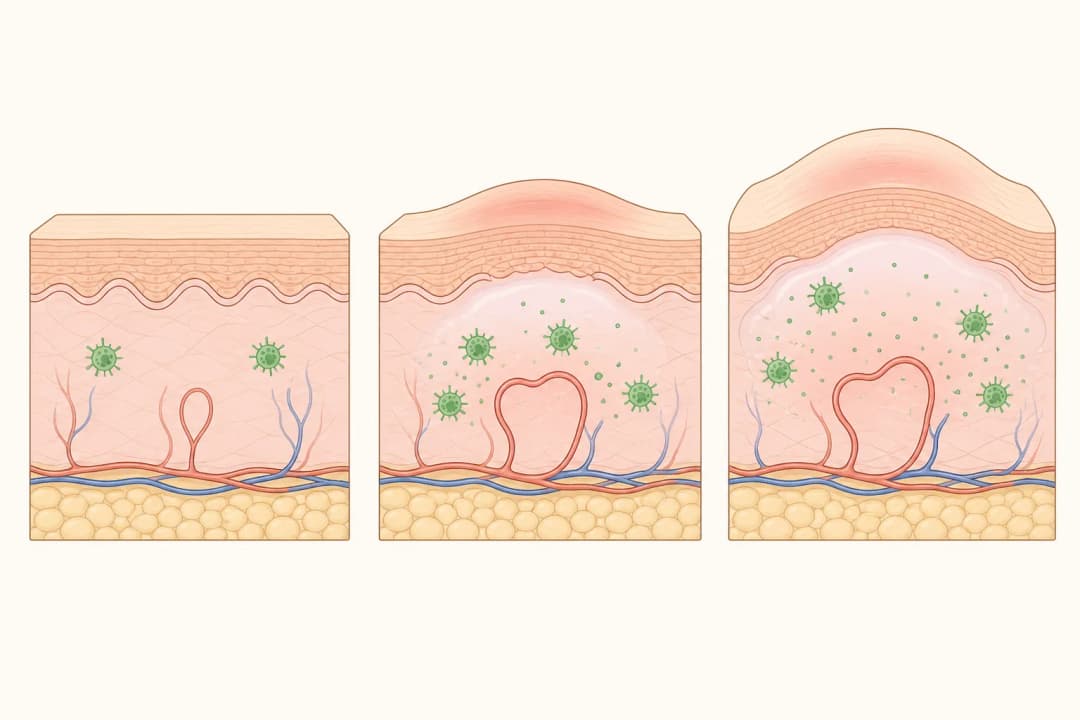
Urticaria develops when chemical mediators released in the skin cause temporary raised welts and itching. “Biphasic” describes the pattern: an initial episode settles, followed by a return of symptoms without a clearly identified new exposure.
Hives can occur alone, while deeper swelling is called angioedema. A biphasic allergic reaction can affect more than the skin, so the return of welts does not by itself show how severe the next phase will be.
Responding when hives return
Follow the discharge or allergy plan you were given. If an adrenaline auto-injector was prescribed for a serious allergy, use it exactly as instructed when the plan’s emergency criteria are met, then call emergency services. Antihistamines may ease skin symptoms but do not replace adrenaline for anaphylaxis.
Record when each phase began, foods or medicines taken, stings, exercise, infections, and treatments used. Photographing the rash can help because individual welts may fade before an appointment. Do not take extra doses or start corticosteroids unless a clinician has advised a specific regimen.
Emergency warning signs
Call UAE emergency services immediately if hives occur with trouble breathing, wheezing, throat tightness, a hoarse voice, tongue swelling, faintness, confusion, or repeated vomiting. Urgency comes from these warning signs, even if the first phase seemed mild or had resolved.
Seek prompt clinical advice when hives return after treatment, repeatedly recur, leave bruising, remain fixed in one place, or accompany fever or joint pain. These features may require assessment for another cause rather than routine hive care.
Questions for your clinician
Ask whether the episode met criteria for anaphylaxis, how long you should be observed, which medicine treats skin symptoms, and whether you need an adrenaline auto-injector. Clarify what should trigger emergency action if symptoms return and whether allergy follow-up is appropriate.
Find care
General Clinics & Polyclinics in Abu Dhabi
That answer is general. If you want it applied to your own case, these are licensed general clinics & polyclinics listed in Abu Dhabi.
27 Ar Ruwwad St - Shakhbout City - MSH4 - Abu Dhabi - United Arab Emirates
Accepts: Daman, Thiqa, Cigna, MetLife +20 more
Al Ruwais, Al Dhafrah
Accepts: Daman, Thiqa, AXA, Cigna +16 more
Al Bahyah - Al Bahyah Old - Abu Dhabi - United Arab Emirates
Accepts: Daman, Thiqa, Cigna, Allianz Care +18 more
Abu Dhabi
Accepts: Daman, Thiqa, AXA, Cigna +27 more
Ordered by verification status and how complete each clinic's public record is, then alphabetically. This is a directory listing, not a ranking — Zavis does not rate or recommend providers.
A factual listing drawn from the DHA, DOH and MOHAP licence registers. It is not a referral, an endorsement, or advice that any of these providers is right for you.
Questions people ask
Are returning hives always anaphylaxis?
No. Hives may recur without other body systems being involved, but breathing difficulty, faintness, throat symptoms, or repeated vomiting require emergency action.
Can an antihistamine prevent a dangerous allergic reaction?
Antihistamines can reduce itching and welts, but they do not treat the breathing or circulation problems of anaphylaxis. Follow the emergency plan and use prescribed adrenaline when its criteria are met.
What information helps at follow-up?
Bring a timeline, photographs, a list of possible exposures, medicine names and doses, and details of any breathing, digestive, swelling, or faintness symptoms.
Related
Related reading
Keep reading
Medical disclaimer. This page is general health information, not medical advice, and it cannot diagnose you. Always consult a licensed healthcare provider about your own symptoms and treatment. In an emergency in the UAE, call 998 for an ambulance.