
Beta thalassaemia
Short answer
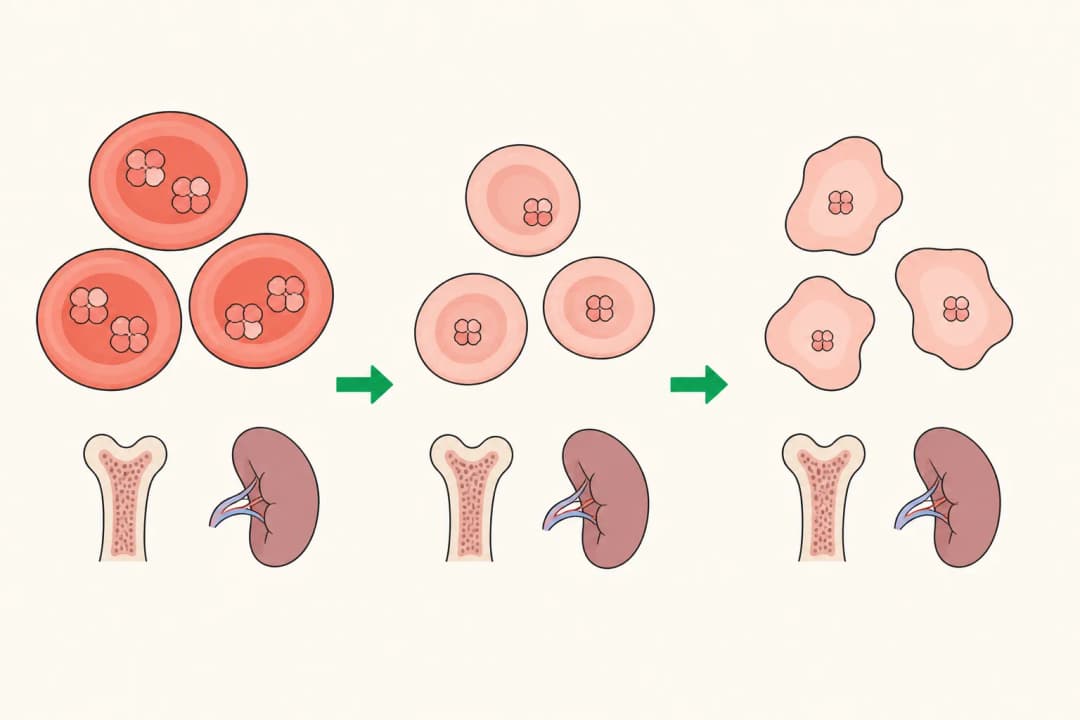
Beta thalassaemia is an inherited blood condition in which reduced beta-globin production affects haemoglobin, so red blood cells may carry less oxygen and anaemia can develop.
This answers one question. It is not a diagnosis and does not replace an assessment by a licensed doctor.
At a glance
- Cause
- Inherited changes affecting beta-globin production
- Main effect
- Haemoglobin and oxygen delivery may be reduced
- Iron caution
- Use iron only when deficiency is confirmed
How it affects the body
Haemoglobin is the red-cell protein that carries oxygen. Beta thalassaemia results from changes in the gene used to make one part of haemoglobin. Some people have a carrier form with few or no symptoms; others develop anaemia of varying severity. Possible features include fatigue, pale skin, reduced exercise tolerance, breathlessness, or slower growth in children. The condition is inherited, so family history and reproductive planning can be relevant.
Assessment and everyday care
A clinician may review symptoms and family background, then use a blood test and specialised haemoglobin analysis to clarify the type. Do not start iron simply because anaemia is present: iron helps only when iron deficiency is confirmed. Keep specialist appointments, follow the recommended treatment plan, and tell clinicians about beta thalassaemia before new medicines or procedures. Genetic counselling and premarital screening may help couples understand reproductive options.
When to seek medical help
Arrange prompt assessment for worsening fatigue, breathlessness at rest, chest discomfort, fainting, fever, or a new yellow tinge to the skin or eyes. Seek urgent care for severe breathing difficulty, collapse, or confusion. If you already receive transfusions or treatment for iron overload, report new abdominal swelling, palpitations, or marked weakness to your specialist rather than waiting for a routine visit.
Questions for your doctor
Ask which form of beta thalassaemia you have, whether relatives should be tested, how iron status will be checked, and whether genetic counselling or premarital screening is appropriate for you.
Find care
General Clinics & Polyclinics in Abu Dhabi
That answer is general. If you want it applied to your own case, these are licensed general clinics & polyclinics listed in Abu Dhabi.
27 Ar Ruwwad St - Shakhbout City - MSH4 - Abu Dhabi - United Arab Emirates
Accepts: Daman, Thiqa, Cigna, MetLife +20 more
Al Ruwais, Al Dhafrah
Accepts: Daman, Thiqa, AXA, Cigna +16 more
Al Bahyah - Al Bahyah Old - Abu Dhabi - United Arab Emirates
Accepts: Daman, Thiqa, Cigna, Allianz Care +18 more
Abu Dhabi
Accepts: Daman, Thiqa, AXA, Cigna +27 more
Ordered by verification status and how complete each clinic's public record is, then alphabetically. This is a directory listing, not a ranking — Zavis does not rate or recommend providers.
A factual listing drawn from the DHA, DOH and MOHAP licence registers. It is not a referral, an endorsement, or advice that any of these providers is right for you.
Questions people ask
Is beta thalassaemia contagious?
No. It is inherited through genes and cannot spread between people.
Does every person with beta thalassaemia need transfusions?
No. Care depends on the type and severity, so treatment should be planned with a specialist.
Related
Related reading
Keep reading
Medical disclaimer. This page is general health information, not medical advice, and it cannot diagnose you. Always consult a licensed healthcare provider about your own symptoms and treatment. In an emergency in the UAE, call 998 for an ambulance.