
Beta cell destruction
Short answer
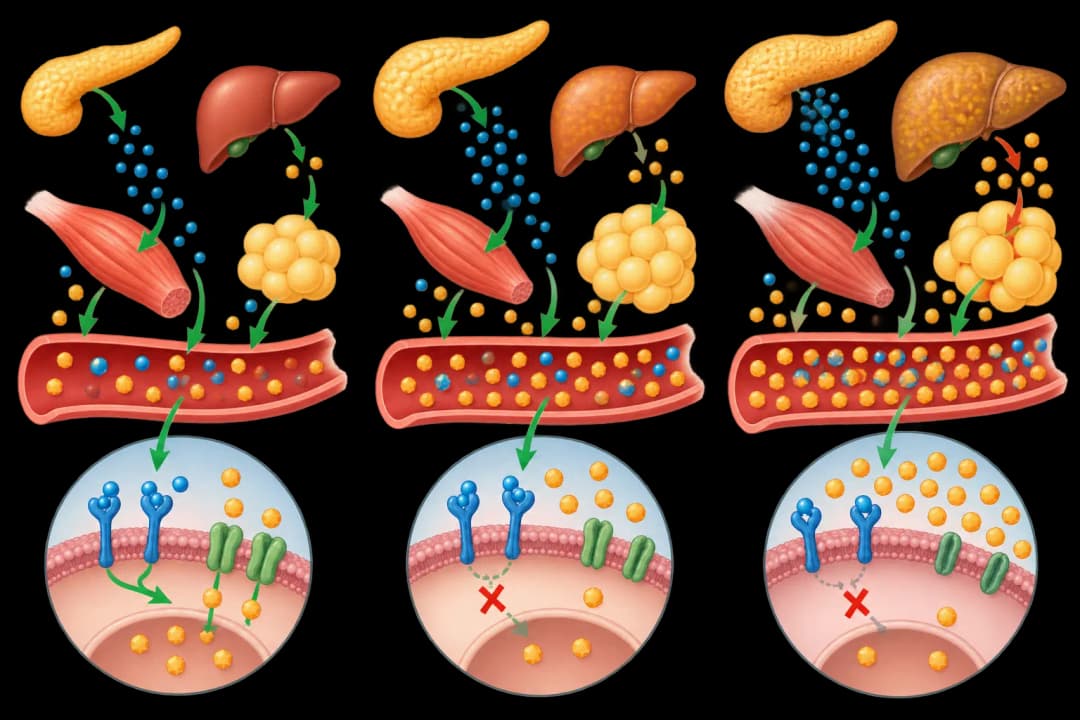
Beta cell destruction means fewer pancreatic cells can release insulin, making blood glucose harder to control; in type 2 diabetes, decline is usually gradual and variable.
This answers one question. It is not a diagnosis and does not replace an assessment by a licensed doctor.
At a glance
- Main role
- Beta cells release insulin after glucose rises
- Typical pattern
- Function may decline gradually in type 2 diabetes
- Safety focus
- Know both high- and low-glucose warning signs
What beta cells do
Beta cells sit in clusters within the pancreas and release insulin when blood glucose rises. Insulin helps glucose move from the bloodstream into cells for energy. In type 2 diabetes, body tissues may respond poorly to insulin, while beta cells work harder and may gradually lose capacity. The term destruction can sound sudden, but reduced function is often a longer process and is not identical to autoimmune loss of beta cells.
Managing the impact
Keep appointments for glucose checks and discuss readings, medicines, food patterns, activity, and sleep with your diabetes team. Treatment may support insulin sensitivity, increase insulin release, or replace insulin when the pancreas cannot provide enough. Protecting feet, treating skin infections promptly, and monitoring kidney health can reduce avoidable complications. Do not change diabetes medicine based on one reading.
When urgent help is needed
Get urgent help for severe thirst with repeated urination, vomiting, deep or difficult breathing, marked drowsiness, confusion, or inability to keep fluids down. Seek prompt advice for symptoms of hypoglycaemia such as sweating, shaking, sudden hunger, blurred vision, or confusion, especially if you use insulin or medicines that increase insulin release. New weakness, facial drooping, or trouble speaking may indicate a stroke and needs emergency care.
Questions for your doctor
Ask how your treatment addresses insulin resistance and beta cell function, what glucose pattern should prompt contact, and how often your feet, kidneys, and cardiovascular risks should be reviewed.
Find care
General Clinics & Polyclinics in Abu Dhabi
That answer is general. If you want it applied to your own case, these are licensed general clinics & polyclinics listed in Abu Dhabi.
27 Ar Ruwwad St - Shakhbout City - MSH4 - Abu Dhabi - United Arab Emirates
Accepts: Daman, Thiqa, Cigna, MetLife +20 more
Al Ruwais, Al Dhafrah
Accepts: Daman, Thiqa, AXA, Cigna +16 more
Al Bahyah - Al Bahyah Old - Abu Dhabi - United Arab Emirates
Accepts: Daman, Thiqa, Cigna, Allianz Care +18 more
Abu Dhabi
Accepts: Daman, Thiqa, AXA, Cigna +27 more
Ordered by verification status and how complete each clinic's public record is, then alphabetically. This is a directory listing, not a ranking — Zavis does not rate or recommend providers.
A factual listing drawn from the DHA, DOH and MOHAP licence registers. It is not a referral, an endorsement, or advice that any of these providers is right for you.
Questions people ask
Does beta cell destruction mean insulin is always needed?
Not necessarily. Treatment depends on remaining insulin production, glucose levels, other health factors, and response to therapy.
Can beta cells recover?
Function can vary and may improve with effective treatment and metabolic changes, but the right plan must be individualised.
Related
Related reading
Keep reading
Medical disclaimer. This page is general health information, not medical advice, and it cannot diagnose you. Always consult a licensed healthcare provider about your own symptoms and treatment. In an emergency in the UAE, call 998 for an ambulance.