
Benign melanoma in dogs: what owners should know
Short answer
A dog’s pigmented lump may be a benign melanocytic tumour, but only veterinary assessment and often tissue testing can establish what it is.
This answers one question. It is not a diagnosis and does not replace an assessment by a licensed doctor.
At a glance
- Correct term
- A benign melanocytic tumour in a dog may be called a melanocytoma.
- Confirmation
- Microscopic examination of sampled tissue helps determine tumour type and behaviour.
- Avoid
- Do not treat an unexplained canine lump with human skin medicines.
The short answer
In veterinary use, benign melanocytic growths are often called melanocytomas. Their behaviour differs from melanoma, which can invade nearby tissue or spread. Appearance alone cannot reliably separate the two.
What the diagnosis means
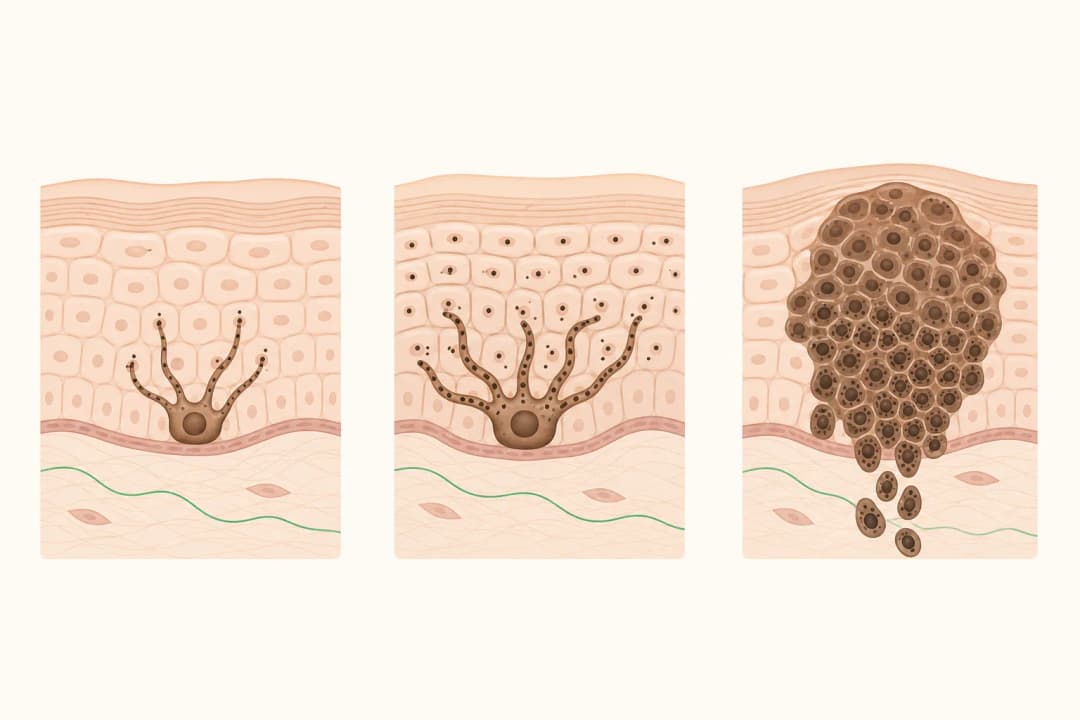
A melanocytic tumour develops from pigment-producing cells. Location matters: growths on haired skin often behave differently from those arising in the mouth, at a nail bed, or near a mucosal surface. The pathology report, growth pattern, and examination findings guide the veterinarian’s assessment.
A dark colour does not establish whether a lump is benign or malignant, and some melanocytic tumours contain little visible pigment. Other cysts, skin tumours, inflammation, or injury can also create a raised or discoloured area.
What to do next
Arrange a veterinary examination for a new or changing lump. Note its location, when you first saw it, and whether your dog licks, scratches, limps, drops food, or has trouble chewing. A clear photograph beside a ruler can help document change between visits.
The veterinarian may sample cells with a needle or recommend removal and microscopic examination. If the lesion is confirmed as benign and fully removed, further treatment may not be needed; monitoring can be reasonable for selected lesions when removal would cause more harm than benefit. Do not cut, squeeze, or apply human skin products to it.
When veterinary care should be prompt
Seek prompt veterinary care if the lump enlarges quickly, bleeds, ulcerates, becomes painful, develops discharge, or interferes with eating, walking, urination, or bowel movements. A mouth mass, nail-bed lesion, unexplained loose tooth, persistent bad breath, or ongoing lameness also deserves timely assessment.
Breathing difficulty, collapse, uncontrolled bleeding, or severe distress requires emergency veterinary attention. Urgency comes from these signs and their effect on your dog, not from the colour of the lesion.
Questions for your veterinarian
Ask what the pathology name means, whether the sample represents the whole lesion, whether the edges were clear, and what changes should trigger a recheck. If malignant features are found, ask whether examination of nearby lymph nodes or additional imaging would change the treatment plan.
Find care
General Clinics & Polyclinics in Abu Dhabi
That answer is general. If you want it applied to your own case, these are licensed general clinics & polyclinics listed in Abu Dhabi.
27 Ar Ruwwad St - Shakhbout City - MSH4 - Abu Dhabi - United Arab Emirates
Accepts: Daman, Thiqa, Cigna, MetLife +20 more
Al Ruwais, Al Dhafrah
Accepts: Daman, Thiqa, AXA, Cigna +16 more
Al Bahyah - Al Bahyah Old - Abu Dhabi - United Arab Emirates
Accepts: Daman, Thiqa, Cigna, Allianz Care +18 more
Abu Dhabi
Accepts: Daman, Thiqa, AXA, Cigna +27 more
Ordered by verification status and how complete each clinic's public record is, then alphabetically. This is a directory listing, not a ranking — Zavis does not rate or recommend providers.
A factual listing drawn from the DHA, DOH and MOHAP licence registers. It is not a referral, an endorsement, or advice that any of these providers is right for you.
Questions people ask
Can a veterinarian identify a benign melanocytic tumour by looking at it?
Visual examination helps define location and urgency, but cell or tissue testing is often needed because benign and malignant growths can look similar.
Does every benign melanocytic tumour in a dog need surgery?
Not necessarily. The decision depends on confirmation of the diagnosis, location, growth, irritation, and the risks of monitoring compared with removal.
Can a benign melanocytoma become melanoma?
A confirmed benign lesion is expected to behave benignly, but any later growth or change should be reassessed because the original sample may not represent every part of a mass or a new lesion may have developed.
Related
Related reading
Keep reading
Medical disclaimer. This page is general health information, not medical advice, and it cannot diagnose you. Always consult a licensed healthcare provider about your own symptoms and treatment. In an emergency in the UAE, call 998 for an ambulance.