
Basal cell and squamous cell skin cancers explained
Short answer
“Basal cell squamous” is not a precise diagnosis; it usually refers to basal cell carcinoma and squamous cell carcinoma, which are distinct skin cancers.
This answers one question. It is not a diagnosis and does not replace an assessment by a licensed doctor.
At a glance
- Terminology
- Basal cell carcinoma and squamous cell carcinoma are separate diagnoses
- Confirmation
- Microscopic examination of a biopsy distinguishes the cell type
- Planning
- Site, pathology and patient health guide treatment
A clear definition
A pathology report should provide the exact tumour name. That wording matters because the expected behaviour, margin planning and follow-up can differ. If the phrase came from a conversation rather than a report, ask the clinician to clarify which diagnosis was intended.
Differences that shape care
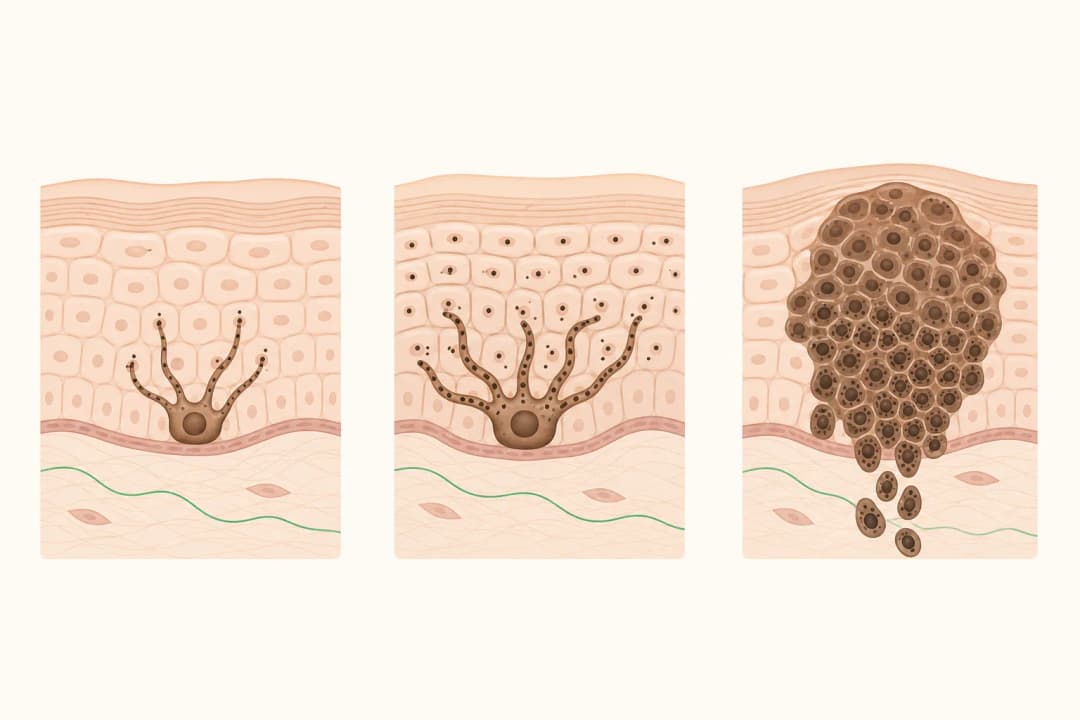
Basal cell carcinoma begins in basal cells of the outer skin layer and often damages tissue mainly where it grows. Squamous cell carcinoma begins in squamous cells and may require closer assessment of features linked with spread, such as tumour depth, nerve involvement, location and immune status.
Neither can be identified reliably from a photograph or texture alone. A biopsy lets a pathologist examine the cells, identify the cancer type and describe features that guide treatment. Melanoma is another separate skin cancer arising from pigment-producing cells.
What to do with a result
Request a copy of the pathology report and note the exact diagnosis, body site, subtype and margin wording. The treating clinician may recommend complete surgical removal, a margin-controlled procedure or another approach after considering the report and your general health.
Protect exposed skin from ultraviolet light and examine your skin in good lighting. Record a clear photograph of a concerning area for comparison without delaying an appointment. Follow-up should cover both the treated site and the rest of the skin.
Changes that need assessment
Book a dermatology assessment for a sore that does not heal, repeated bleeding or crusting, a growing lump, a persistent scaly patch or a changing pigmented mark. Basal cell carcinoma and squamous cell carcinoma can present with some of these features, but an examination and sometimes biopsy are needed to determine the cause.
Seek prompt care if a lesion is growing quickly, causes new numbness or weakness, becomes markedly painful, or is accompanied by a new lump near the affected region. Urgency comes from the change itself and its clinical context, not from guessing a diagnosis.
Questions about your pathology
Ask whether the report names basal cell carcinoma, squamous cell carcinoma or another tumour; whether the sample represents a biopsy or complete removal; and whether further treatment is advised. Also ask what changes at the scar or elsewhere should trigger an earlier review.
Find care
General Clinics & Polyclinics in Abu Dhabi
That answer is general. If you want it applied to your own case, these are licensed general clinics & polyclinics listed in Abu Dhabi.
27 Ar Ruwwad St - Shakhbout City - MSH4 - Abu Dhabi - United Arab Emirates
Accepts: Daman, Thiqa, Cigna, MetLife +20 more
Al Ruwais, Al Dhafrah
Accepts: Daman, Thiqa, AXA, Cigna +16 more
Al Bahyah - Al Bahyah Old - Abu Dhabi - United Arab Emirates
Accepts: Daman, Thiqa, Cigna, Allianz Care +18 more
Abu Dhabi
Accepts: Daman, Thiqa, AXA, Cigna +27 more
Ordered by verification status and how complete each clinic's public record is, then alphabetically. This is a directory listing, not a ranking — Zavis does not rate or recommend providers.
A factual listing drawn from the DHA, DOH and MOHAP licence registers. It is not a referral, an endorsement, or advice that any of these providers is right for you.
Questions people ask
Is basal cell carcinoma a type of squamous cell carcinoma?
No. Both arise from cells in the skin's outer layer, but they begin in different cell types and are named separately on pathology.
Can one person develop both types?
Yes. Separate lesions can have different diagnoses, so each suspicious area should be assessed on its own clinical and pathology findings.
Is surgery always the next step?
Surgery is commonly considered, but the suitable approach depends on the confirmed diagnosis, tumour features, location, previous treatment and personal health factors.
Related
Related reading
Keep reading
Medical disclaimer. This page is general health information, not medical advice, and it cannot diagnose you. Always consult a licensed healthcare provider about your own symptoms and treatment. In an emergency in the UAE, call 998 for an ambulance.