
Balance exercise therapy explained
Short answer
Balance exercise therapy uses progressively challenging, supervised movements to improve steadiness, body awareness, and confidence during daily tasks.
This answers one question. It is not a diagnosis and does not replace an assessment by a licensed doctor.
At a glance
- Training targets
- Postural reactions, strength, sensory use, stepping, and confidence can all be addressed.
- Safety setup
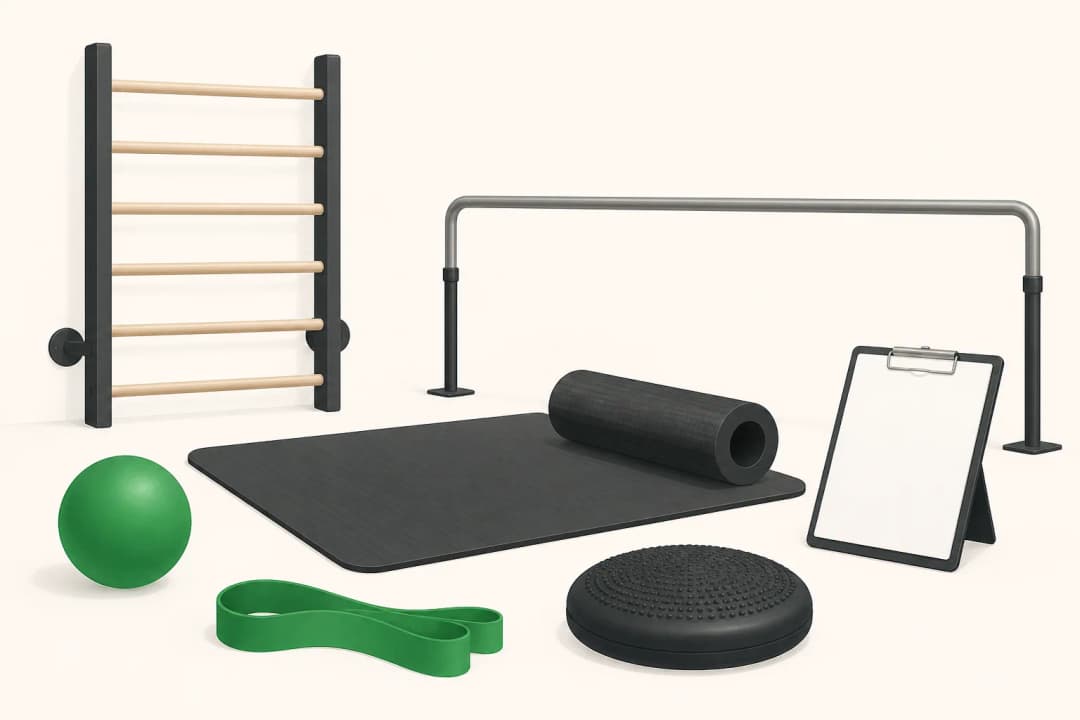
- Use a stable handhold and a clear practice area when support may be needed.
- Progression
- Increase one challenge at a time while retaining control and good movement quality.
Direct answer
A programme may combine stable standing, weight shifts, stepping, turning, and walking tasks. The right starting point depends on your mobility, strength, vision, sensation, medicines, and the reason you feel unsteady.
How balance training works
Maintaining balance requires the brain to combine information from the eyes, inner ear, joints, muscles, and skin. Practice challenges this system in controlled ways so you can adjust posture and take a protective step more effectively.
Therapy is task-specific. Someone with knee osteoarthritis may work on leg control during stairs, while a person with flat feet may need foot strength and alignment work alongside balance drills. Pain, fatigue, joint stiffness, or fear of falling can shape the programme.
Practising with the right level of challenge
Begin with an assessment from a physiotherapist or other qualified clinician if you have fallen, use a walking aid, or cannot stand safely without support. Practise near a stable counter or rail, keep the floor clear, wear secure footwear, and avoid using a wheeled chair as support.
A useful exercise should demand attention without causing repeated loss of control. Progress might involve narrowing the stance, adding head turns, changing the surface, reaching, or combining a movement with a simple mental task. Change one feature at a time and preserve a safe handhold. Consistent practice with sound technique is more useful than pushing through dizziness or joint pain.
When unsteadiness needs assessment
Stop the session and seek clinical advice if exercises repeatedly trigger spinning, faintness, chest discomfort, unusual breathlessness, new numbness, or worsening joint pain. Review is also sensible after a fall or when balance deteriorates despite practice.
Call emergency services for sudden loss of balance accompanied by facial droop, weakness on one side, trouble speaking, a severe new headache, or loss of consciousness. Exercise is not an appropriate response to these sudden neurological warning signs.
Questions that personalise therapy
Ask which body system appears to be limiting your balance, whether medicines or vision should be reviewed, and what support is safest at home. Your therapist can define a clear progression rule and show how to recover if you start to lose stability.
Find care
General Clinics & Polyclinics in Abu Dhabi
That answer is general. If you want it applied to your own case, these are licensed general clinics & polyclinics listed in Abu Dhabi.
27 Ar Ruwwad St - Shakhbout City - MSH4 - Abu Dhabi - United Arab Emirates
Accepts: Daman, Thiqa, Cigna, MetLife +20 more
Al Ruwais, Al Dhafrah
Accepts: Daman, Thiqa, AXA, Cigna +16 more
Al Bahyah - Al Bahyah Old - Abu Dhabi - United Arab Emirates
Accepts: Daman, Thiqa, Cigna, Allianz Care +18 more
Abu Dhabi
Accepts: Daman, Thiqa, AXA, Cigna +27 more
Ordered by verification status and how complete each clinic's public record is, then alphabetically. This is a directory listing, not a ranking — Zavis does not rate or recommend providers.
A factual listing drawn from the DHA, DOH and MOHAP licence registers. It is not a referral, an endorsement, or advice that any of these providers is right for you.
Questions people ask
Should balance exercises make me wobble?
A small, controlled challenge can be part of training, but repeated near-falls are a sign that the task or setup is too difficult. Use support and ask a therapist to adjust the exercise.
Can I do balance therapy if my knees hurt?
Exercises can often be adapted by changing stance, support, range, or duration. Increasing knee pain during or after practice suggests that the dose or movement needs review.
Are standing exercises the only way to train balance?
No. Seated weight shifts, trunk control, transfers, stepping preparation, and strength work may build the components needed before unsupported standing is appropriate.
Related
Related reading
Keep reading
Medical disclaimer. This page is general health information, not medical advice, and it cannot diagnose you. Always consult a licensed healthcare provider about your own symptoms and treatment. In an emergency in the UAE, call 998 for an ambulance.