
Asthma and a tight chest
Short answer
Chest tightness is a common asthma symptom; follow your action plan and seek urgent help when breathing becomes severely difficult.
This answers one question. It is not a diagnosis and does not replace an assessment by a licensed doctor.
At a glance
- Typical companions
- Wheeze, cough, and breathlessness may accompany asthma-related tightness.
- Technique matters
- Correct device and spacer use helps medicine reach the airways.
- Review trigger
- Night waking or restricted activity suggests asthma control needs review.
The short answer
Asthma treatment aims to relax narrowed airways during a flare and control airway inflammation over time. New, unexplained, or intense chest pressure still needs careful assessment because not every tight chest comes from asthma.
How asthma causes tightness
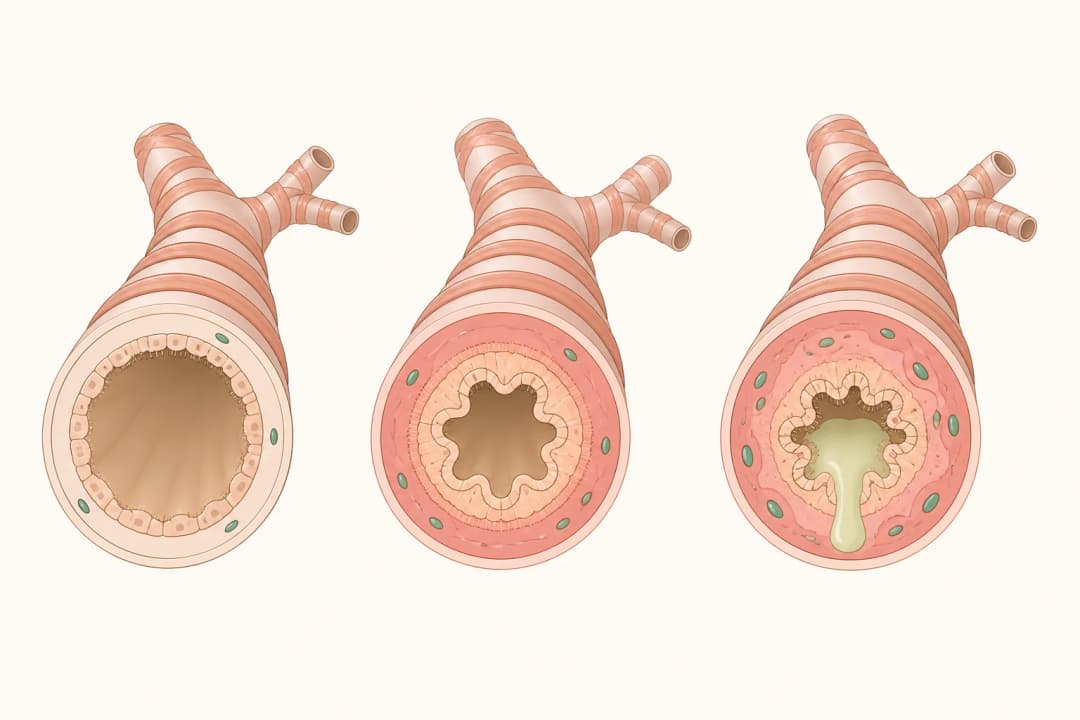
During an asthma flare, muscles around the breathing tubes tighten while the airway lining becomes inflamed and produces mucus. Moving air through the narrower space can feel like squeezing, heaviness, or difficulty taking a satisfying breath.
Asthma often presents with chest tightness alongside wheezing, coughing, or breathlessness, especially after exercise, viral illness, cold air, smoke, or allergen exposure. Chest discomfort without those features may still require evaluation for heart, muscle, digestive, or anxiety-related causes.
How to respond
Pause exertion, sit upright, and move away from the suspected trigger. Take your prescribed reliever through the device specified in your plan, using a spacer if one has been recommended. Reassess your breathing according to the plan rather than repeatedly taking extra medicine without guidance.
After the episode, document what happened before it began, whether wheeze or cough appeared, and how well treatment worked. Recurrent tightness can signal inadequate control, incorrect technique, missed controller doses, or continued trigger exposure.
When tightness is an emergency
Get emergency assistance for severe breathlessness, inability to speak normally, blue or grey lips, faintness, confusion, crushing chest pressure, pain spreading to the arm or jaw, or symptoms that do not respond as your asthma plan expects.
Book a timely appointment if chest tightness disturbs sleep, restricts walking or exercise, keeps returning, or drives increased reliever use. These changes can justify a review of diagnosis, inhaler technique, controller treatment, and the written action plan.
Planning your review
Bring your inhalers and ask the clinician to watch you use them. Discuss whether breathing tests are appropriate, which triggers matter most, what symptom changes define a flare, and precisely when your plan says to seek urgent care.
Find care
General Clinics & Polyclinics in Abu Dhabi
That answer is general. If you want it applied to your own case, these are licensed general clinics & polyclinics listed in Abu Dhabi.
27 Ar Ruwwad St - Shakhbout City - MSH4 - Abu Dhabi - United Arab Emirates
Accepts: Daman, Thiqa, Cigna, MetLife +20 more
Al Ruwais, Al Dhafrah
Accepts: Daman, Thiqa, AXA, Cigna +16 more
Al Bahyah - Al Bahyah Old - Abu Dhabi - United Arab Emirates
Accepts: Daman, Thiqa, Cigna, Allianz Care +18 more
Abu Dhabi
Accepts: Daman, Thiqa, AXA, Cigna +27 more
Ordered by verification status and how complete each clinic's public record is, then alphabetically. This is a directory listing, not a ranking — Zavis does not rate or recommend providers.
A factual listing drawn from the DHA, DOH and MOHAP licence registers. It is not a referral, an endorsement, or advice that any of these providers is right for you.
Questions people ask
Does a tight chest confirm asthma?
No. Asthma commonly presents with chest tightness, but heart, digestive, muscle, and anxiety-related problems can cause a similar feeling. A clinician uses the symptom pattern and, when appropriate, breathing tests to assess the cause.
Why does chest tightness return at night?
Night symptoms may reflect poorly controlled airway inflammation, allergen exposure in the bedroom, reflux, or another condition. Record the pattern and arrange an asthma review rather than simply accepting disrupted sleep.
Related
Related reading
Keep reading
Medical disclaimer. This page is general health information, not medical advice, and it cannot diagnose you. Always consult a licensed healthcare provider about your own symptoms and treatment. In an emergency in the UAE, call 998 for an ambulance.