
Asthma relief: what helps and when to get care
Short answer
Asthma relief comes from using the prescribed reliever correctly during symptoms while maintaining controller treatment and avoiding known triggers according to a personal asthma action plan.
This answers one question. It is not a diagnosis and does not replace an assessment by a licensed doctor.
At a glance
- Reliever role
- Helps open narrowed airways during symptoms
- Controller role
- Treats airway inflammation over time
- Useful review
- Bring inhalers and spacers so technique can be observed
Relief and long-term control are different
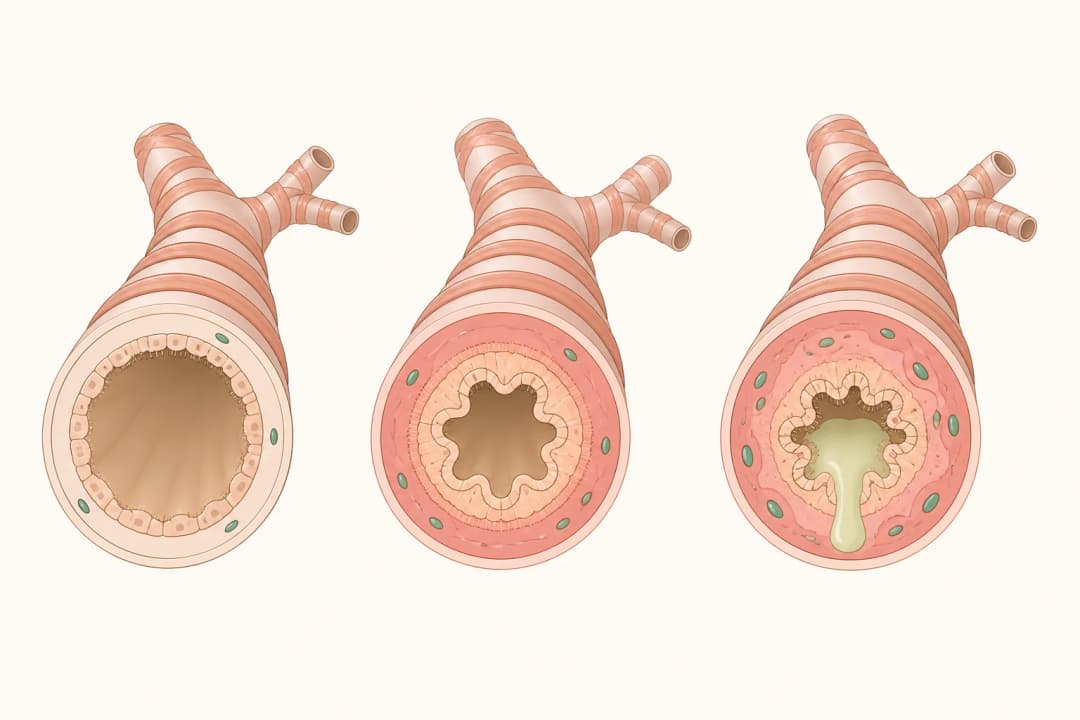
A reliever inhaler is intended to open narrowed airways promptly during symptoms such as wheezing, cough or chest tightness. A controller medicine reduces airway inflammation over time. Feeling better after a reliever does not make regular controller treatment unnecessary when that treatment has been prescribed.
Frequent symptoms, waking at night, avoiding activity or repeatedly reaching for a reliever can indicate that asthma is not well controlled. These patterns merit a clinical review even when each episode settles.
Steps that support safer relief
Sit upright, stay as calm as possible and move away from smoke, perfume, dust or another obvious trigger. Use the prescribed reliever exactly as the personal action plan directs. If a metered-dose inhaler and spacer were supplied, attach them correctly and take each puff separately with the breathing method demonstrated by the clinician.
Check the dose counter or remaining supply before an emergency arises. After a flare, note what happened, which medicine was used and whether symptoms returned. A pharmacist or clinician can watch inhaler technique and correct errors such as firing several puffs into a spacer at once.
Warning signs during an asthma flare
Call emergency services if breathing is severely difficult, speech is limited by breathlessness, the lips look blue or grey, the person is faint, confused or unusually drowsy, or the reliever is not helping as the action plan says it should. Continue the emergency-plan steps while help is being arranged, if it is safe to do so.
What to clarify at your next review
Bring every inhaler and spacer to the appointment. Ask the clinician to label which medicine relieves symptoms, which controls inflammation, how your plan changes during a flare, and what pattern of reliever use should prompt an earlier appointment.
Find care
General Clinics & Polyclinics in Abu Dhabi
That answer is general. If you want it applied to your own case, these are licensed general clinics & polyclinics listed in Abu Dhabi.
27 Ar Ruwwad St - Shakhbout City - MSH4 - Abu Dhabi - United Arab Emirates
Accepts: Daman, Thiqa, Cigna, MetLife +20 more
Al Ruwais, Al Dhafrah
Accepts: Daman, Thiqa, AXA, Cigna +16 more
Al Bahyah - Al Bahyah Old - Abu Dhabi - United Arab Emirates
Accepts: Daman, Thiqa, Cigna, Allianz Care +18 more
Abu Dhabi
Accepts: Daman, Thiqa, AXA, Cigna +27 more
Ordered by verification status and how complete each clinic's public record is, then alphabetically. This is a directory listing, not a ranking — Zavis does not rate or recommend providers.
A factual listing drawn from the DHA, DOH and MOHAP licence registers. It is not a referral, an endorsement, or advice that any of these providers is right for you.
Questions people ask
Why does my reliever help but the symptoms return?
The airways may remain inflamed or the trigger may still be present. Follow the action plan and arrange a review if relief is short-lived or symptoms keep recurring.
Does a spacer matter?
A spacer can make a compatible metered-dose inhaler easier to coordinate and help medicine reach the airways. Use the device and technique recommended for your prescription.
Can steam stop an asthma attack?
Steam is not a substitute for prescribed reliever medicine and may irritate some people's airways. Follow the asthma action plan instead.
Related
Related reading
Keep reading
Medical disclaimer. This page is general health information, not medical advice, and it cannot diagnose you. Always consult a licensed healthcare provider about your own symptoms and treatment. In an emergency in the UAE, call 998 for an ambulance.