
What type of response causes asthma symptoms?
Short answer
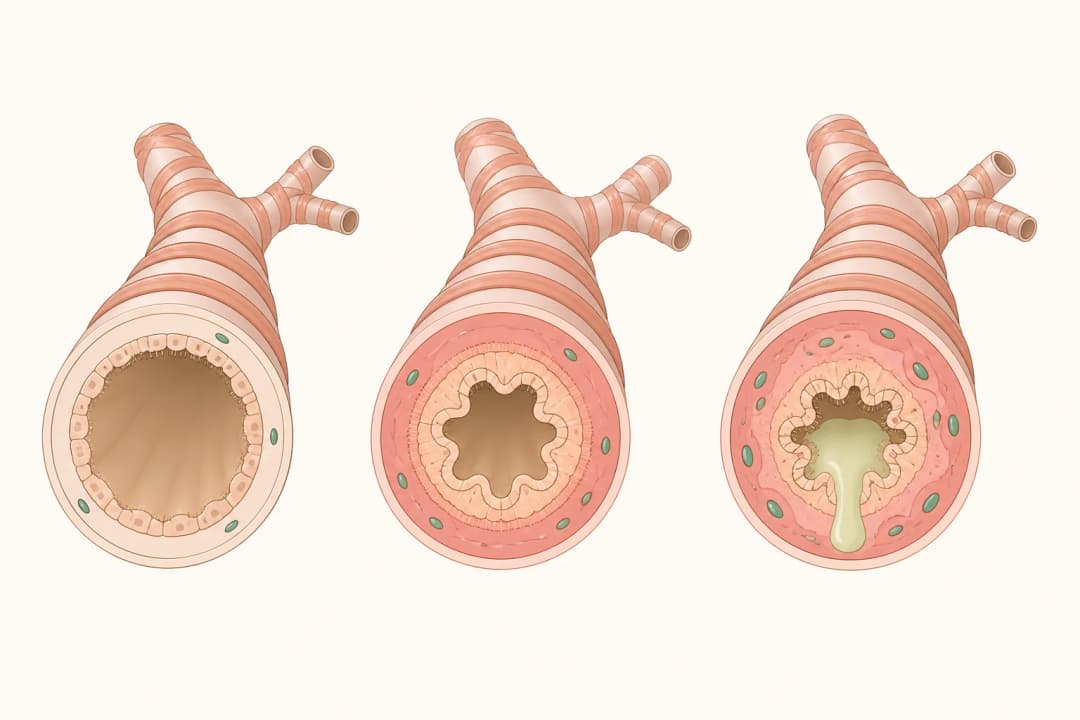
Asthma involves chronic airway inflammation and excessive airway sensitivity; in allergic asthma, an immune response to otherwise harmless substances contributes, while other asthma patterns may be driven by different triggers and pathways.
This answers one question. It is not a diagnosis and does not replace an assessment by a licensed doctor.
At a glance
- Core process
- Inflamed, overly responsive airways narrow after certain triggers.
- Allergic asthma
- Immune sensitisation to an allergen contributes to airway inflammation.
- Other triggers
- Infections, exercise, smoke, odours, cold air, and workplace exposures may provoke symptoms.
The immune and airway response
In allergic asthma, exposure to a sensitising allergen can activate immune cells and chemical signals in the airway. The lining becomes inflamed, airway muscle tightens, and mucus production can increase. Asthma can then present with wheeze, cough, breathlessness, and chest tightness.
Not every asthma episode is an allergic reaction. Viral respiratory infections, exercise, smoke, strong odours, cold air, and some workplace exposures can provoke symptoms through overlapping pathways. The immediate tightening of airway muscle and the longer inflammatory response are related but not identical processes.
Identify patterns and treat inflammation
Record where symptoms occur, what you were doing, whether you had nasal or eye allergy symptoms, and how you responded to the prescribed inhaler. This can help distinguish a consistent trigger from a coincidence. Allergy testing may support a diagnosis of sensitisation, but the result must match your actual exposure and symptom history.
Inhaled corticosteroid treatment reduces airway inflammation; bronchodilators relax tightened airway muscle. Use each medicine for the role stated in your asthma plan, review inhaler technique, and reduce avoidable smoke or allergen exposure without allowing avoidance measures to replace prescribed treatment.
Warning signs of a severe response
Call emergency services for rapidly worsening breathing, difficulty speaking, blue or grey lips, confusion, collapse, or severe symptoms that do not improve with the medicine prescribed for relief. If breathing trouble follows an allergen exposure and is accompanied by throat swelling, widespread hives, faintness, or vomiting, treat it as a possible anaphylactic reaction and use prescribed emergency medication while help is coming.
Questions about your asthma pattern
Ask whether your history suggests allergic or non-allergic triggers, whether testing would alter management, and which medicine controls inflammation versus relieves tightening. Request clear instructions for handling respiratory infections, exercise symptoms, allergen exposure, and any signs of a severe allergic reaction.
Find care
General Clinics & Polyclinics in Abu Dhabi
That answer is general. If you want it applied to your own case, these are licensed general clinics & polyclinics listed in Abu Dhabi.
27 Ar Ruwwad St - Shakhbout City - MSH4 - Abu Dhabi - United Arab Emirates
Accepts: Daman, Thiqa, Cigna, MetLife +20 more
Al Ruwais, Al Dhafrah
Accepts: Daman, Thiqa, AXA, Cigna +16 more
Al Bahyah - Al Bahyah Old - Abu Dhabi - United Arab Emirates
Accepts: Daman, Thiqa, Cigna, Allianz Care +18 more
Abu Dhabi
Accepts: Daman, Thiqa, AXA, Cigna +27 more
Ordered by verification status and how complete each clinic's public record is, then alphabetically. This is a directory listing, not a ranking — Zavis does not rate or recommend providers.
A factual listing drawn from the DHA, DOH and MOHAP licence registers. It is not a referral, an endorsement, or advice that any of these providers is right for you.
Questions people ask
Is asthma always an allergic response?
No. Allergic immune pathways contribute to some asthma, while other patterns are associated with infections, irritants, exercise, medicines, or additional inflammatory pathways.
Does a positive allergy test prove what triggers my asthma?
Not by itself. It shows sensitisation, which must be interpreted alongside exposure timing and symptoms. A clinician can decide whether the result changes avoidance or treatment.
Why are both controller and bronchodilator medicines used?
They address different parts of asthma: controller treatment reduces airway inflammation, while bronchodilators relax tightened airway muscle. Your prescription determines when each is used.
Related
Related reading
Keep reading
Medical disclaimer. This page is general health information, not medical advice, and it cannot diagnose you. Always consult a licensed healthcare provider about your own symptoms and treatment. In an emergency in the UAE, call 998 for an ambulance.