
Asthma and wheezing in infants
Short answer
Infants can have asthma-like wheezing and cough, but diagnosis requires careful assessment because several illnesses cause similar symptoms.
This answers one question. It is not a diagnosis and does not replace an assessment by a licensed doctor.
At a glance
- Diagnostic approach
- Symptom pattern, examination and treatment response
- Helpful observation
- Record sounds, feeding changes and possible triggers
- Medicine delivery
- A prescribed inhaler may be given through a spacer and mask
The key point for parents
A baby cannot describe chest tightness or perform standard breathing tests reliably. Clinicians therefore look at repeated symptom patterns, triggers, family and allergy history, examination findings and response to treatment.
How breathing symptoms may appear
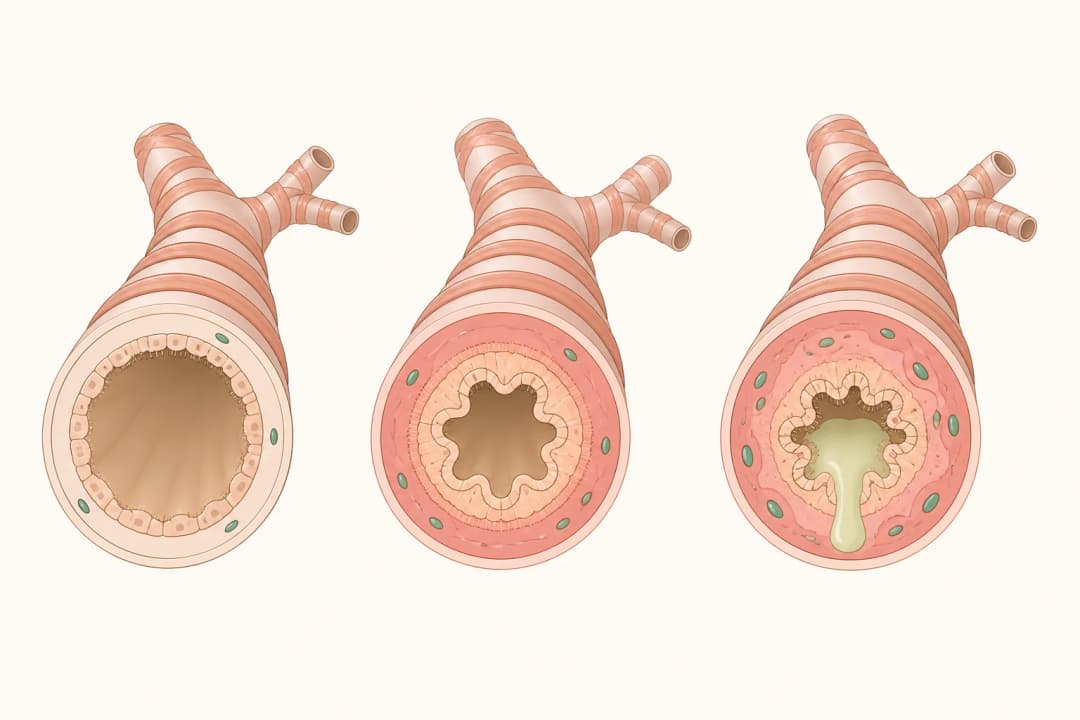
Asthma in a young child may present with recurrent wheezing, coughing during sleep or activity, faster breathing, tiring during feeds, or reduced playfulness. Viral infections frequently bring on wheezing in infancy, and not every baby who wheezes has asthma.
Noisy breathing can also come from the nose or upper airway. A phone recording of the sound and notes about when it starts can help the clinician distinguish wheeze from congestion or other noises.
What caregivers can do
Keep the baby away from tobacco smoke, vaping aerosols, incense and strong fragrances. Give only medicines prescribed for the child, using the spacer and mask as demonstrated. The mask should seal gently around the mouth and nose so the inhaled medicine is not lost.
Record coughing, wheezing, feeding changes, sleep disruption and possible triggers. Arrange medical review for repeated episodes, symptoms between colds, or uncertainty about device technique. Do not give an infant someone else's inhaler or cough medicine.
Warning signs in an infant
Get emergency help if the baby has blue or grey lips, pauses in breathing, severe chest pulling, grunting, unusual sleepiness, poor responsiveness, or cannot feed because of breathlessness. Urgent assessment is also needed when breathing is rapidly worsening or prescribed reliever treatment is not working as the child's plan describes.
Topics to discuss with the clinician
Ask what sound or behaviour should trigger treatment, how the spacer and mask should be cleaned, and when the baby needs reassessment. Confirm a written plan for worsening symptoms and whether allergy, reflux, infection or an airway problem needs consideration.
Find care
General Clinics & Polyclinics in Abu Dhabi
That answer is general. If you want it applied to your own case, these are licensed general clinics & polyclinics listed in Abu Dhabi.
27 Ar Ruwwad St - Shakhbout City - MSH4 - Abu Dhabi - United Arab Emirates
Accepts: Daman, Thiqa, Cigna, MetLife +20 more
Al Ruwais, Al Dhafrah
Accepts: Daman, Thiqa, AXA, Cigna +16 more
Al Bahyah - Al Bahyah Old - Abu Dhabi - United Arab Emirates
Accepts: Daman, Thiqa, Cigna, Allianz Care +18 more
Abu Dhabi
Accepts: Daman, Thiqa, AXA, Cigna +27 more
Ordered by verification status and how complete each clinic's public record is, then alphabetically. This is a directory listing, not a ranking — Zavis does not rate or recommend providers.
A factual listing drawn from the DHA, DOH and MOHAP licence registers. It is not a referral, an endorsement, or advice that any of these providers is right for you.
Questions people ask
Does wheezing in a baby confirm asthma?
No. Viral illness and other airway conditions can also cause wheezing, so clinicians assess repeated patterns and other findings.
Can a baby use an inhaler?
A prescribed inhaler can be delivered through an age-appropriate spacer and face mask. Correct fit and technique are essential.
What details help at an appointment?
Bring notes or recordings showing when the noise occurs, whether feeding or sleep changes, and how any prescribed treatment affected symptoms.
Keep reading
Medical disclaimer. This page is general health information, not medical advice, and it cannot diagnose you. Always consult a licensed healthcare provider about your own symptoms and treatment. In an emergency in the UAE, call 998 for an ambulance.