
Asthma explained in plain English
Short answer
Asthma is a long-term airway condition that can cause wheezing, coughing, chest tightness and difficulty breathing.
This answers one question. It is not a diagnosis and does not replace an assessment by a licensed doctor.
At a glance
- Affected area
- The breathing tubes in the lungs
- Typical pattern
- Symptoms can vary and may come in episodes
- Core management
- Correct inhaler use and a written action plan
The short answer
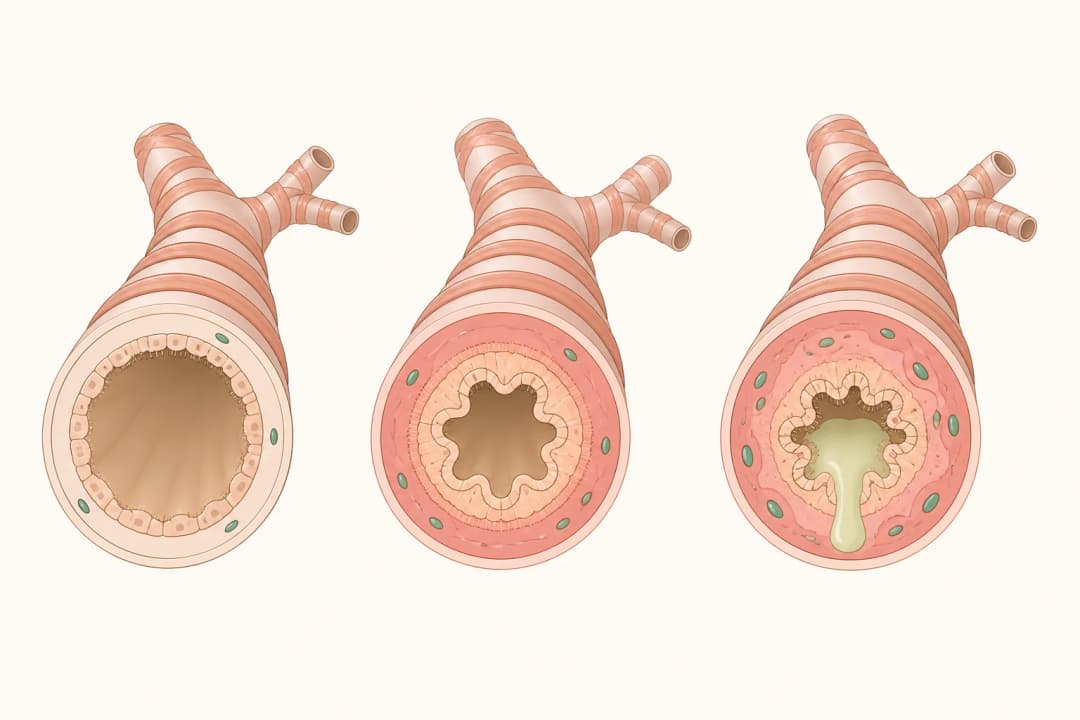
The breathing tubes become sensitive, swollen and narrow at times. Muscles around them may tighten, and extra mucus can further restrict airflow. Symptoms can settle between episodes, but the underlying sensitivity may remain.
What asthma may feel like
Asthma commonly presents with a whistling sound when breathing, a dry or persistent cough, pressure across the chest, or breathlessness. Symptoms may appear after exercise, during the night, with viral illness, or after exposure to smoke, dust, strong scents or allergens.
A clinician considers the symptom pattern, examination and breathing tests where suitable. Other conditions can cause similar complaints, so wheezing or cough alone does not establish the diagnosis.
Managing asthma day to day
Use inhalers exactly as prescribed and have the technique checked, because poor positioning or timing can prevent medicine from reaching the lungs. A reliever opens tightened airways, while a preventer is used regularly to reduce airway swelling when prescribed.
Follow your written asthma action plan, notice personal triggers and keep medicines available as directed. Arrange a review if symptoms wake you, limit normal activity or require the reliever more often than your plan allows.
When breathing trouble needs urgent care
Seek emergency help for severe breathlessness, difficulty speaking in full sentences, bluish or grey lips, confusion, marked exhaustion, or rapid worsening. Follow the emergency steps in the asthma action plan while help is arranged. If the prescribed reliever is not helping as expected, do not delay urgent assessment.
Useful questions for your appointment
Ask which inhaler is for daily prevention and which is for sudden symptoms, then demonstrate your technique. Clarify your likely triggers, the signs that control is worsening, and the exact actions your written plan recommends during a flare.
Find care
General Clinics & Polyclinics in Abu Dhabi
That answer is general. If you want it applied to your own case, these are licensed general clinics & polyclinics listed in Abu Dhabi.
27 Ar Ruwwad St - Shakhbout City - MSH4 - Abu Dhabi - United Arab Emirates
Accepts: Daman, Thiqa, Cigna, MetLife +20 more
Al Ruwais, Al Dhafrah
Accepts: Daman, Thiqa, AXA, Cigna +16 more
Al Bahyah - Al Bahyah Old - Abu Dhabi - United Arab Emirates
Accepts: Daman, Thiqa, Cigna, Allianz Care +18 more
Abu Dhabi
Accepts: Daman, Thiqa, AXA, Cigna +27 more
Ordered by verification status and how complete each clinic's public record is, then alphabetically. This is a directory listing, not a ranking — Zavis does not rate or recommend providers.
A factual listing drawn from the DHA, DOH and MOHAP licence registers. It is not a referral, an endorsement, or advice that any of these providers is right for you.
Questions people ask
Can asthma symptoms come and go?
Yes. Airways may be quiet between episodes and become narrower after a trigger, which is why a changing pattern is characteristic.
Does every person with asthma wheeze?
No. Asthma can present mainly with cough, chest tightness or breathlessness, and a clinician assesses the overall pattern.
Why does inhaler technique matter?
The medicine needs to travel into the airways. Incorrect timing, sealing or breathing can leave much of it in the mouth.
Related
Related reading
Keep reading
Medical disclaimer. This page is general health information, not medical advice, and it cannot diagnose you. Always consult a licensed healthcare provider about your own symptoms and treatment. In an emergency in the UAE, call 998 for an ambulance.