
Asthma and difficulty breathing: what to do
Short answer
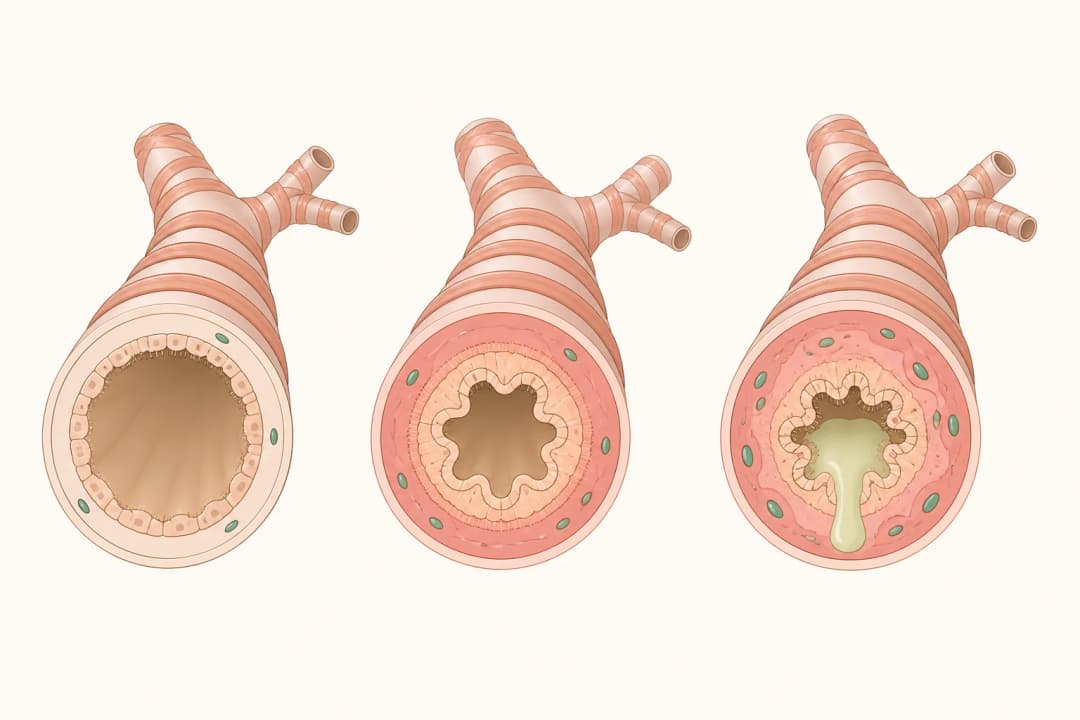
Asthma can make breathing hard by narrowing inflamed airways, and severe or rapidly worsening breathlessness needs urgent action.
This answers one question. It is not a diagnosis and does not replace an assessment by a licensed doctor.
At a glance
- Body change
- Airway tightening, swelling, and mucus reduce space for moving air
- Safer position
- Stop exertion and sit upright while following the asthma action plan
- Do not rely on
- Wheezing alone; serious restriction can sometimes be quiet
Why airflow feels restricted
In asthma, muscles around the breathing tubes tighten while swelling and mucus narrow their inside space. Moving air out can become especially difficult, creating chest tightness, wheeze, cough, or the feeling that a full breath is unavailable. Symptoms can be mild at first and then intensify.
Breathlessness has causes other than asthma, including heart or lung problems, infection, and anxiety-related overbreathing. Someone with an asthma diagnosis should not assume every episode has the same cause, particularly when the sensation is new, unusually intense, or accompanied by chest pain, faintness, fever, or leg swelling.
Actions to take now
Stop exertion and sit upright. Follow the current asthma action plan and use prescribed reliever medicine exactly as its urgent instructions state, using a spacer if advised. Loosen restrictive clothing and move away from an obvious irritant only when that can be done safely.
Once breathing has settled, organise a clinical review to discuss what happened. Take the inhaler, spacer, and action plan with you. The clinician can check whether the device was used correctly, whether medicine remains available in it, and whether prevention treatment or trigger management needs revision.
Recognising a breathing emergency
Call emergency services immediately if you cannot speak comfortably, are gasping or exhausted, develop blue or grey lips or face, feel faint or confused, have severe chest pain, or do not improve after using the emergency steps in your asthma plan. Ask someone to stay with you if possible.
Do not delay because wheezing is absent; very restricted airflow may produce little sound. New breathlessness, a clear deterioration, or symptoms that keep returning after temporary relief also deserve prompt medical assessment.
Clarify your personal plan
Ask what your earliest warning sign appears to be, which exact action-plan instruction applies when talking or walking becomes difficult, and how to check inhaler technique. Mention any chest pain, fever, palpitations, faintness, leg swelling, new medicines, or recent travel so other causes can be considered.
Find care
General Clinics & Polyclinics in Abu Dhabi
That answer is general. If you want it applied to your own case, these are licensed general clinics & polyclinics listed in Abu Dhabi.
27 Ar Ruwwad St - Shakhbout City - MSH4 - Abu Dhabi - United Arab Emirates
Accepts: Daman, Thiqa, Cigna, MetLife +20 more
Al Ruwais, Al Dhafrah
Accepts: Daman, Thiqa, AXA, Cigna +16 more
Al Bahyah - Al Bahyah Old - Abu Dhabi - United Arab Emirates
Accepts: Daman, Thiqa, Cigna, Allianz Care +18 more
Abu Dhabi
Accepts: Daman, Thiqa, AXA, Cigna +27 more
Ordered by verification status and how complete each clinic's public record is, then alphabetically. This is a directory listing, not a ranking — Zavis does not rate or recommend providers.
A factual listing drawn from the DHA, DOH and MOHAP licence registers. It is not a referral, an endorsement, or advice that any of these providers is right for you.
Questions people ask
Why can it feel harder to breathe out with asthma?
Narrowed small airways resist outgoing airflow, so air can feel trapped in the chest. This may create a prolonged exhale, tightness, wheeze, or rapid breathing.
Can I lie down during an asthma breathing episode?
Sitting upright is generally more comfortable and supports chest movement. Follow your action plan and seek emergency help immediately if speech, alertness, colour, or response to reliever medicine is affected.
Related
Related reading
Keep reading
Medical disclaimer. This page is general health information, not medical advice, and it cannot diagnose you. Always consult a licensed healthcare provider about your own symptoms and treatment. In an emergency in the UAE, call 998 for an ambulance.