
Asthma causes and treatment explained
Short answer
Asthma reflects ongoing airway sensitivity influenced by inherited and environmental factors, and treatment combines trigger management, anti-inflammatory control and rapid relief when symptoms occur.
This answers one question. It is not a diagnosis and does not replace an assessment by a licensed doctor.
At a glance
- Treatment focus
- Control inflammation, relieve narrowing and reduce relevant exposures
- Device check
- Demonstrate inhaler technique during clinical or pharmacy reviews
- Personal guide
- A written asthma action plan for stable days and flares
Causes and treatment summary
There is rarely one identifiable cause. The practical goal is to confirm the diagnosis, recognise each person's symptom pattern and use treatment that keeps the breathing tubes less inflamed and less likely to narrow.
Why the airways react
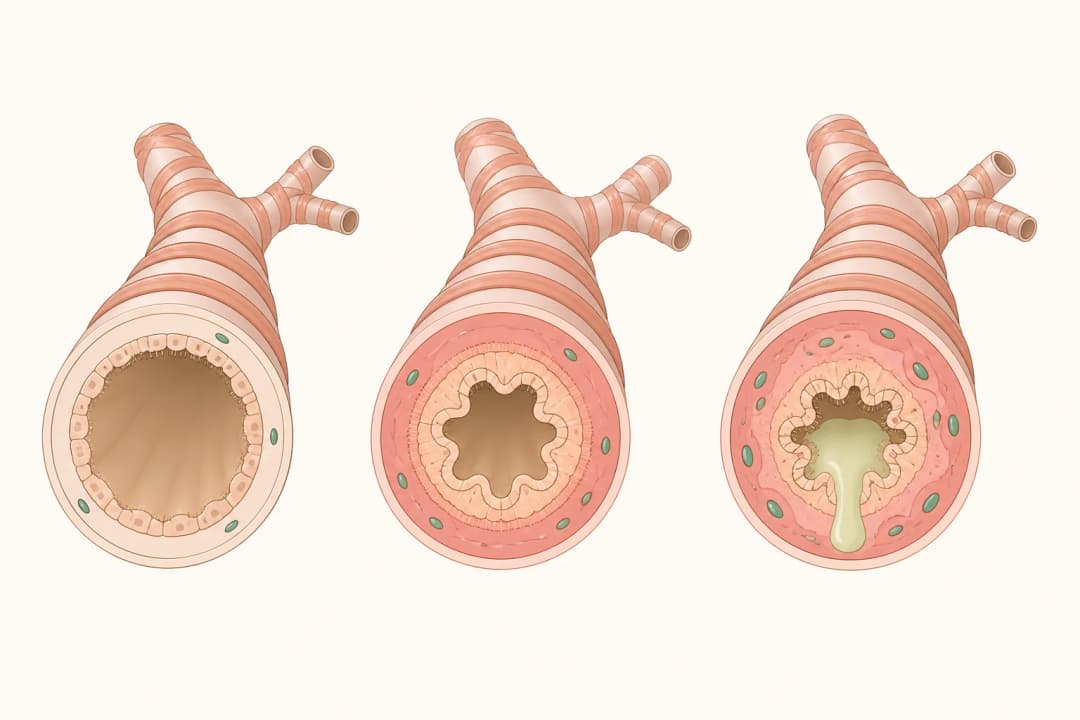
Asthma involves inflammation inside the breathing tubes. A family tendency and allergic conditions can increase susceptibility, while smoke, pollution or occupational irritants may contribute. Once airways are sensitive, viral infections, allergens, exercise, cold air and fumes can provoke a flare.
Wheezing, coughing, breathlessness and chest tightness often fluctuate, becoming worse at night, early in the morning or after a trigger. Asthma commonly presents with this variable cluster, but an assessment is needed because other conditions can produce similar symptoms.
Building a treatment plan
Controller or preventer medicines reduce airway inflammation and are taken according to the prescribed schedule, even when breathing feels normal. Reliever medicines act quickly on narrowed airways during symptoms. Some inhalers combine these functions, so follow the instructions for your specific device rather than relying on its colour.
Correct inhaler technique determines how much medicine reaches the lungs. Ask a clinician or pharmacist to watch you use the device, discuss whether a spacer is appropriate and check technique again if control changes.
Keep a written action plan covering routine medicines, personal signs of worsening, treatment adjustments already authorised by your clinician and emergency actions. Avoid smoke, address confirmed allergy triggers and continue suitable activity with advice if exercise brings on symptoms.
Signs a flare is serious
Call emergency services for severe difficulty breathing, inability to finish sentences, blue or grey lips, marked drowsiness or confusion, or symptoms that keep worsening despite the emergency steps in your action plan. Sit upright and use prescribed rescue treatment as directed while awaiting help.
Book an earlier review if symptoms interrupt sleep, interfere with work or exercise, return repeatedly, or require reliever medicine more often than the action plan allows. The clinician can check technique, adherence, triggers and whether the diagnosis or treatment needs adjustment.
Treatment questions for your clinician
Clarify what each inhaler does, when it should be used, which changes mean treatment needs review and how your plan applies during a respiratory infection. Bring every inhaler and spacer so technique and remaining doses can be checked together.
Find care
General Clinics & Polyclinics in Abu Dhabi
That answer is general. If you want it applied to your own case, these are licensed general clinics & polyclinics listed in Abu Dhabi.
27 Ar Ruwwad St - Shakhbout City - MSH4 - Abu Dhabi - United Arab Emirates
Accepts: Daman, Thiqa, Cigna, MetLife +20 more
Al Ruwais, Al Dhafrah
Accepts: Daman, Thiqa, AXA, Cigna +16 more
Al Bahyah - Al Bahyah Old - Abu Dhabi - United Arab Emirates
Accepts: Daman, Thiqa, Cigna, Allianz Care +18 more
Abu Dhabi
Accepts: Daman, Thiqa, AXA, Cigna +27 more
Ordered by verification status and how complete each clinic's public record is, then alphabetically. This is a directory listing, not a ranking — Zavis does not rate or recommend providers.
A factual listing drawn from the DHA, DOH and MOHAP licence registers. It is not a referral, an endorsement, or advice that any of these providers is right for you.
Questions people ask
Should I stop a preventer inhaler when I feel well?
Do not stop or change prescribed controller treatment on your own. Feeling well may indicate that inflammation is being controlled; discuss any reduction with the prescribing clinician.
Do antibiotics treat an asthma flare?
Antibiotics do not treat airway inflammation or narrowing and are not routinely used for asthma itself. They may be prescribed when a clinician identifies a bacterial infection that needs separate treatment.
Can avoiding triggers replace inhalers?
Reducing a confirmed trigger may lessen symptoms, but it does not necessarily control the underlying airway inflammation. Use prescribed medicine and exposure measures as parts of the same plan.
Related
Related reading
Keep reading
Medical disclaimer. This page is general health information, not medical advice, and it cannot diagnose you. Always consult a licensed healthcare provider about your own symptoms and treatment. In an emergency in the UAE, call 998 for an ambulance.