
Recognising and responding to an asthma attack
Short answer
An asthma attack is a worsening of breathing symptoms caused by narrowed inflamed airways and requires prompt action using the person's asthma plan.
This answers one question. It is not a diagnosis and does not replace an assessment by a licensed doctor.
At a glance
- Position
- Sit upright rather than lying flat during breathing difficulty.
- Preparation
- Keep the written asthma plan and prescribed reliever accessible.
The direct answer
Signs may include increasing wheeze, cough, chest tightness, shortness of breath, difficulty speaking, or a reliever that helps less than expected. Symptoms can build gradually or deteriorate quickly.
What happens in the airways
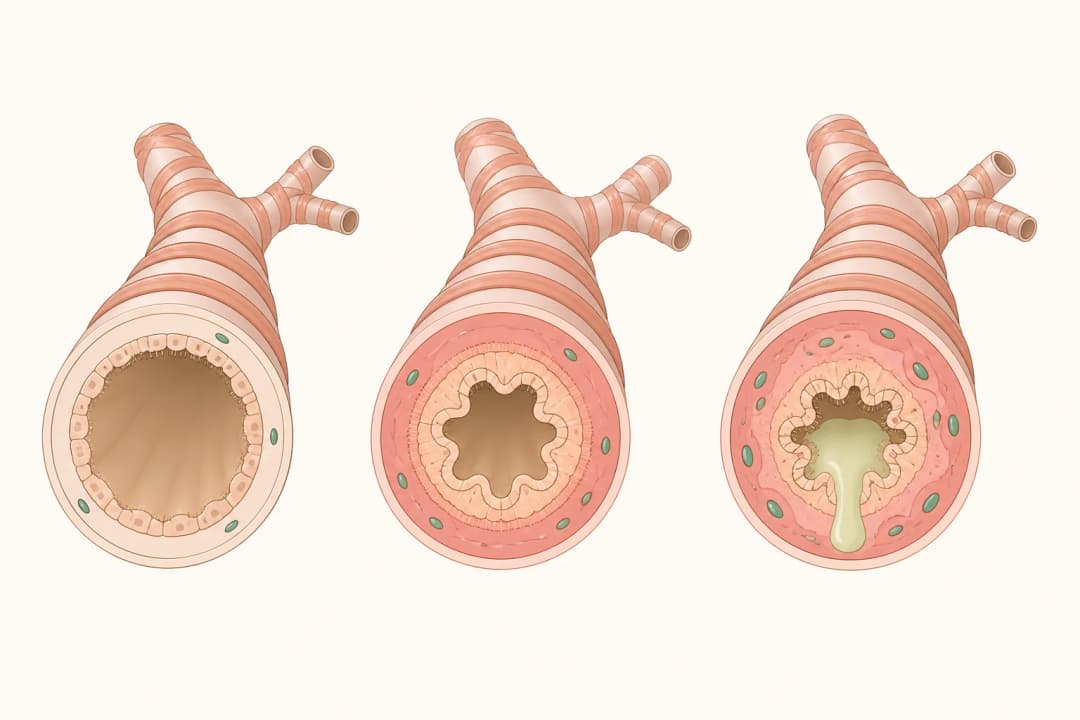
During an attack, muscles around the breathing tubes tighten while inflammation and mucus reduce the space available for airflow. Breathing out becomes especially difficult, and the effort of breathing may exhaust the person.
Triggers differ between people and can include respiratory infections, smoke, dust, strong scents, exercise, weather changes, or missed controller medicine. Identifying a possible trigger can support later prevention, but it must not delay immediate treatment.
Immediate action
Sit upright, stay with the person, and keep them as calm as possible. Follow their written asthma action plan and help them use the prescribed reliever with the correct device and spacer if directed. Move away from an obvious trigger without creating further exertion.
If there is no action plan, symptoms are significant, or you are uncertain about the response, obtain urgent medical guidance. Do not rely on steam, hot drinks, or someone else's inhaler as a substitute for appropriate asthma treatment.
Call emergency services
Get emergency help immediately if breathing is severe or rapidly worsening, the person cannot speak comfortably, the skin around the lips looks blue or grey, they appear confused, drowsy, or exhausted, or the prescribed reliever is not helping. Continue following the emergency steps in the asthma action plan while help is coming.
Review after an attack
Arrange follow-up after recovery to discuss the likely trigger, controller treatment, reliever use, inhaler technique, and a written plan for future symptoms. Ask when normal activity can resume and what early changes should prompt treatment before breathing becomes severe.
Find care
General Clinics & Polyclinics in Abu Dhabi
That answer is general. If you want it applied to your own case, these are licensed general clinics & polyclinics listed in Abu Dhabi.
27 Ar Ruwwad St - Shakhbout City - MSH4 - Abu Dhabi - United Arab Emirates
Accepts: Daman, Thiqa, Cigna, MetLife +20 more
Al Ruwais, Al Dhafrah
Accepts: Daman, Thiqa, AXA, Cigna +16 more
Al Bahyah - Al Bahyah Old - Abu Dhabi - United Arab Emirates
Accepts: Daman, Thiqa, Cigna, Allianz Care +18 more
Abu Dhabi
Accepts: Daman, Thiqa, AXA, Cigna +27 more
Ordered by verification status and how complete each clinic's public record is, then alphabetically. This is a directory listing, not a ranking — Zavis does not rate or recommend providers.
A factual listing drawn from the DHA, DOH and MOHAP licence registers. It is not a referral, an endorsement, or advice that any of these providers is right for you.
Questions people ask
Can an asthma attack happen without loud wheezing?
Yes. Severe airway narrowing may produce little audible wheeze, so breathing effort, speech, alertness, and response to treatment are crucial.
Should an asthma attack be reviewed after it settles?
Yes. Follow-up can identify triggers, correct inhaler technique, and adjust prevention or the written action plan if needed.
Related
Related reading
Keep reading
Medical disclaimer. This page is general health information, not medical advice, and it cannot diagnose you. Always consult a licensed healthcare provider about your own symptoms and treatment. In an emergency in the UAE, call 998 for an ambulance.