
Asthma and cold air
Short answer
Cold, dry air can trigger asthma symptoms by cooling and drying sensitive airways, particularly during faster breathing.
This answers one question. It is not a diagnosis and does not replace an assessment by a licensed doctor.
At a glance
- Trigger
- Coldness and dryness can irritate sensitive lower airways.
- Breathing route
- The nose helps warm and humidify inhaled air.
- Preparation
- A gradual warm-up and accessible reliever can support safer activity.
The short answer
The response may include cough, wheeze, chest tightness or breathlessness. It does not mean outdoor activity must stop, but recurring symptoms suggest your asthma control and preparation for exposure should be reviewed.
Why cold air can trigger symptoms
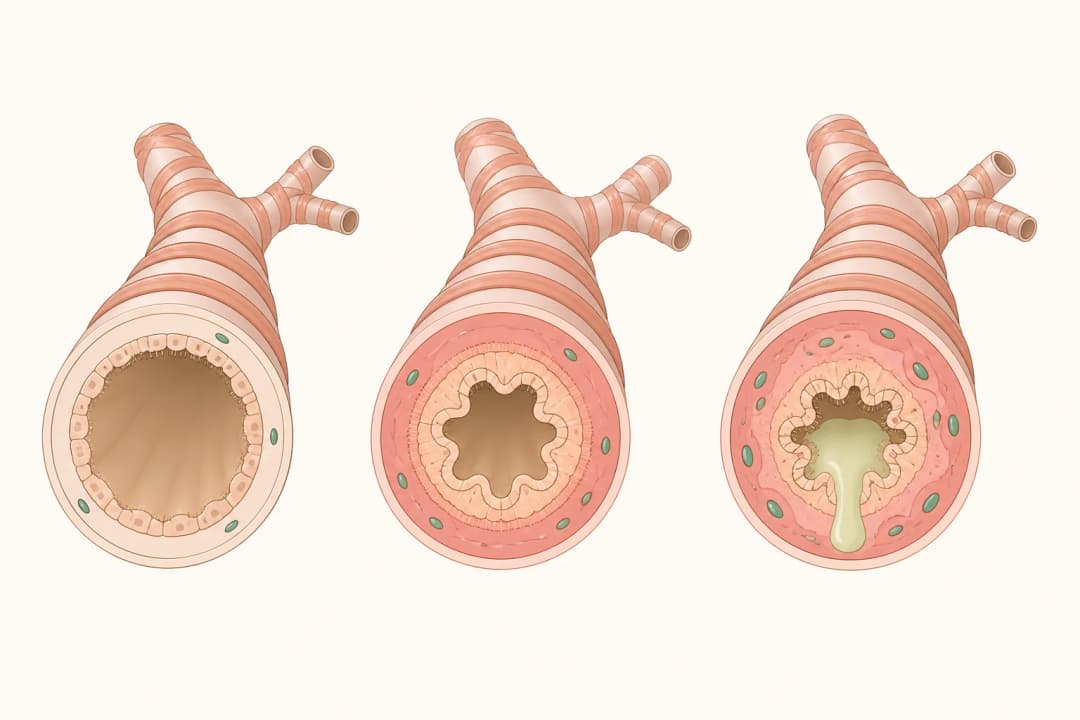
Breathing through the nose normally warms and humidifies incoming air. During exercise or hurried walking, mouth breathing sends colder, drier air directly towards the lower airways, where sensitive muscles may tighten and inflamed lining can become more irritated.
Wind, sudden movement between warm and cold spaces, respiratory infections and airborne irritants may add to the effect. Asthma commonly presents with symptoms that vary by trigger, so a repeated cold-weather pattern is useful information for your clinician.
Reducing the effect of cold air
Keep taking your prescribed preventer and follow any pre-exercise instructions in your asthma action plan. Warm up gradually, breathe through your nose when practical, and place a loose scarf or cold-weather mask over your nose and mouth to help warm inhaled air.
Carry your reliever where it remains easy to reach and check that it is usable before going out. Choose a sheltered route or move activity indoors when cold wind reliably causes symptoms. Avoid smoke and strong fragrances, which can compound airway irritation.
When symptoms need medical care
Arrange an asthma review if cold air repeatedly limits routine activity, wakes you at night or leads to increasing reliever use. A clinician can check inhaler technique, explore other triggers and update the action plan before further exposure.
Call local emergency services if breathlessness becomes severe, speaking full sentences is difficult, lips appear blue or grey, you become confused or drowsy, or the reliever fails to help as set out in your emergency plan. Move out of the cold if this can be done safely.
Planning for cooler weather
Ask how to prepare for exercise or travel in cold conditions, when to use prescribed medicine before exposure, and how to tell a manageable trigger response from a flare. Mention nasal allergy symptoms, persistent cough and any limits on work or sport.
Find care
General Clinics & Polyclinics in Abu Dhabi
That answer is general. If you want it applied to your own case, these are licensed general clinics & polyclinics listed in Abu Dhabi.
27 Ar Ruwwad St - Shakhbout City - MSH4 - Abu Dhabi - United Arab Emirates
Accepts: Daman, Thiqa, Cigna, MetLife +20 more
Al Ruwais, Al Dhafrah
Accepts: Daman, Thiqa, AXA, Cigna +16 more
Al Bahyah - Al Bahyah Old - Abu Dhabi - United Arab Emirates
Accepts: Daman, Thiqa, Cigna, Allianz Care +18 more
Abu Dhabi
Accepts: Daman, Thiqa, AXA, Cigna +27 more
Ordered by verification status and how complete each clinic's public record is, then alphabetically. This is a directory listing, not a ranking — Zavis does not rate or recommend providers.
A factual listing drawn from the DHA, DOH and MOHAP licence registers. It is not a referral, an endorsement, or advice that any of these providers is right for you.
Questions people ask
Can I exercise outdoors when it is cold?
Often, yes, if asthma is controlled and your action plan supports it. Warm up gradually, reduce direct cold-air exposure and stop if breathing symptoms develop.
Does a scarf help asthma in cold weather?
A loose scarf or suitable mask over the nose and mouth can warm and moisten incoming air. It does not replace prescribed asthma medicine.
Why do I cough after moving into cold air?
The rapid change in temperature and humidity can irritate sensitive airways. Repeated coughing, wheeze or tightness should be discussed during an asthma review.
Related
Related reading
Keep reading
Medical disclaimer. This page is general health information, not medical advice, and it cannot diagnose you. Always consult a licensed healthcare provider about your own symptoms and treatment. In an emergency in the UAE, call 998 for an ambulance.