
What an X-ray can show in aspiration pneumonia
Short answer
A chest X-ray can show lung changes consistent with aspiration pneumonia, but it cannot confirm the cause by itself or exclude very early disease.
This answers one question. It is not a diagnosis and does not replace an assessment by a licensed doctor.
At a glance
- What it shows
- The location and extent of visible lung changes
- Key limitation
- Early aspiration-related changes may not yet be visible
- Diagnosis
- Imaging is combined with history, examination, and oxygen assessment
How the image is interpreted
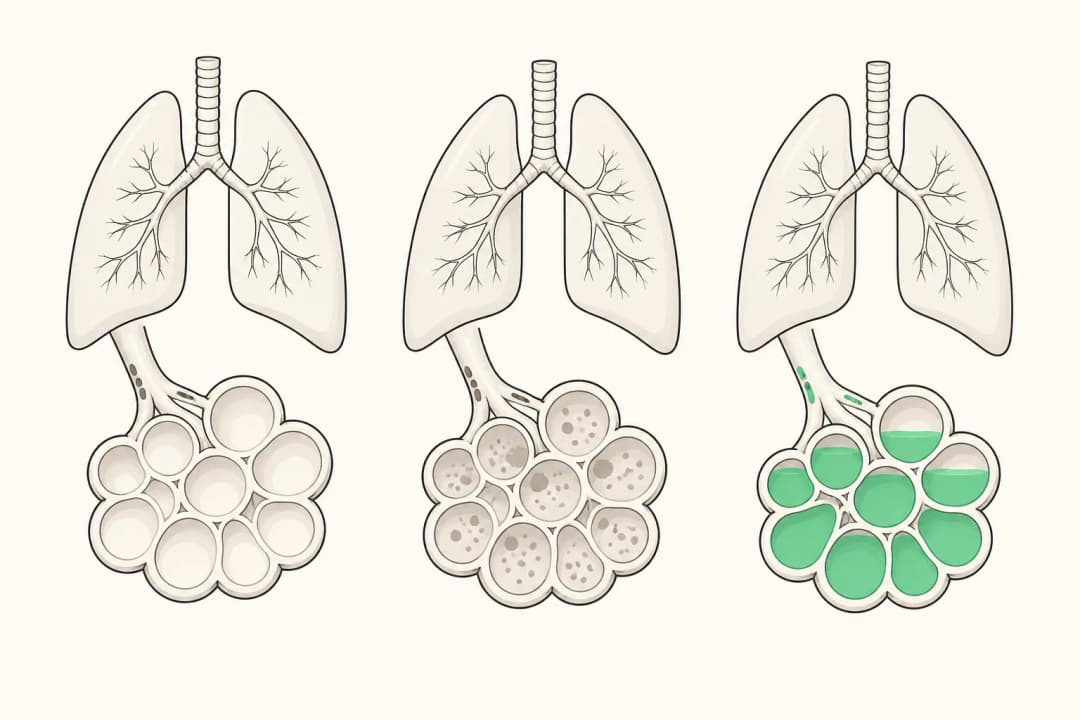
Clinicians look for new areas of opacity, which appear whiter where air spaces contain fluid, inflammatory material, or collapsed tissue. The location can support aspiration when it matches the person's position during the event, but similar appearances occur with other forms of pneumonia, fluid in the lungs, bleeding, or partial collapse. The report therefore needs to be read alongside the aspiration history, temperature, breathing, oxygen level, examination, and laboratory results.
What happens around the test
Tell the imaging team if you cannot stand safely, are pregnant or might be pregnant, or need oxygen while moving. Usually images are taken from more than one direction when your condition allows. An initially unremarkable image does not override concerning symptoms soon after aspiration; the clinician may continue observation, treat based on the full assessment, repeat imaging later, or choose another test when the diagnosis remains uncertain.
Do not wait for imaging if breathing worsens
Emergency assessment is needed for severe breathlessness, blue or grey lips, collapse, new confusion, or difficulty staying awake. Arrange prompt review after an aspiration event if fever, chest pain, increasing cough, phlegm, or shortness of breath develops, even if an earlier X-ray was described as clear. Urgency is determined by breathing and circulation warning signs rather than by whether a report has already been issued.
Understanding your result
Ask which lung areas look abnormal, whether the pattern matches the suspected aspiration event, and what alternative explanations remain. Find out whether the result changes treatment, whether follow-up imaging is appropriate, and which symptoms should bring you back sooner. If aspiration is unexplained or recurrent, ask whether swallowing function, reflux, dental health, or medicines that cause drowsiness should be assessed.
Find care
General Clinics & Polyclinics in Abu Dhabi
That answer is general. If you want it applied to your own case, these are licensed general clinics & polyclinics listed in Abu Dhabi.
27 Ar Ruwwad St - Shakhbout City - MSH4 - Abu Dhabi - United Arab Emirates
Accepts: Daman, Thiqa, Cigna, MetLife +20 more
Al Ruwais, Al Dhafrah
Accepts: Daman, Thiqa, AXA, Cigna +16 more
Al Bahyah - Al Bahyah Old - Abu Dhabi - United Arab Emirates
Accepts: Daman, Thiqa, Cigna, Allianz Care +18 more
Abu Dhabi
Accepts: Daman, Thiqa, AXA, Cigna +27 more
Ordered by verification status and how complete each clinic's public record is, then alphabetically. This is a directory listing, not a ranking — Zavis does not rate or recommend providers.
A factual listing drawn from the DHA, DOH and MOHAP licence registers. It is not a referral, an endorsement, or advice that any of these providers is right for you.
Questions people ask
Can a chest X-ray prove that aspiration caused pneumonia?
No. Its pattern can support the diagnosis, but the same lung appearance may have other causes. The suspected event and clinical findings supply essential context.
Can the first X-ray be normal?
Yes. Visible lung changes may lag behind symptoms, particularly soon after aspiration, so persistent or worsening signs can require reassessment.
Will I always need another X-ray?
Not always. The clinician bases follow-up imaging on symptom progress, the original findings, other health conditions, and whether another diagnosis needs to be excluded.
Related
Related reading
Medical disclaimer. This page is general health information, not medical advice, and it cannot diagnose you. Always consult a licensed healthcare provider about your own symptoms and treatment. In an emergency in the UAE, call 998 for an ambulance.