
Aplastic crisis in sickle cell disease
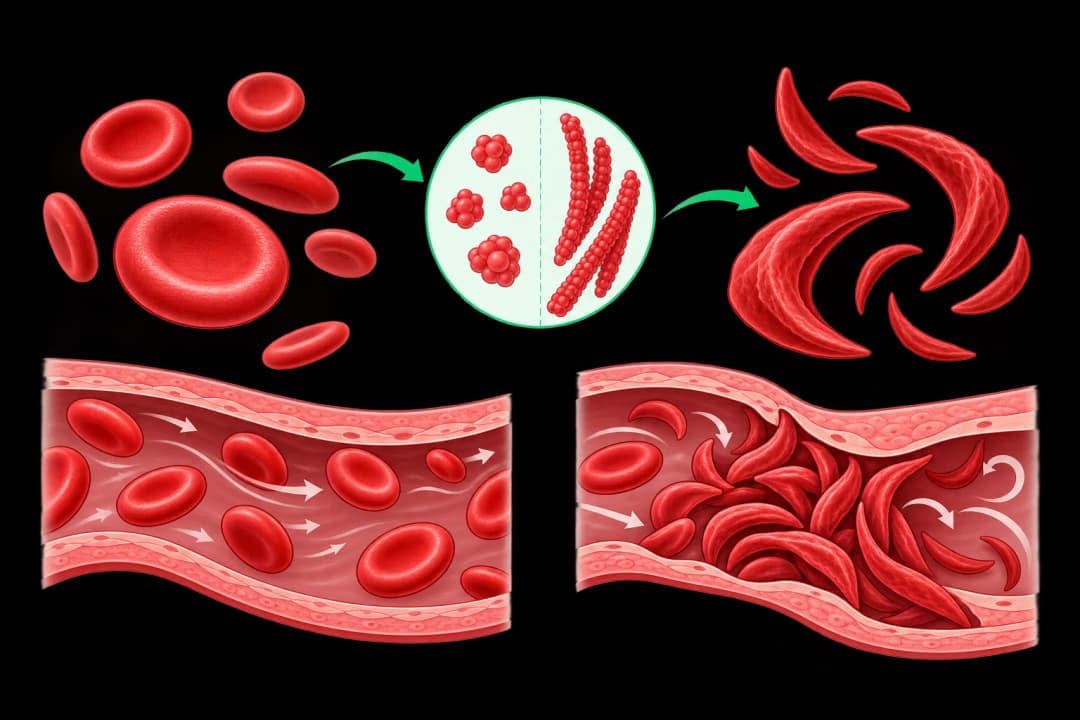
Short answer
An aplastic crisis is a sudden pause in red blood cell production that can cause severe anaemia in sickle cell disease.
This answers one question. It is not a diagnosis and does not replace an assessment by a licensed doctor.
At a glance
- Main problem
- The bone marrow temporarily slows or stops new red blood cell production.
- Key tests
- A full blood count and reticulocyte count help identify the pattern.
- Care priority
- New marked pallor, breathlessness, fainting, or severe weakness needs urgent assessment.
The short answer
It is often triggered by a viral infection and requires prompt medical assessment. Because red blood cells already have a shorter lifespan in sickle cell disease, even a temporary production pause can make the haemoglobin level fall quickly. Treatment depends on symptoms and blood results and may include close observation, supportive care, or a blood transfusion.
What happens during an aplastic crisis
The bone marrow temporarily makes far fewer new red blood cells. A blood count may show worsening anaemia, while a reticulocyte count shows that few young red blood cells are entering circulation. This pattern helps distinguish an aplastic crisis from problems in which red blood cells are being destroyed rapidly. Fatigue, pallor, breathlessness, dizziness, a fast heartbeat, or reduced activity can accompany the anaemia.
What assessment and care involve
Contact the person's sickle cell team or seek same-day medical assessment if an aplastic crisis is suspected. Clinicians usually check a full blood count and reticulocyte count, review recent fever or viral symptoms, and compare the findings with the person's usual haemoglobin. Until assessed, encourage rest and fluids if the person can drink, continue prescribed medicines unless instructed otherwise, and avoid strenuous activity.
When emergency care is needed
Go to emergency care for difficulty breathing, chest pain, fainting, confusion, extreme drowsiness, severe weakness, a very fast heartbeat, or rapidly increasing paleness. Fever in someone with sickle cell disease also needs urgent clinical advice because infection can become serious. Do not wait for a routine appointment when these signs are present.
Questions for the care team
Ask how the current haemoglobin and reticulocyte count compare with the usual values, whether hospital monitoring or transfusion is needed, and what symptoms should prompt an immediate return. Families can also ask how to reduce infection spread at home and when normal school, work, exercise, or travel can resume.
Find care
General Clinics & Polyclinics in Abu Dhabi
That answer is general. If you want it applied to your own case, these are licensed general clinics & polyclinics listed in Abu Dhabi.
27 Ar Ruwwad St - Shakhbout City - MSH4 - Abu Dhabi - United Arab Emirates
Accepts: Daman, Thiqa, Cigna, MetLife +20 more
Al Ruwais, Al Dhafrah
Accepts: Daman, Thiqa, AXA, Cigna +16 more
Al Bahyah - Al Bahyah Old - Abu Dhabi - United Arab Emirates
Accepts: Daman, Thiqa, Cigna, Allianz Care +18 more
Abu Dhabi
Accepts: Daman, Thiqa, AXA, Cigna +27 more
Ordered by verification status and how complete each clinic's public record is, then alphabetically. This is a directory listing, not a ranking — Zavis does not rate or recommend providers.
A factual listing drawn from the DHA, DOH and MOHAP licence registers. It is not a referral, an endorsement, or advice that any of these providers is right for you.
Questions people ask
Is an aplastic crisis the same as a pain crisis?
No. An aplastic crisis primarily involves reduced red blood cell production and worsening anaemia. A pain crisis results from restricted blood flow and can occur separately or at the same time.
How is an aplastic crisis confirmed?
Clinicians use symptoms, examination, a full blood count, and a reticulocyte count. They may order additional tests to identify an infection or another cause.
Can an aplastic crisis be managed at home?
Suspected cases need prompt clinical assessment because anaemia can worsen quickly. The care setting depends on symptoms, blood results, and the person's overall condition.
Related
Related reading
Keep reading
Medical disclaimer. This page is general health information, not medical advice, and it cannot diagnose you. Always consult a licensed healthcare provider about your own symptoms and treatment. In an emergency in the UAE, call 998 for an ambulance.