
What should you know about anaerobic pneumonia?
Short answer
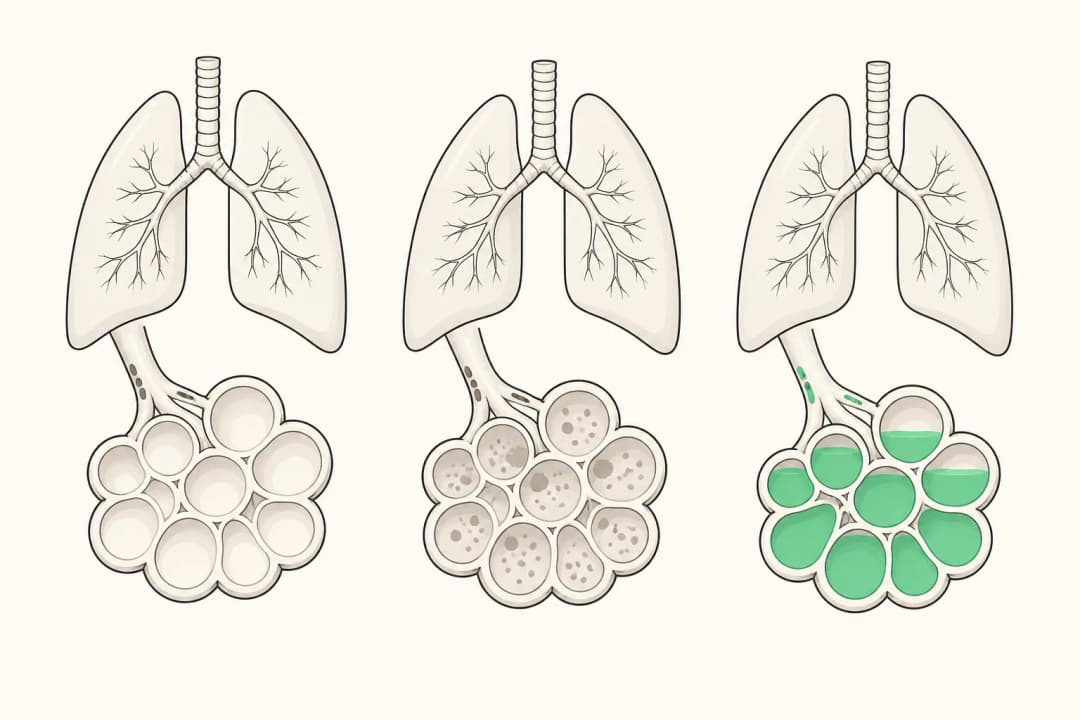
Anaerobic pneumonia is a lung infection involving bacteria that thrive where oxygen is limited, often after material from the mouth or stomach enters the airways.
This answers one question. It is not a diagnosis and does not replace an assessment by a licensed doctor.
At a glance
- Type
- A bacterial lung infection
- Common pathway
- Aspiration of material carrying mouth bacteria
- Assessment
- Symptoms, examination, oxygen measurement and imaging
Plain-language answer
It can cause a persistent cough, phlegm, fever, chest discomfort and breathlessness. Medical evaluation is needed because treatment may require antibiotics chosen for the suspected organisms and, occasionally, management of a collection of infected fluid or damaged lung tissue.
Why aspiration matters
Swallowing normally protects the lungs. Aspiration occurs when saliva, food, drink or vomit passes into the airway. Risk can rise when alertness or swallowing is impaired, such as after vomiting, seizures, sedation, neurological illness or significant dental disease.
Anaerobic pneumonia cannot be identified from the smell or colour of phlegm alone. A clinician considers symptoms, oxygen level, chest examination and imaging. Blood or respiratory samples may be used when the illness is severe or the initial treatment is not working.
Treatment and recovery
Take prescribed antibiotics for the full instructed course and do not use leftover medicine. Rest, drink enough fluid if you have not been told to restrict intake, and avoid smoking or vaping while the lungs recover. A clinician may also address dental infection or swallowing difficulty to reduce further aspiration.
Attend follow-up if fever, cough or breathlessness persists, or if imaging needs to be repeated. Recovery can be slower when an abscess, pleural infection or another lung condition is present, so a lack of steady improvement deserves reassessment.
Breathing and infection red flags
Get emergency help for severe trouble breathing, blue or grey lips, new confusion, collapse, extreme drowsiness, or chest pain with breathing distress. These may signal inadequate oxygen or serious infection.
Seek same-day assessment for worsening breathlessness, inability to keep fluids down, coughing blood, persistent high fever, reduced urination or symptoms that deteriorate after initially improving. Rapid worsening can occur even before a specific bacterial cause is known.
Clarify the care plan
Ask whether aspiration is suspected, whether a swallowing or dental assessment is needed, how soon symptoms should begin to settle and what follow-up imaging is planned. If you care for someone with reduced alertness, request practical advice on safer positioning and feeding.
Find care
General Clinics & Polyclinics in Abu Dhabi
That answer is general. If you want it applied to your own case, these are licensed general clinics & polyclinics listed in Abu Dhabi.
27 Ar Ruwwad St - Shakhbout City - MSH4 - Abu Dhabi - United Arab Emirates
Accepts: Daman, Thiqa, Cigna, MetLife +20 more
Al Ruwais, Al Dhafrah
Accepts: Daman, Thiqa, AXA, Cigna +16 more
Al Bahyah - Al Bahyah Old - Abu Dhabi - United Arab Emirates
Accepts: Daman, Thiqa, Cigna, Allianz Care +18 more
Abu Dhabi
Accepts: Daman, Thiqa, AXA, Cigna +27 more
Ordered by verification status and how complete each clinic's public record is, then alphabetically. This is a directory listing, not a ranking — Zavis does not rate or recommend providers.
A factual listing drawn from the DHA, DOH and MOHAP licence registers. It is not a referral, an endorsement, or advice that any of these providers is right for you.
Questions people ask
Is anaerobic pneumonia contagious?
The condition often follows aspiration of a person's own mouth bacteria rather than ordinary person-to-person spread, although another coexisting respiratory infection may be transmissible.
Can phlegm confirm anaerobic pneumonia?
No. Phlegm may provide clues, but diagnosis relies on the overall clinical picture and imaging; samples are sometimes tested to guide care.
Why might swallowing be assessed?
Difficulty protecting the airway can allow repeated aspiration. Identifying it can help clinicians recommend safer ways to eat, drink or take medicines.
Medical disclaimer. This page is general health information, not medical advice, and it cannot diagnose you. Always consult a licensed healthcare provider about your own symptoms and treatment. In an emergency in the UAE, call 998 for an ambulance.