
ALPPS liver resection: a patient guide
Short answer
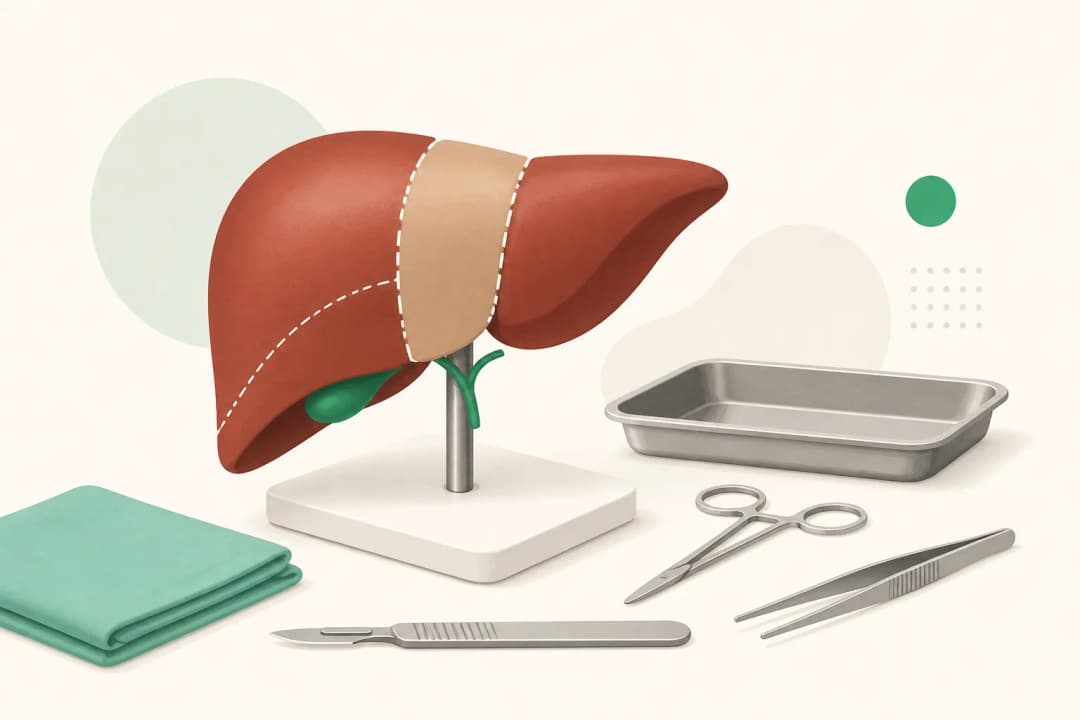
ALPPS is a staged liver operation intended for selected patients whose tumour cannot be removed safely in one operation because the portion of liver that would remain is initially too small.
This answers one question. It is not a diagnosis and does not replace an assessment by a licensed doctor.
At a glance
- Procedure
- A staged liver resection for carefully selected patients
- Purpose
- To allow the future liver remnant to grow before tumour-bearing liver is removed
- Decision team
- Specialist liver surgeons and a multidisciplinary tumour team
Direct answer
During the initial operation, surgeons redirect blood flow and divide liver tissue to encourage the future liver remnant to grow. Imaging and blood tests then assess recovery and growth before the planned operation that removes the diseased portion.
What ALPPS means
The name stands for associating liver partition and portal vein ligation for staged hepatectomy. It may be considered for some primary liver tumours or liver metastases when standard resection would leave inadequate functioning liver. Suitability depends on tumour position, blood-vessel involvement, liver health, general fitness and whether disease is controlled outside the liver.
ALPPS is a major, complex pathway rather than a routine form of liver surgery. The team weighs it against other approaches, which may include a different staged resection, portal-vein procedures, systemic treatment or tumour ablation. Reaching the next operation depends on the liver remnant functioning and growing adequately and on the absence of a new reason to stop.
Preparing and recovering
Before surgery, provide a complete medicines list, including supplements and blood-thinning medicines, and follow the hospital's instructions about eating, drinking and medication changes. Tests commonly evaluate liver function, remaining-liver volume, heart and lung fitness, and the tumour's relationship to major vessels.
After each operation, the team monitors pain, breathing, wounds, liver blood tests, fluid balance and signs of infection or bile leakage. Walking with assistance, breathing exercises and the prescribed nutrition plan support recovery. Do not lift, drive or restart withheld medicines until the surgical team says it is appropriate.
When to seek urgent care
Contact the liver surgery team urgently for fever, increasing abdominal pain, a swollen abdomen, yellow skin or eyes, repeated vomiting, confusion, wound discharge, or inability to eat or drink. Call emergency services for severe breathlessness, chest pain, fainting, heavy bleeding, or sudden collapse. Follow the discharge number and instructions given by your own hospital because complications between the staged operations require prompt assessment.
Questions for the surgical team
Ask why ALPPS is being recommended over another liver procedure, how much healthy liver is expected to remain, what would prevent the later operation, how long you may remain in hospital, and who to contact between stages. It is also reasonable to ask whether your case has been reviewed by a multidisciplinary liver tumour team.
Questions people ask
Is the later ALPPS operation automatic?
No. The team reassesses liver growth, liver function, recovery and tumour status before deciding whether it is safe and appropriate to proceed.
Is ALPPS the same as a standard liver resection?
Both remove diseased liver, but ALPPS separates the treatment into linked operations and uses specific surgical steps to stimulate growth of the liver that will remain.
Can liver metastases be considered for ALPPS?
Some patients with liver metastases may be assessed for it, but tumour distribution, liver condition, treatment response and overall fitness all influence the decision.
Related
Related reading
Keep reading
Cancer care in the UAE
Hospitals & Medical Centers in Abu Dhabi
Most UAE cancer care is delivered inside hospital services rather than by standalone oncology clinics, so these are licensed hospitals & medical centers listed in Abu Dhabi. Confirm the specific cancer service exists before you travel, and know that asking for a second opinion is routine.
Ahalia Hospital Musaffah Building - Musaffah - Musaffah Industrial - Abu Dhabi - United Arab Emirates
Accepts: Daman, Thiqa, AXA, Cigna +26 more
Al Ruwais Industrial City - Abu Dhabi - United Arab Emirates
Accepts: Daman, Thiqa, AXA, Cigna +30 more
Abu Dhabi, Abu Dhabi
Accepts: Daman, Thiqa, AXA, Cigna +30 more
Second opinions are routine in cancer care and asking for one does not affect your treatment. How to arrange a second opinion in the UAE.
Ordered by verification status and how complete each clinic's public record is, then alphabetically. This is a directory listing, not a ranking — Zavis does not rate or recommend providers.
A factual listing drawn from the DHA, DOH and MOHAP licence registers. It is not a referral, an endorsement, or advice that any of these providers is right for you.
Medical disclaimer. This page is general health information, not medical advice, and it cannot diagnose you. Always consult a licensed healthcare provider about your own symptoms and treatment. In an emergency in the UAE, call 998 for an ambulance.