
Allergic asthma cough: what to know
Short answer
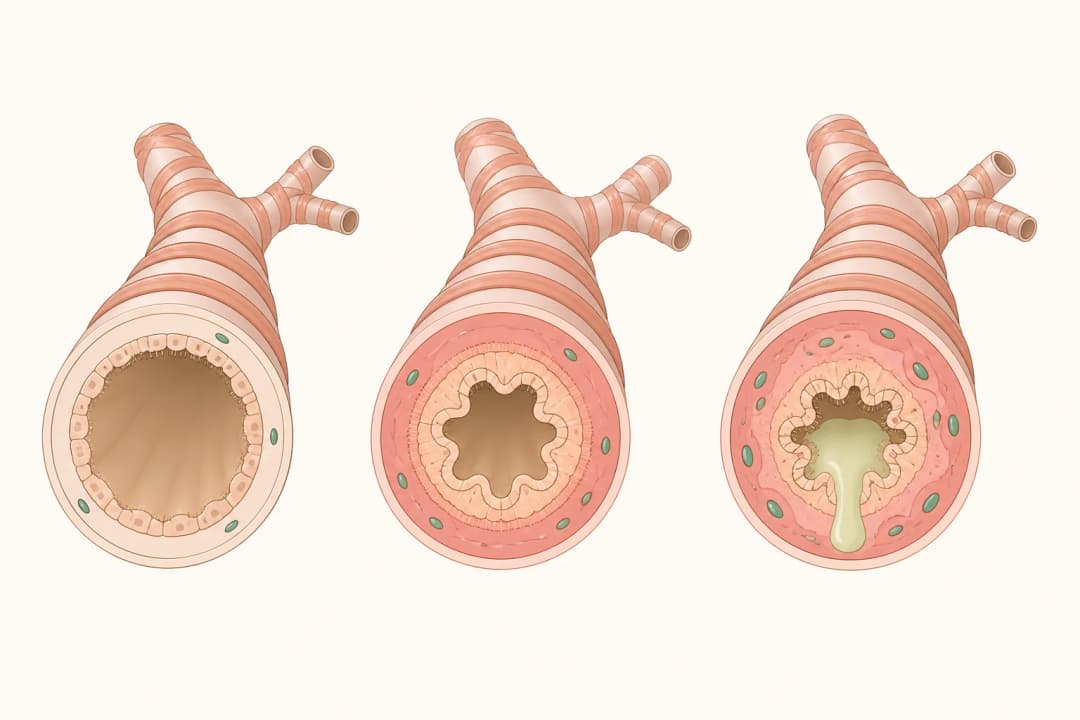
An allergic asthma cough happens when an allergen triggers sensitive, inflamed airways to tighten and produce symptoms.
This answers one question. It is not a diagnosis and does not replace an assessment by a licensed doctor.
At a glance
- Possible pattern
- Variable cough after allergens, at night or with exercise
- Useful record
- Trigger, timing, accompanying symptoms and medicine response
- Assessment
- Symptom history, breathing tests and allergy evaluation when appropriate
The short answer
The cough may be dry or bring up a little mucus. It can occur with wheezing, breathlessness or chest tightness, and may flare after dust, pollen, mould, pets or other personal triggers.
Recognising the pattern
Asthma commonly presents with a cough that varies over time. Night-time symptoms, coughing with exercise, or repeated episodes after a particular exposure can point toward reactive airways. A cough alone cannot confirm the cause because infections, nasal drainage, reflux and medicines can produce similar symptoms.
Allergic rhinitis can add throat irritation and post-nasal drainage. When nose and chest symptoms appear around the same trigger, a clinician may assess both rather than assuming every cough comes directly from the lungs.
Practical next steps
Record when the cough starts, what you were exposed to, whether it wakes you, and whether wheezing or tightness occurs. Use prescribed inhalers exactly as shown; inhaler technique and a suitable spacer can affect how much medicine reaches the lungs.
Reduce contact with a trigger where practical, but avoid broad restrictions without identifying a pattern. Arrange a medical review if the cough keeps returning, disturbs sleep, limits activity or requires reliever medicine more often than your written asthma plan allows.
Urgent breathing warning signs
Seek urgent medical help if breathing becomes difficult, speech is broken by breathlessness, lips or face look blue or grey, you become unusually drowsy or confused, or symptoms keep worsening despite the prescribed reliever. Follow the emergency steps in your asthma action plan while help is being arranged.
Questions to take to an appointment
Ask whether your cough pattern needs breathing tests, whether nose allergies also need treatment, how to check inhaler technique, and which changes mean your action plan should be updated. Bring your inhalers and symptom notes so the discussion can be specific.
Find care
General Clinics & Polyclinics in Abu Dhabi
That answer is general. If you want it applied to your own case, these are licensed general clinics & polyclinics listed in Abu Dhabi.
27 Ar Ruwwad St - Shakhbout City - MSH4 - Abu Dhabi - United Arab Emirates
Accepts: Daman, Thiqa, Cigna, MetLife +20 more
Al Ruwais, Al Dhafrah
Accepts: Daman, Thiqa, AXA, Cigna +16 more
Al Bahyah - Al Bahyah Old - Abu Dhabi - United Arab Emirates
Accepts: Daman, Thiqa, Cigna, Allianz Care +18 more
Abu Dhabi
Accepts: Daman, Thiqa, AXA, Cigna +27 more
Ordered by verification status and how complete each clinic's public record is, then alphabetically. This is a directory listing, not a ranking — Zavis does not rate or recommend providers.
A factual listing drawn from the DHA, DOH and MOHAP licence registers. It is not a referral, an endorsement, or advice that any of these providers is right for you.
Questions people ask
Can allergic asthma cause a cough without wheezing?
Yes. Asthma can present mainly with cough, although other causes must be considered before attributing an isolated cough to asthma.
Will avoiding allergens stop the cough?
Reducing a confirmed trigger may help, but airway inflammation may still require prescribed treatment and a personalised asthma plan.
Should I use someone else's inhaler for a cough?
No. A cough has several possible causes, and inhalers should be prescribed for you with instructions on when and how to use them.
Related
Related reading
Keep reading
Medical disclaimer. This page is general health information, not medical advice, and it cannot diagnose you. Always consult a licensed healthcare provider about your own symptoms and treatment. In an emergency in the UAE, call 998 for an ambulance.