
Acute kidney injury on chronic kidney disease
Short answer
Acute kidney injury on chronic kidney disease is a sudden further loss of kidney function that needs prompt medical assessment.
This answers one question. It is not a diagnosis and does not replace an assessment by a licensed doctor.
At a glance
- Meaning
- A rapid kidney-function decline on top of an existing long-term reduction
- Common triggers
- Dehydration, infection, urinary blockage, heart strain, or medicine effects
- Fluid safety
- Follow individual advice rather than automatically drinking large volumes
The short answer
The kidneys may struggle to balance fluid, salts, acid, and waste when function drops quickly. Some people notice less urine, swelling, nausea, breathlessness, drowsiness, or confusion, while others have few symptoms and the change appears on blood tests.
What the diagnosis means
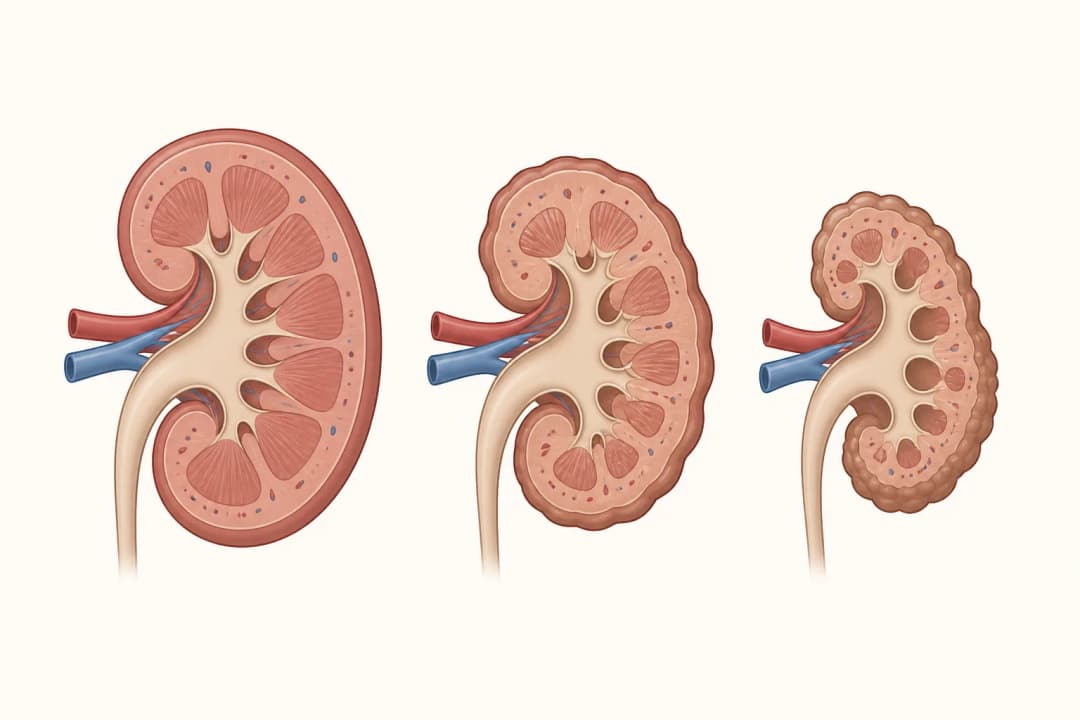
Chronic kidney disease reduces the kidneys' underlying reserve. An added problem such as dehydration, severe infection, urinary blockage, heart strain, or a medicine effect can then cause a rapid decline. The acute component may improve when its cause is treated, but recovery varies and follow-up is needed to establish the new baseline.
Clinicians compare current and previous blood results, measure urine output, examine hydration and swelling, and review every medicine. Urine testing and imaging may help identify infection or obstruction. Fatigue can accompany chronic kidney disease or anaemia, but a sudden change in alertness, breathing, swelling, or urine output requires faster attention.
What to do today
Contact your kidney team, general practitioner, or urgent-care service promptly if acute kidney injury is suspected. Report vomiting, diarrhoea, fever, poor intake, changes in urine, recent procedures, and all prescribed, over-the-counter, and herbal products. Bring recent blood results and your medication list if available.
Do not force large amounts of fluid because this may worsen breathlessness or swelling in some people. Follow the fluid advice already given by your care team. Avoid anti-inflammatory painkillers unless a clinician who knows your kidney function has specifically recommended them. Do not stop regular medicines independently; ask for same-day guidance because temporary changes depend on the cause, hydration, potassium, and blood pressure.
When emergency care is needed
Go to emergency care for severe breathlessness, chest pain, collapse, seizure, new confusion, extreme drowsiness, rapidly increasing swelling, or very little to no urine with worsening illness. Repeated vomiting, inability to drink, signs of severe infection, or sudden weakness also need urgent assessment.
Hospital treatment may include careful fluid management, treatment of infection or blockage, correction of dangerous salt or acid imbalance, and medication adjustment. Dialysis is used when specific complications cannot be controlled adequately by other measures; it is not determined by one blood-test value alone.
Questions for the care team
Ask what probably triggered the decline, which medicines should be paused or adjusted, what fluid plan to follow, and when blood and urine tests will be repeated. Clarify which result represents your usual kidney function, how recovery will be tracked, and whom to contact if urine output or swelling changes.
Find care
General Clinics & Polyclinics in Abu Dhabi
That answer is general. If you want it applied to your own case, these are licensed general clinics & polyclinics listed in Abu Dhabi.
27 Ar Ruwwad St - Shakhbout City - MSH4 - Abu Dhabi - United Arab Emirates
Accepts: Daman, Thiqa, Cigna, MetLife +20 more
Al Ruwais, Al Dhafrah
Accepts: Daman, Thiqa, AXA, Cigna +16 more
Al Bahyah - Al Bahyah Old - Abu Dhabi - United Arab Emirates
Accepts: Daman, Thiqa, Cigna, Allianz Care +18 more
Abu Dhabi
Accepts: Daman, Thiqa, AXA, Cigna +27 more
Ordered by verification status and how complete each clinic's public record is, then alphabetically. This is a directory listing, not a ranking — Zavis does not rate or recommend providers.
A factual listing drawn from the DHA, DOH and MOHAP licence registers. It is not a referral, an endorsement, or advice that any of these providers is right for you.
Questions people ask
Can kidney function recover after an acute injury?
The acute decline may partly or substantially improve when the trigger is corrected, but recovery differs between people. Repeat blood and urine checks show where kidney function settles.
Does acute kidney injury always reduce urine output?
No. Acute kidney injury can occur even when urine volume seems unchanged, so blood tests and the overall clinical picture remain important.
Should I drink extra water if my kidneys worsen?
Not automatically. Extra fluid may help dehydration but can be harmful when fluid is already accumulating or the heart is strained. Follow urgent, individual advice from your care team.
Related
Related reading
Keep reading
Medical disclaimer. This page is general health information, not medical advice, and it cannot diagnose you. Always consult a licensed healthcare provider about your own symptoms and treatment. In an emergency in the UAE, call 998 for an ambulance.